Driving the news:
Pope Leo XIV spent the past two days moving between political meetings and major religious sites in Lebanon, delivering messages focused on peace, coexistence, and support for those suffering across the country.
His public remarks in Beirut, Annaya, and Harissa set the tone for a visit aimed at offering encouragement to a nation struggling with deep political and social crises.
His speeches in Beirut, Annaya, and Harissa consistently returned to the same themes: coexistence, peace and resilience.
Why it matters:
Lebanon’s ongoing crises have weakened trust in its institutions and pushed many people to leave. In this context, the Pope’s words have reached beyond the Christian community. He spoke to officials, religious figures, young people, and civil-society groups whilst highlighting Leb
Zoom in:
Sunday was a political welcome. After landing in Beirut, Pope Leo met president Joseph Aoun, parliament speaker NabihBerri, and prime minister Nawaf Salam. While there was no direct political criticism, he urged Lebanon’s leaders to “place the human person at the center of national priorities.”
Prayer for the suffering on Sunday evening in a gathering with diplomatic missions and community representatives, he paused for silent prayer “for the suffering and the displaced”.
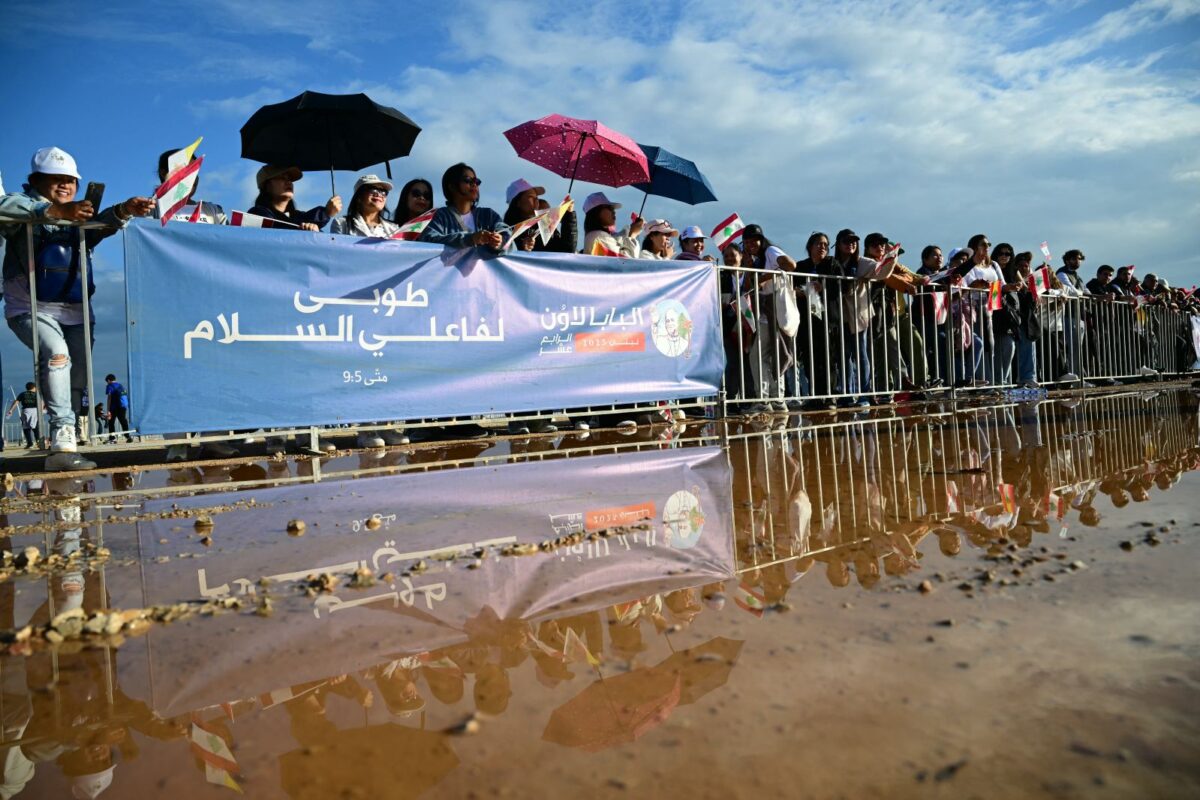
On Monday morning the Pope visited the tomb of Saint Charbel, asking that Lebanon “find strength in its roots” and calling the saint a symbol of patience in hardship. The trip drew thousands of worshippers from the surrounding villages despite the rainy weather.
Later in the afternoon, at Our Lady of Lebanon in Harissa, he led a prayer service attended by bishops, priests, and hundreds of young people. His message centered on coexistence and that Lebanon’s identity is not a sectarian one.
In both speeches, Pope Leo spoke directly to the country’s young people. He urged them not to “lose hope or abandon a land that still has a role to play,” acknowledging the frustration that has fueled a mass exodus in the country.
Between the lines:
While the pope remained diplomatically cautious, his emphasis on coexistence and his persistent references to those “excluded, uprooted or forgotten” implicitly contrasted with a political class that has not produced reform.
His language also echoed concerns raised by humanitarian groups about rising poverty, strained public services, and intensifying cross-border hostilities.
The bottom line:
The papal visit offered Lebanon a rare national moment of unity. For two days, Pope Leo XIV reframed Lebanon not as a country of collapse, but as a place still capable of solidarity.
What’s next:
On Tuesday, the pope is expected to pray at the Beirut Port blast site and celebrate an open-air Mass at the waterfront, closing his visit with a call for healing, remembrance, and renewal.