Pope Leo XIV’s visit to Lebanon arrived at a moment when the country desperately needed a breath of dignity. For three days, Lebanon looked — and felt — different. Streets lit up. People smiled more easily. The country momentarily remembered that it is still capable of hospitality, coexistence, and warmth. In a region saturated with despair, the Pope’s message of peace and healing landed in a country hungry for both.
And yet, as always in Lebanon, the simplest moments reveal the deepest truths.
A Beautiful Welcome, and the Weight of Symbols
When the Pope’s convoy crossed through the southern suburbs, many Shia residents stepped out to wave, record, and smile. At the level of individuals, it was a touching scene. One that reflects the genuine capacity of Lebanese people, across communities, to rise above politics and show respect for a global religious figure. Many families acted with sincerity and goodwill. Their gesture should be acknowledged for what it was: a human moment that cuts through stereotypes.
But Lebanon is a country where the line between personal gesture and political symbolism is always thin.
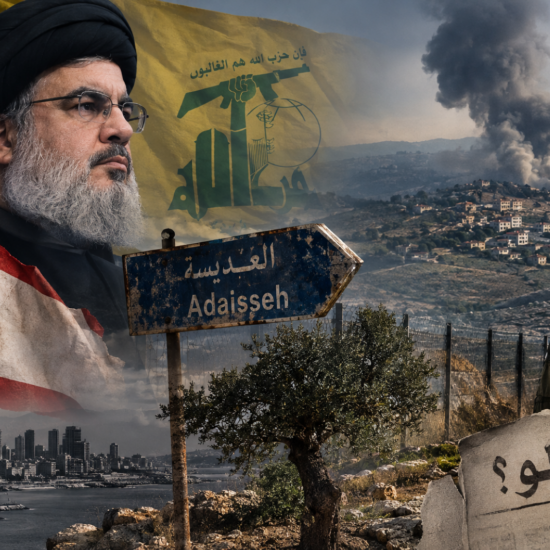
Soon, Hezbollah flags appeared. Portraits of the party’s leader were raised. Some chants evoked partisan loyalty rather than national unity. And here the meaning of the moment changed. Not because the people changed, but because the symbolic frame changed.
Welcoming the Pope under the banner of a political-military party shifts the message from coexistence to identity assertion. It signals: “We welcome you, but through our narrative.” It also places ordinary residents – who may simply have wanted to greet a visitor – inside a political script they did not necessarily intend to write.
In a healthier political environment, a community’s welcome would not need to be filtered through a party’s symbols. But Lebanon’s reality is different: public space is never neutral, and unity often arrives wrapped in partisan flags.
The Empty Chair in Baabda
A second scene revealed another side of the problem.
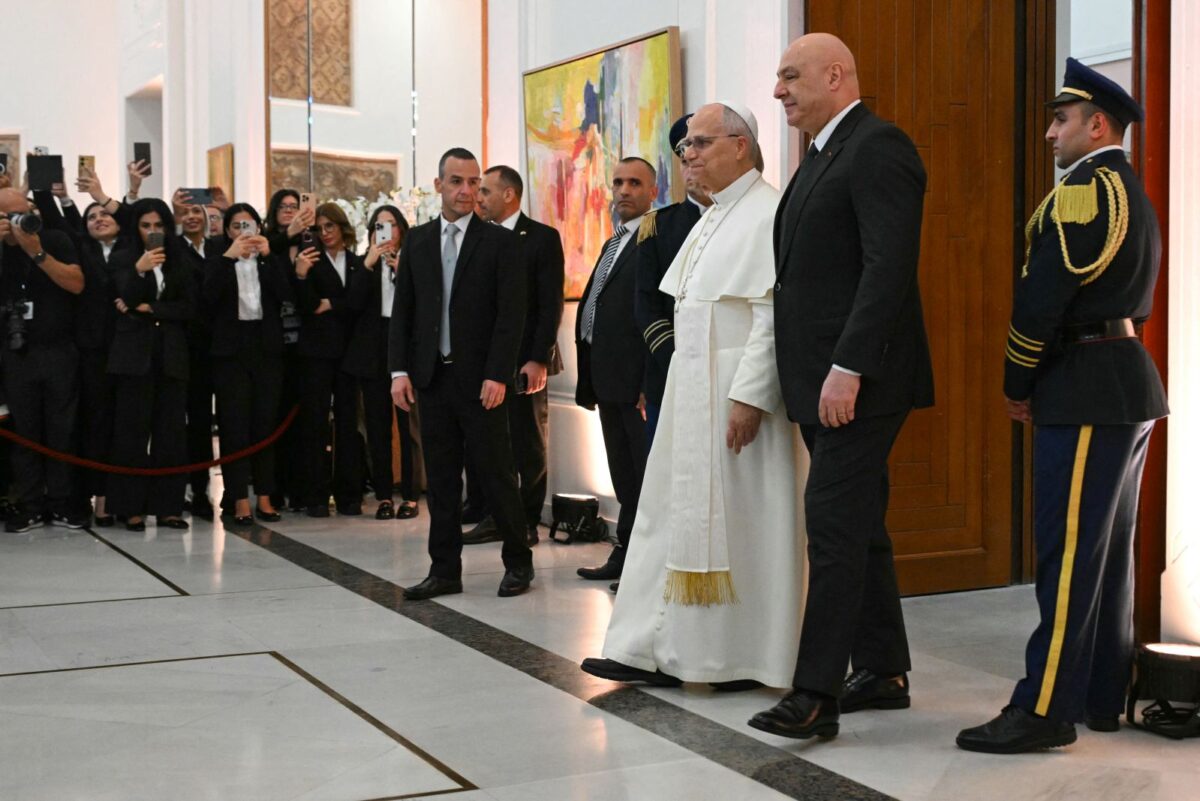
At Baabda Palace, many non-officials were invited to the welcoming ceremony. Yet one notable figure was not: Samir Geagea, head of Lebanon’s largest Christian political party. Here again, the explanation of protocol does not hold. Once the invitation list extends beyond officials, selectively excluding the leader of the largest Christian bloc becomes a symbolic act, not a procedural one.
It creates a curated version of Christian representation. A staged plurality rather than a real one. And at a moment when Lebanon is showcasing its diversity to the world, such exclusion undermines the very message the visit is meant to send.
These two scenes – the partisan framing in the street and the selective representation in the palace – come from opposite ends of the political map. Yet together, they expose the same structural truth.
Lebanon’s Crisis Is Not in Its People, It Is in Its System
If this visit proved anything, it is that the Lebanese people are capable of unity. Muslims and Christians, young and old, came out with genuine affection. The emotional response was real. The desire for coexistence was real. The warmth was real.
But Lebanon’s political system is still incapable of matching that sincerity.
In the street, partisan actors tried to dominate the symbolism of the moment.
In the palace, political actors tried to control which Christian voices get to appear as “representative.” In both cases, the message was the same: power is still exercised through symbolic monopoly.
The Pope came with a message of peace. Lebanese citizens responded with dignity and grace.
But the system – fragmented, insecure, and unwilling to share symbolic space – responded with signals of control.
Does the Visit Change Anything Politically?
In direct political terms, no. The visit will not shift alliances or resolve conflicts. It will not weaken armed actors or strengthen state institutions. Lebanon’s structural problems remain exactly where they were. But symbolic moments still matter. They remind the people what they are capable of when politics steps aside. They reveal the difference between the emotional maturity of citizens and the insecurities of their leaders. They show that maybe the country’s crisis is not one of coexistence, but one of representation. And they offer a glimpse – even if brief – of what Lebanon could look like if its system ever reflected the values of its society. This visit provided that glimpse.
A Moment, a Mirror, and a Possibility
The Pope’s presence did not unify Lebanon. It showed that unity somehow already exists among its people. It is the political structures around them that remain stuck in old habits of control, exclusion, and symbolic domination. Lebanon may not have changed politically this week. But something deeper happened: the country saw itself more clearly. It saw its potential for coexistence at the level of people, and its crisis of representation at the level of power. Between these two realities lies the Lebanon we could still build; if we ever choose to put the human gesture above the partisan symbol, and the citizen above the faction.
Ramzi Abou Ismail is a Political Psychologist and Senior Research Fellow at the Institute for Social Justice and Conflict Resolution at the Lebanese American University.
The views in this story reflect those of the author alone and do not necessarily reflect the beliefs of NOW