Why it matters:
New claims by the Israeli military allege that Hezbollah operated a covert assassination cell tasked with silencing potential whistleblowers connected to the 2020 Beirut port explosion — a charge that, if substantiated, reinforces long-standing concerns over political obstruction of justice in Lebanon.
What’s new:
In a statement released this week, the Israeli Defense Forces (IDF) said a Hezbollah covert unit — known internally as Unit 121 — was responsible for assassinating four individuals who were either involved in customs oversight, investigation efforts, or public criticism related to the August 2020 blast.
The claims allege:
- Joseph Skaff, head of customs at Beirut Port, was killed in 2017 after requesting the removal of ammonium nitrate stockpiled at the port.
- Mounir Abou Rjeily, head of the anti-smuggling unit within Lebanese customs, was killed in December 2020 following disclosures related to Hezbollah’s alleged connection to the material stored at the port.
- Joe Bejjani, a freelance photographer who documented the aftermath of the explosion and later collaborated with the Lebanese army’s investigation, was killed in his vehicle in December 2020. His phone, according to the IDF, was taken during the incident.
- Lokman Slim, publisher and prominent Hezbollah critic, was killed in his car in February 2021 after publicly accusing Hezbollah and the Syrian regime of responsibility for the blast.
The IDF asserts that all four killings were carried out by operatives linked to Unit 121, operating under Hezbollah command.
What Hezbollah says:
Hezbollah has denied any involvement in these assassinations. None of the four cases have been resolved by Lebanese authorities, and no indictments have been issued.
The larger context:
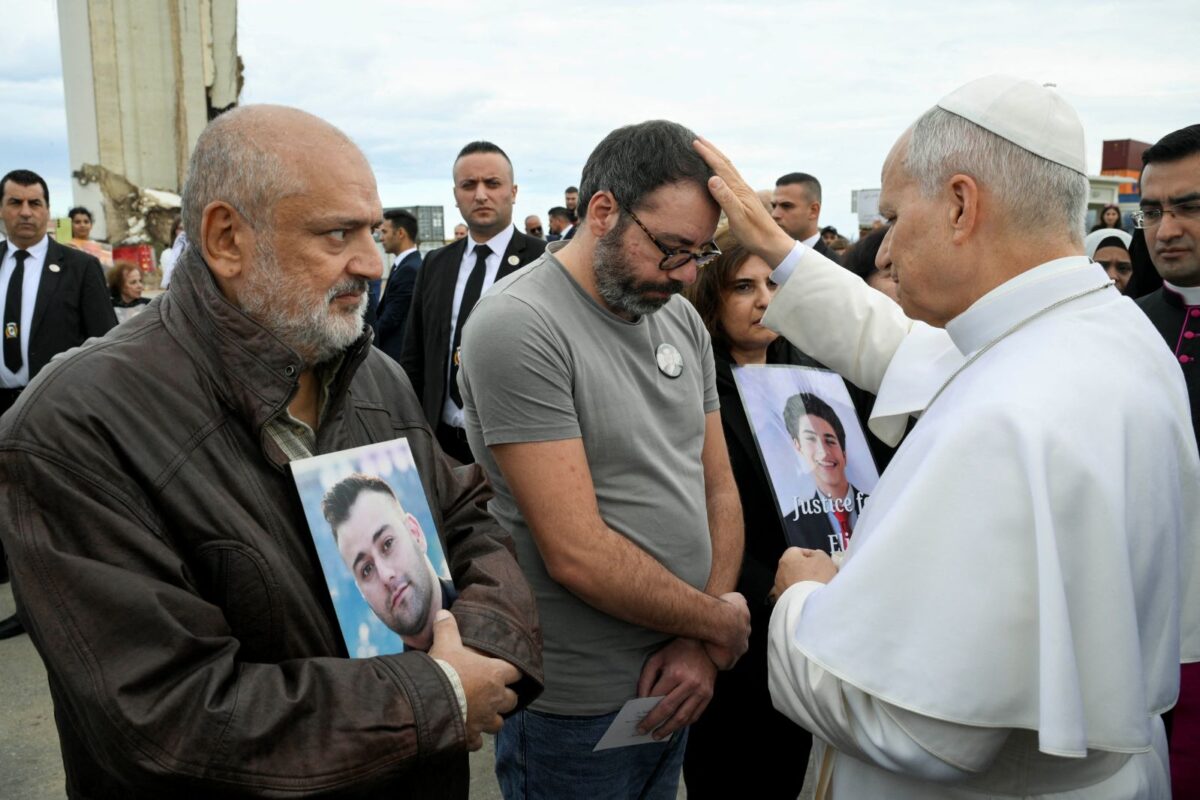
Lebanon’s investigation into the Beirut port explosion — which killed over 200 people and devastated large areas of the capital — has remained stalled for more than four years due to political interference and repeated efforts to obstruct Judge Tarek Bitar, the lead investigator.
Successive appeals, immunity claims by officials, and refusal by security and political institutions to execute summonses or detention orders have frozen legal proceedings. More than a dozen senior officials and security figures named for questioning have never appeared before the court.
Between the lines:
The allegation of a dedicated Hezbollah assassination unit assigned to neutralizing witnesses or critics feeds into a broader narrative of intimidation that has repeatedly crippled high-profile investigations in Lebanon — most notably the assassination of former Prime Minister Rafik Hariri in 2005 and subsequent politically sensitive cases.
While the IDF’s claims have not been independently verified, their plausibility taps into an established Lebanese reality: no political killing since the end of the civil war has resulted in domestic accountability unless international mechanisms were imposed.
Zoom out:
Lebanon’s security landscape remains dominated by an armed political organization operating outside state authority and beyond judicial reach. This structural imbalance has prevented the state from pursuing truth or accountability in major crimes — leaving journalism, foreign disclosures, and international reporting to fill the void that Lebanese institutions cannot.
What to watch:
- Whether Lebanese authorities acknowledge or respond to the IDF’s claims.
- Any renewed international pressure around activating stalled investigative mechanisms, including the Beirut blast probe.
- Public reaction to the revived linkage between politically sensitive murders and the unresolved port catastrophe.
Bottom line:
Whether or not the IDF’s allegations receive independent confirmation, they underscore a grim Lebanese reality: justice remains hostage to armed power.
Until political violence is tackled through sovereign institutions rather than silenced by intimidation, the Beirut blast — and the deaths surrounding it — will remain suspended between truth and oblivion.