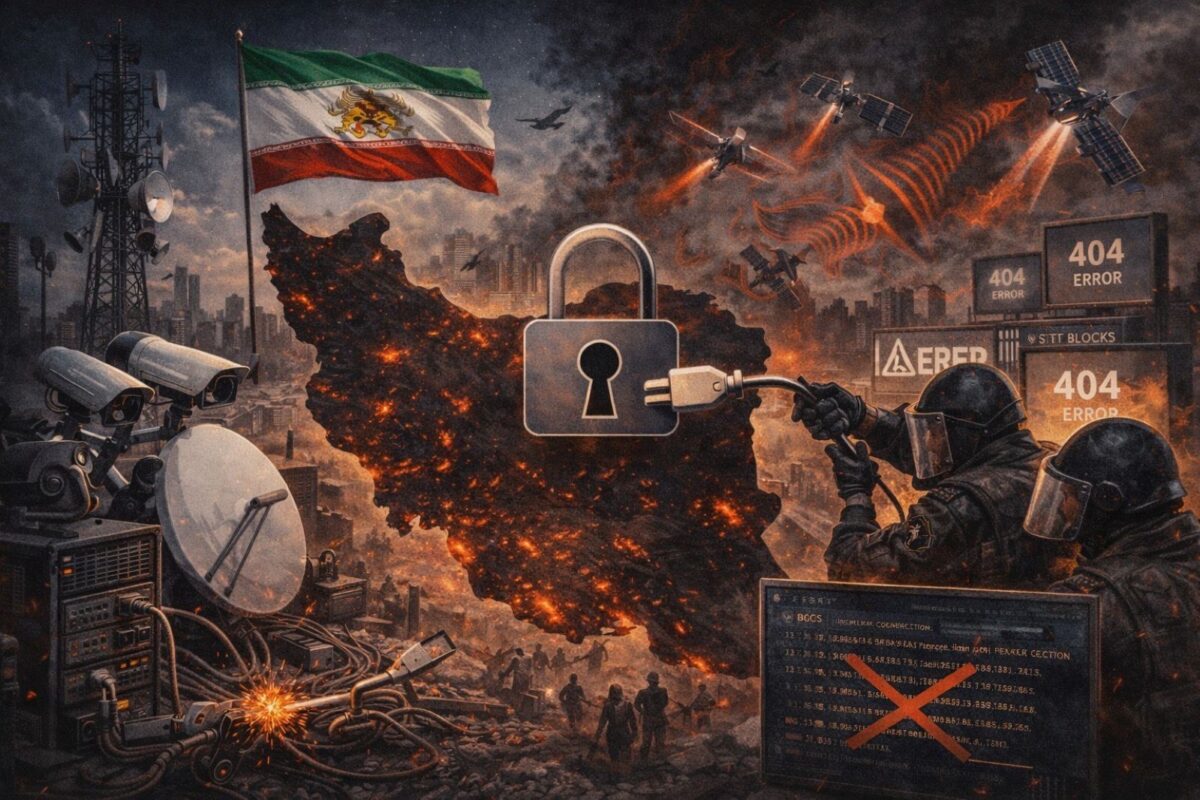
What is unfolding in Iran is not merely an “internet disruption.” It is one of the most complete and technically sophisticated internet shutdowns the Iranian regime has ever implemented. Beginning around January 8, the government simultaneously cut off fixed-line internet, mobile data, and phone services for ordinary citizens, while state media outlets and official channels remained online.
The internet monitoring organization NetBlocks described the situation as a “near-total blackout.” The objective is clear: to prevent protesters from coordinating and to conceal what security forces and state authorities are doing to them. Available data shows that national connectivity dropped to roughly one percent of normal levels and has remained frozen there.
Despite the scale of the shutdown, videos and reports continue to leak out, sporadically, through smuggled channels, unstable messaging platforms, or occasional satellite connections. However, due to the near-total collapse of communications, verifying any of this information has become extraordinarily difficult.
The Technical Architecture of the Blackout: A Shutdown from the Highest Level
This blackout has not been implemented locally or in a fragmented manner. Instead, it has been executed at the highest infrastructural level through Iran’s Telecommunication Infrastructure Company (TIC), the entity that controls the country’s primary gateway to the global internet. Technical evidence indicates that the regime is deploying multiple advanced techniques simultaneously.
One of the most critical measures has been BGP route withdrawals. Iranian internet service providers have withdrawn their IPv6 prefixes from the Border Gateway Protocol, effectively removing Iran from the global routing map. This is neither routine packet loss nor network congestion. It is a deliberate erasure of Iran’s address space from the internet.
Data published by Cloudflare Radar, alongside NetBlocks’ own measurements, confirmed this process in early January. To make the shutdown appear less abrupt from outside the country, the regime has kept some routes nominally announced. Internally, however, users remain effectively disconnected.
Alongside this, international bandwidth has been deliberately throttled, with reductions of up to 35 percent reported. The regime is employing Deep Packet Inspection to filter traffic, DNS poisoning to redirect or block access to foreign websites, and protocol whitelisting, allowing only approved domestic services to function while all others are blocked.
The War on Satellite Internet
As citizens have attempted to bypass the blackout, the regime has moved aggressively against satellite internet, particularly Starlink, which briefly provided protesters with a crucial lifeline to the outside world.
According to technical reports, the regime has deployed sophisticated jamming equipment, likely with assistance from Russia or China, specifically designed to disrupt Starlink signals. This jamming targets the Ku-band frequencies (12–18 GHz) used by Starlink.
In affected areas, users are experiencing packet loss rates between 50 and 70 percent, rendering the service effectively unusable. Mobile jamming units have been deployed in areas with intense protest activity, including Tehran and Kermanshah.
At the same time, multiple field reports indicate the systematic confiscation of satellite dishes. Security forces have conducted door-to-door inspections, rooftop searches, and raids on residential and commercial buildings, seizing satellite equipment wherever it is found. Individuals identified as using or possessing such equipment face arrest and judicial prosecution. These measures demonstrate that the regime is closing remaining communication channels not only technically, but physically.
What is taking place in Iran is not merely a technical or security operation. It is part of a broader strategy of repression: cutting coordination, cutting narrative, and cutting visibility. Within this framework, the internet is treated not as a public utility but as a political battlefield that the state seeks to dominate entirely.
For a brief moment, Starlink disrupted this equation by enabling direct connection to the outside world. That opening has now been largely closed through a combination of signal jamming, physical confiscation of equipment, and the arrest of users.
The blackout continues. So does the systematic effort to render state violence invisible.
Elham Adimi is an Iranian freelancer journalist based in Beirut
The views in this story reflect those of the author alone and do not necessarily reflect the beliefs of NOW