Lebanon is currently staging a peculiar political performance. Everyone knows their lines. No one expects the plot to move.
In his most recent televised interview, the President stated – calmly and unambiguously – that the disarmament plan will be carried out as planned. The message was meant to project resolve, continuity, and state authority.
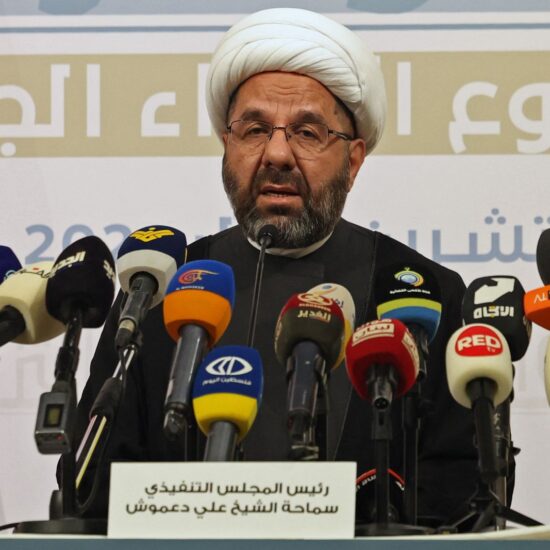
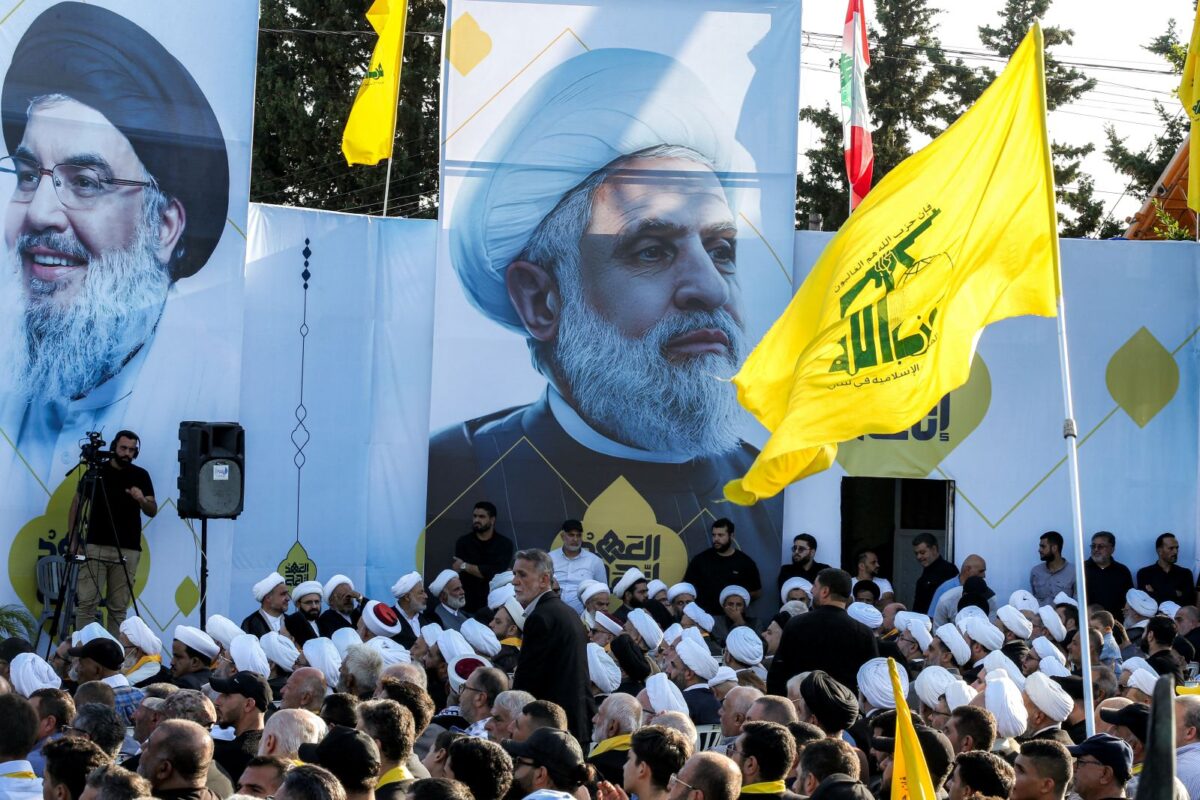
Days later, Naim Qassem responded with a speech that was anything but ambiguous. He rejected disarmament outright, attacked the Lebanese foreign minister, and used language that bordered on threat rather than argument including the now-infamous phrase “طويلة على رقبتكن” ( Dream on but with a vulgar tone ) In substance, the message was simple: we will not disarm.
Shortly after, the Presidential Palace leaked that it was not pleased with Qassem’s remarks and would not take them lightly.
But nothing happened. No clarification. No escalation. No institutional response. This is where the irony hardens into something more serious.
Two Sovereignties, One Silence
Lebanon now has two mutually exclusive claims circulating in public space: The President says the state will implement disarmament. Hezbollah’s leadership says it will not comply.
In any functioning political system, this contradiction cannot remain rhetorical. Either policy changes, enforcement follows, or negotiations are acknowledged. One side adjusts. Reality intervenes. In Lebanon, however, the contradiction is simply allowed to coexist, suspended in a fog of performative calm. This is not stability. It is managed paralysis.
The Comforting Myth of “Not Taking Him Seriously”
Many Lebanese reacted to Qassem’s speech with fatigue rather than fear. Eye-rolling replaced outrage. His tone felt outdated, his threats hollow, his rhetoric disconnected from the daily concerns of a society desperate for normalcy. This reaction is understandable but politically dangerous. Public exhaustion does not equal institutional irrelevance. Citizens may dismiss rhetoric. States cannot.
When the secretary general of an armed political party publicly and aggressively declares non-compliance with a sovereign policy, this is no longer speech. It is a claim of exemption.
Translated plainly:
The law applies, but not to us. That is not resistance discourse. That is outlaw discourse, whether intentionally framed as such or not.
Anger Without Consequence Is Institutional Self-Harm
The Palace’s reported reaction may seem tactically prudent. It is, in fact, the most damaging response available.
Why?
Because it communicates three things simultaneously: To citizens, the state hears defiance but cannot respond to it. To Hezbollah, escalation carries no cost as long as it remains verbal. To external actors, Lebanese sovereignty is rhetorical, not operational. Anger without consequence is not restraint. It is authority performing its own limits.
Debate Ends Where Defiance Begins
There is a crucial distinction being blurred on purpose. Disarmament can be debated. Disarmament plans can be negotiated. Disarmament timelines can be adjusted. But once the head of a party publicly declares that a sovereign decision will not be obeyed the issue is no longer political disagreement. It becomes a question of legal order.
The state now faces a binary it is refusing to name: Enforce, or negotiate openly, or retreat openly. Instead, Lebanon has chosen a fourth option: pretending contradiction is coexistence. This is not consensus. It is avoidance.
The Cost of Pretending Nothing Is Happening
The real danger is not escalation. It is normalization. When defiance is absorbed without response, it becomes precedent. When precedent accumulates, authority erodes not with a bang, but with polite silence. Over time, citizens learn the lesson faster than institutions: state decisions are suggestions, not rules. This is how states don’t collapse, they hollow out.
A Final, Uncomfortable Truth
Even if Lebanese society no longer takes Qassem’s speeches seriously, the Lebanese state cannot afford that luxury. Because when a political actor announces that he will not submit to sovereign authority, he is not merely expressing opinion. He is positioning himself outside the legal order. The moment the state accepts that without response, it makes a choice. Not neutrality. Not patience. Acceptance of exception. And exceptions are how states slowly stop being states.
Ramzi Abou Ismail is a Political Psychologist and Senior Research Fellow at the Institute for Social Justice and Conflict Resolution at the Lebanese American University.
The views in this story reflect those of the author alone and do not necessarily reflect the beliefs of NOW