Calling for parliamentary elections in Lebanon this coming May, under the existing political and security status quo, is not a democratic corrective, it is a strategic error. Elections do not derive legitimacy from ballots alone. They derive it from conditions of sovereignty, equality of competition, and the absence of armed coercion. None of these conditions currently exist in Lebanon.
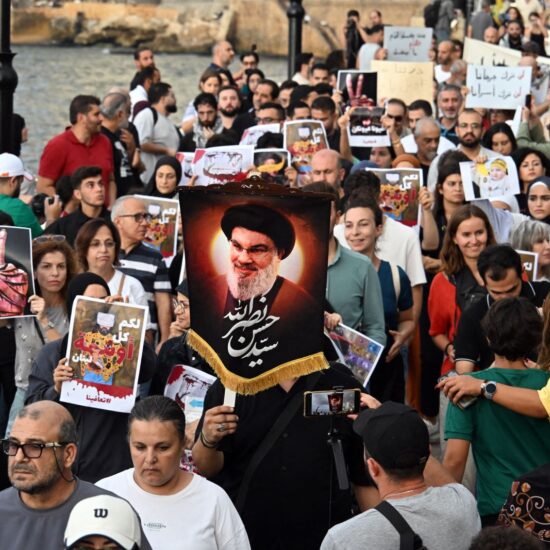
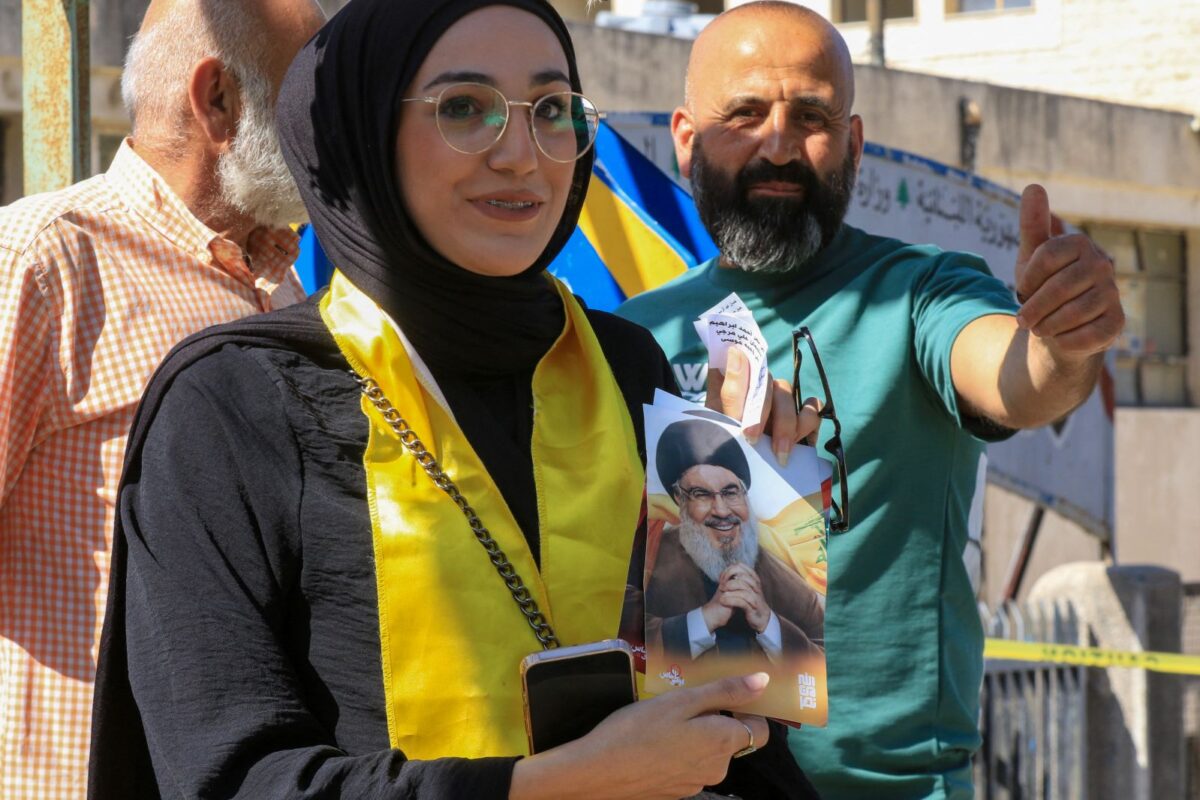
Less than six months ahead of the anticipated elections, Hezbollah is already engaged in intensive political, organizational, and logistical preparations, signaling that it treats the electoral process not as an open democratic contest but as a controlled battlefield to preserve power.
Holding elections before the completion of Hezbollah’s disarmament, or at minimum, before the irreversible dismantling of its military dominance would only reproduce the same imbalance that has paralyzed the state for decades. It would consecrate power relations shaped by force, not consent, and produce a parliament structurally incapable of guiding the country through the most consequential regional transformation in a generation.
This would not be a step forward. It would be a constitutional recycling of failure.
A basic principle of political theory is often ignored in practice, you cannot have free political choice where one actor retains unilateral military power. As long as Hezbollah remains armed, elections in Lebanon are not a contest of programs or visions; they are a negotiation conducted under implicit threat.
This is not merely about intimidation at polling stations. It is about the entire pre-election ecosystem: Candidates calibrate their rhetoric to avoid red lines enforced by weapons, parties form alliances not based on ideology or reform, but on survival and voters self-censor, knowing that the outcome does not truly shift power. Under these conditions, elections function as a legitimizing ritual, not a mechanism of accountability. They provide democratic cover for a non-democratic reality.
For decades, Hezbollah has attempted to replicate in Lebanon the Iranian model of parallel governance, a state within the state, institutions mirroring institutions. In Iran, an elected president operates under the authority of the Supreme Leader; in Lebanon, an elected presidency is paralyzed under the weight of an armed party. In Iran, parliament is ultimately constrained by the Guardian Council; in Lebanon, parliamentary life is constrained by an unelected military veto. In Iran, the formal armed forces coexist with, and are strategically subordinated to, the Islamic Revolutionary Guard Corps (IRGC); in Lebanon, the Lebanese Armed Forces coexist with a militia that claims a superior “resistance” mandate.
Even this Iranian model, once portrayed as durable, is now visibly eroding under internal pressure and regional strain. Yet in Lebanon, the political class has shown neither the courage nor the capacity to confront its local replication. The regional context has changed, Lebanon has not. The Middle East is undergoing a profound strategic reordering. Old deterrence equations are breaking down. Non-state armed actors are losing tolerance, cover, and strategic utility. States are reasserting primacy. Sovereignty is no longer a slogan, it is becoming a prerequisite for survival.
Lebanon, however, remains frozen in a model that belongs to a fading era: a hybrid system where an armed faction substitutes itself for the state while participating in its institutions. To hold elections now, before resolving the weapons question, is to lock Lebanon into a post-dated parliament for a pre-dated era.
What kind of parliament Lebanon actually needs? Lebanon does not need just “a new parliament.” It needs a transitional sovereign parliament capable of doing what previous ones structurally could not.
The next phase requires a legislature that represents citizens, one that can legislate without veto by force, that is empowered to redefine Lebanon’s defence posture, foreign policy, and strategic neutrality and finally one that can negotiate internationally as a sovereign state, not as a hostage.
Such a parliament must also possess the political maturity and independence required to confront realities long postponed. In due course, it must be able to ratify a peace agreement, should conditions mature, and allow negotiations to proceed toward balanced, transparent, and state-to-state relationships, free from proxy agendas and armed intermediaries.
Such responsibilities cannot be shouldered by a parliament born under coercion or hostage to slogans.
Holding elections under the current balance of power will inevitably reproduce the same Shia political monopoly ensuring the preservation of a closed political bloc that claims exclusive representation and veto power, while recycling the same discourse of sectarian power-sharing legitimacy to block accountability and reform.
This dynamic is already evident in the electoral preparations. Hezbollah and Amal have openly opposed any amendment to the electoral law or timetable that could dilute their dominance, particularly regarding expatriate voting. Both favor confining diaspora influence to a symbolic six-seat overseas constituency, fearing that broader expatriate participation, especially among Christian voters abroad, would weaken their grip on parliament. In multiple instances, the Speaker of Parliament has refused to place alternative proposals on the legislative agenda, effectively freezing reform through procedural control.
Democracy is not only about timing; it is about sequencing. The correct order is clear, first establish a credible, irreversible process toward the state’s exclusive monopoly on the use of force, second dismantle the parallel institutional architecture that has hollowed out sovereignty, third, restore minimal sovereignty and equal political ground and then hold elections that genuinely redistribute power, rather than reproduce it.
Reversing this order produces institutions that look democratic but function as extensions of imbalance.
If elections are held in May under current conditions the resulting parliament will lack legitimacy domestically and credibility internationally, reform will remain blocked by the same informal but decisive red lines and international support will remain conditional, hesitant, and reversible. Worst of all, Lebanon will lose a historic window to realign itself with a rapidly changing regional order. Postponing elections until the weapons question is resolved is not an attack on democracy. It is a defense of its substance.
The real danger is not delay. The real danger is confusing procedure with sovereignty, and ballots with freedom.
Elissa E Hachem is a journalist and political writer specializing in regional affairs and governance. Former Regional Media Advisor at the U.S. State Department’s Arabic Regional Media Hub, with broad experience in strategic communication across government and private sectors.
The views in this story reflect those of the author alone and do not necessarily reflect the beliefs of NOW.