Lebanon entered a new cycle of economic and political tension this week after the Cabinet approved additional fuel-related taxes and endorsed raising value-added tax, prompting immediate protests across Beirut and beyond. The measures, adopted on February 17, include a new tax raise on gasoline aimed at funding public sector wage adjustments and easing fiscal strain.
The impact was immediately felt. Transport unions blocked key highways in the city, warning that higher fuel costs would cause fare increases and broader price hikes. Economists caution that because Lebanon imports the majority of its goods and has already adjusted customs calculations in recent months, higher transportation and logistics costs will inevitably be reflected in supermarket shelves and essential commodities.
The government argues the decision is necessary to finance overdue salary corrections and stabilize state finances. Critics counter that relying on indirect taxation risks accelerating inflation at a fragile moment in Lebanon’s recovery. With Ramadan having started, households fear another surge in living costs.
In Lebanon
Protests erupt over fuel price increases: The Cabinet’s decision to impose a new fuel tax immediately translated into street anger, with transport unions and taxi drivers blocking major roads in Beirut, including key routes linking the capital to Mount Lebanon. Protesters argued that any increase at the pump inevitably raises transportation fares and delivery costs, feeding directly into higher prices for food and basic goods. The move revived memories of previous tax-driven unrest, as citizens voiced frustration over what they see as a pattern of indirect taxation falling on already strained households. While the government framed the measure as fiscally necessary, demonstrators warned that public patience is wearing thin.
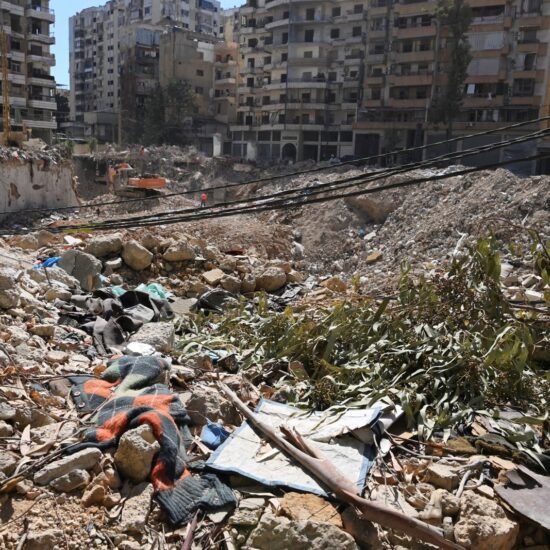
Israeli airstrikes intensify in eastern Lebanon: Israeli air raids targeted areas in the Bekaa Valley and parts of southern Lebanon during the week, resulting in casualties and significant material damage. The strikes marked one of the most serious escalations in recent months and underscored the fragility of understandings reached after last year’s cross-border hostilities. Lebanese officials condemned the attacks as violations of sovereignty, while security analysts warned that repeated strikes risk pulling Lebanon deeper into regional confrontation dynamics tied to Gaza and broader Iran-Israel tensions.
Cabinet debates second phase of weapons control plan: The government came together to discuss advancing the second phase of its plan aimed at consolidating state authority over weapons outside official institutions, particularly north of the Litani River. The discussions highlighted longstanding divisions within Lebanon’s political landscape. The debate around this issue reflects the broader struggle over Lebanon’s defense doctrine and the balance between state authority and armed non-state actors.
Inflation warnings amid Ramadan: As Ramadan began, importers and retailers signaled that higher fuel costs, coupled with recent adjustments to customs valuations, could soon be reflected in consumer prices. Lebanon’s heavy reliance on imports makes transportation and logistics costs particularly sensitive to fuel fluctuations. Economists noted that even modest increases at the pump can have amplified effects across supply chains. Households, already struggling with weakened purchasing power, fear another spike in grocery and commodity prices during a traditionally high-consumption period.
Public sector salary adjustments tied to new revenue measures: Government officials clarified that the newly approved taxes are directly linked to financing long-awaited wage corrections for public sector employees and pensioners, whose incomes were eroded by the currency collapse. While some welcomed the acknowledgment of salary disparities, critics argue that funding adjustments through consumption-based taxes shifts the burden onto the broader population rather than advancing deeper structural reforms.
In The Region
Cross-border tensions remain volatile: The Israel-Lebanon front remained tense throughout the week, with continued military signaling and intermittent strikes reinforcing the precarious security environment. While neither side appears to be seeking full-scale war, the frequency of incidents has heightened fears of miscalculation. Diplomatic channels are reportedly active, but regional analysts warn that developments in Gaza continue to influence the northern front.
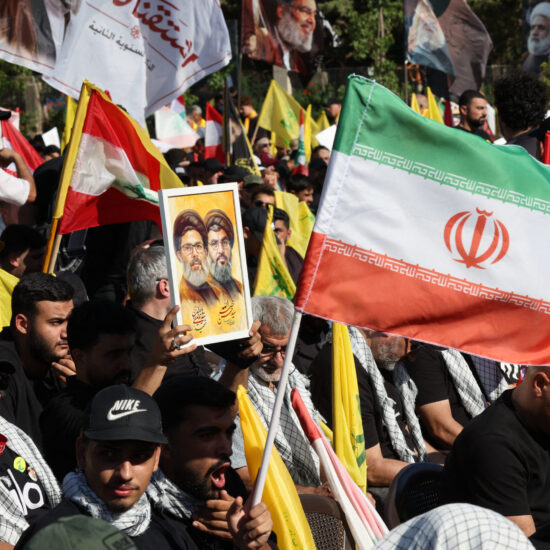
Iran reiterates deterrence messaging amid regional strain: Iranian officials issued statements during the week reaffirming their support for allied groups in the region while signaling that broader escalation remains contingent on battlefield developments. Tehran’s messaging is closely watched in Beirut, given Lebanon’s entanglement in the wider axis of confrontation and the implications for domestic stability.
Energy market uncertainty pressures import-dependent economies: Regional security concerns and maritime tensions continued to influence global energy markets this week, contributing to price volatility. For countries like Lebanon, which rely almost entirely on fuel imports, fluctuations in global oil prices translate quickly into domestic cost pressures, reinforcing the economic sensitivity surrounding fuel taxation and subsidy policies.
Egypt: Currency and IMF Reform Pressure Intensify: In Egypt, economic reform discussions regained momentum this week amid renewed scrutiny over inflation and foreign currency availability. Cairo continues to navigate IMF-backed reform commitments, including subsidy rationalization and exchange rate flexibility. Rising food and fuel prices remain politically sensitive, particularly in Ramadan.
What we’re reading
“Moral Clarity in the Face of Murder: Remembering Malcolm Kerr” reflects on a 2026 remembrance event at the American University of Beirut (AUB) marking the legacy of Malcolm Kerr, the university’s president who was assassinated in 1984 during the Lebanese Civil War. In this piece, Makram Rabah NOW Lebanon’s managing editor focuses on Ann Kerr’s powerful testimony about her husband’s life, principles, and the meaning of his death arguing that he was targeted not for his nationality but for what AUB stood for: open-minded inquiry, academic freedom, and a space for critical thought.
Fuel tax hike to finance public wage bill tests Lebanon’s economic stabilization” Rodayna Raydan examines the Lebanese Cabinet’s recent approval of a new gasoline tax, effectively pushing prices toward nearly $20 per 20-litre tank as part of efforts to generate revenue to finance long-debated public sector salary and pension increases. The analysis highlights public backlash and protests over the higher costs, while economists warn that relying on consumption taxes without broader fiscal reforms could fuel inflation, weaken competitiveness, and strain Lebanon’s fragile economic recovery.
“Sectarianism Isn’t the Problem — The Crisis of Centralized Authority,” In this piece, Elissa El Hachem argues that Lebanon’s political challenges aren’t caused by sectarianism itself, but by the failure of centralized state authority and the way power is actually exercised. She explains that Lebanon’s confessional system was originally meant to ensure inclusion across communities, but over time has turned into a quota and patronage-based system that weakens state institutions.