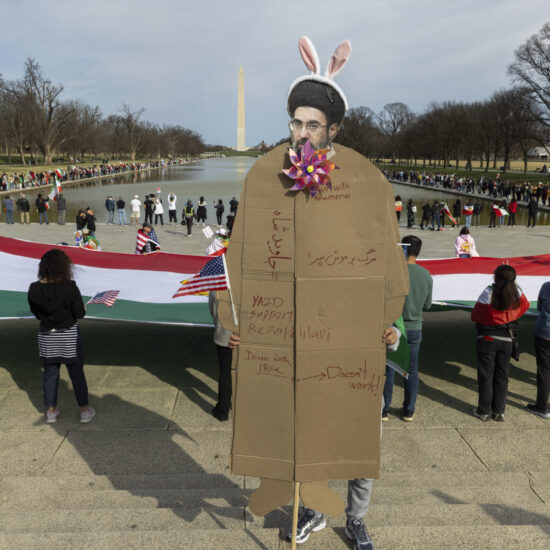
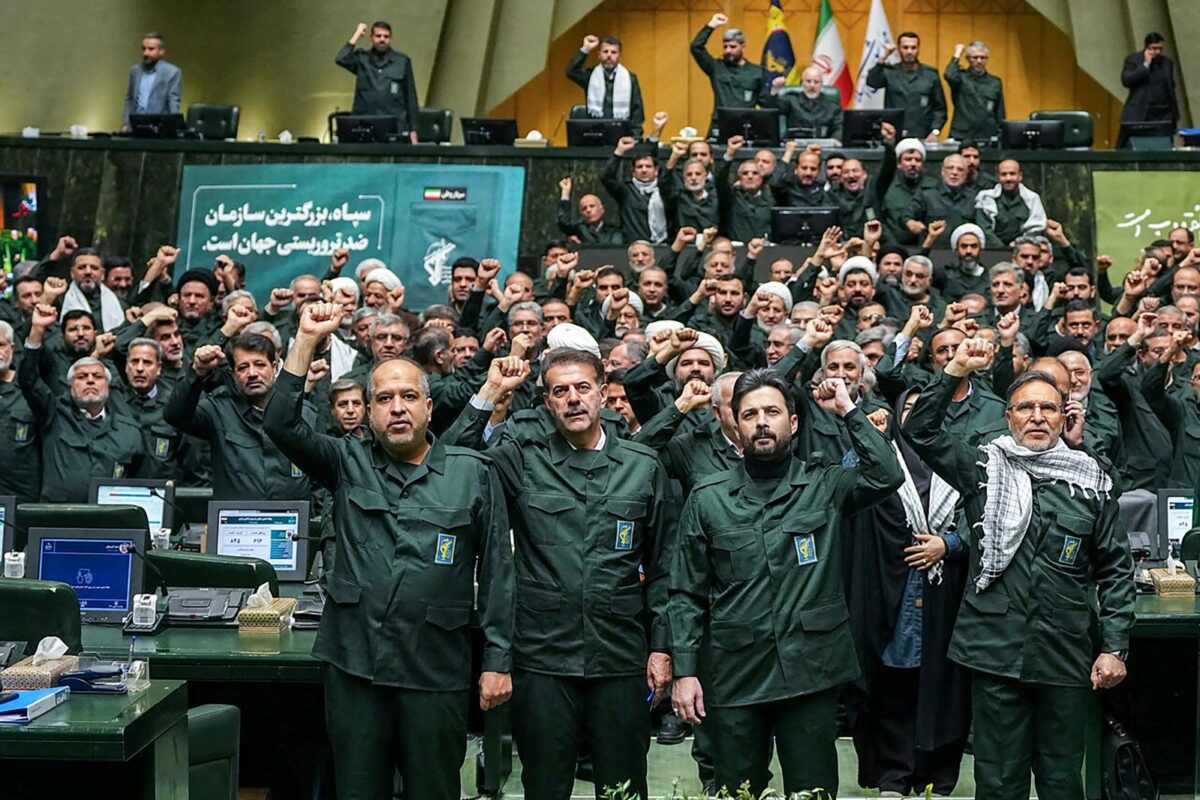
For years, the U.S.-Iran confrontation followed a familiar script: loud threats, visible military posturing, indirect negotiations, and a shared effort to avoid full-scale war. This equilibrium suited both sides. Washington projected strength without paying the costs of chaos, while Tehran absorbed pressure and bet on regional restraint. That balance is now eroding.
Not because war has become inevitable, but because the political utility of threatening without acting is declining. Deterrence based on repetition eventually loses force. When warnings fail to change behavior, they stop signaling resolve and begin to signal limits. This is the dilemma Washington now faces. Iran has learned to live with pressure. Sanctions have been absorbed into the regime’s political economy. Diplomatic deadlines are treated as ritual rather than rupture. Military posturing has become background noise. The result is a cycle of escalation and de-escalation that generates tension without leverage.
This is why the emerging shift is not necessarily toward war, but certainly toward action. The aim is to restore credibility without triggering regional collapse. The transition underway is not from diplomacy to war, but from deterrence by rhetoric to deterrence by calibrated force. This distinction matters. It reflects a recalibration of strategy, not a collapse into adventurism.
Regime change in Iran remains strategically unattractive. Removing the regime would not eliminate Iranian power; it would fragment it, unleashing proxy retaliation, regional instability, and energy shocks. No serious planner can assume that post-regime Iran would be stable, pro-Western, or even governable. Yet the fact that regime change is again being discussed matters. Not because it is likely, but because its re-entry into mainstream discourse signals strategic impatience. When containment and negotiation appear exhausted, maximalist ideas become easier to justify politically. This is how escalation dynamics begin: not with a desire for chaos, but with shrinking tolerance for restraint.
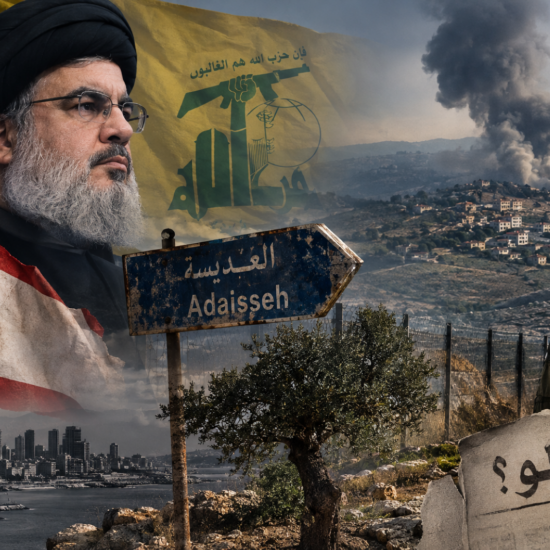
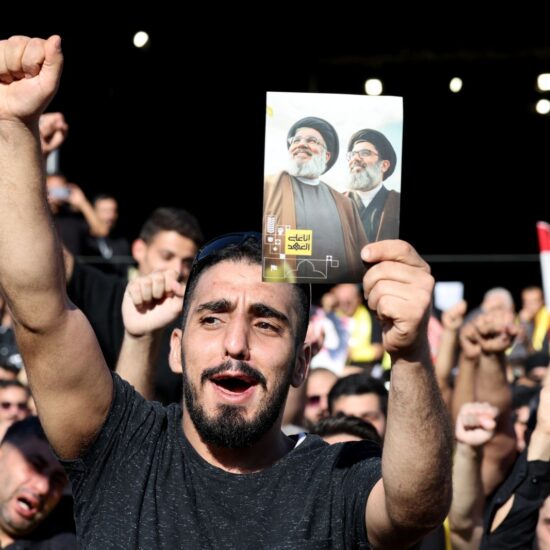
For Lebanon, this shift is structural rather than symbolic. Lebanon is embedded in the architecture of U.S.-Iran confrontation through Hezbollah and the broader regional proxy system. Any movement from threats to action might affect the Lebanese-Israeli front and reshape domestic political calculations. Even limited action against Iranian assets reverberates through Lebanon’s security environment, media narratives, and political alignments.
This external securitization further distorts Lebanon’s already fragile political life. Economic collapse and institutional paralysis have hollowed out governance. Regional escalation pushes what remains of political debate toward identity-based mobilization and away from reform. Elections – if it happens – risk becoming security referendums. Public discourse narrows as survival politics expands. The harder U.S.-Iran dynamics become, the more Lebanon’s political space contracts.
The paradox of this new phase is that limited action is meant to prevent chaos, yet risks producing it. In a region saturated with non-state actors, calibrated strikes rarely remain calibrated in their effects. A signal intended to restore deterrence can be interpreted as an opening move. Proxy networks ensure that escalation is rarely linear or containable. What is designed as a message can quickly become a chain reaction. The shift from threats to action is therefore not a solution but a gamble that limited force will stabilize deterrence rather than unravel it.
The real choice in Washington is not between war and peace. It is between a declining deterrence model based on rhetorical escalation with diminishing returns, and a riskier deterrence model based on selective action with unpredictable regional spillover. Neither option is clean. But the political cost of inaction is rising in a climate where credibility is often confused with coercion. When threats no longer produce outcomes, action becomes tempting not because it is wise, but because restraint becomes politically costly.
This is what defines the current moment. Not the inevitability of war, but the erosion of the comfort zone that allowed threats to substitute for action. The danger is not that war is desired, but that the mechanisms of restraint are weakening. As patience erodes, risk tolerance increases. Strategic testing replaces symbolic confrontation.
For Lebanon and the region, the implications are sobering and the most dangerous phase in any confrontation is not when war begins, but when restraint becomes politically costly. That is where the region now stands.
Ramzi Abou Ismail is a Political Psychologist and Senior Research Fellow at the Institute for Social Justice and Conflict Resolution at the Lebanese American University.
The views in this story reflect those of the author alone and do not necessarily reflect the beliefs of NOW.