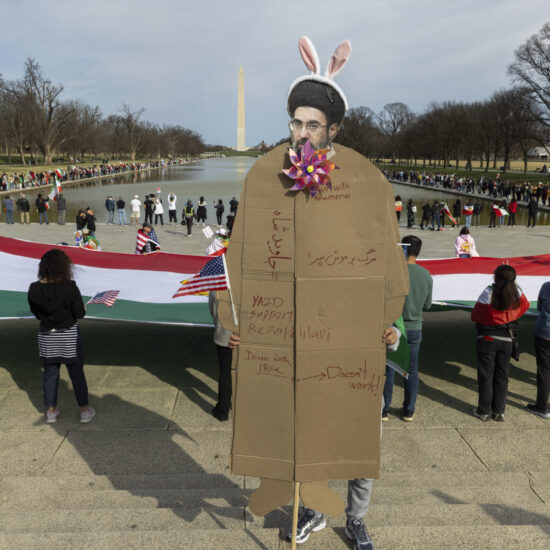
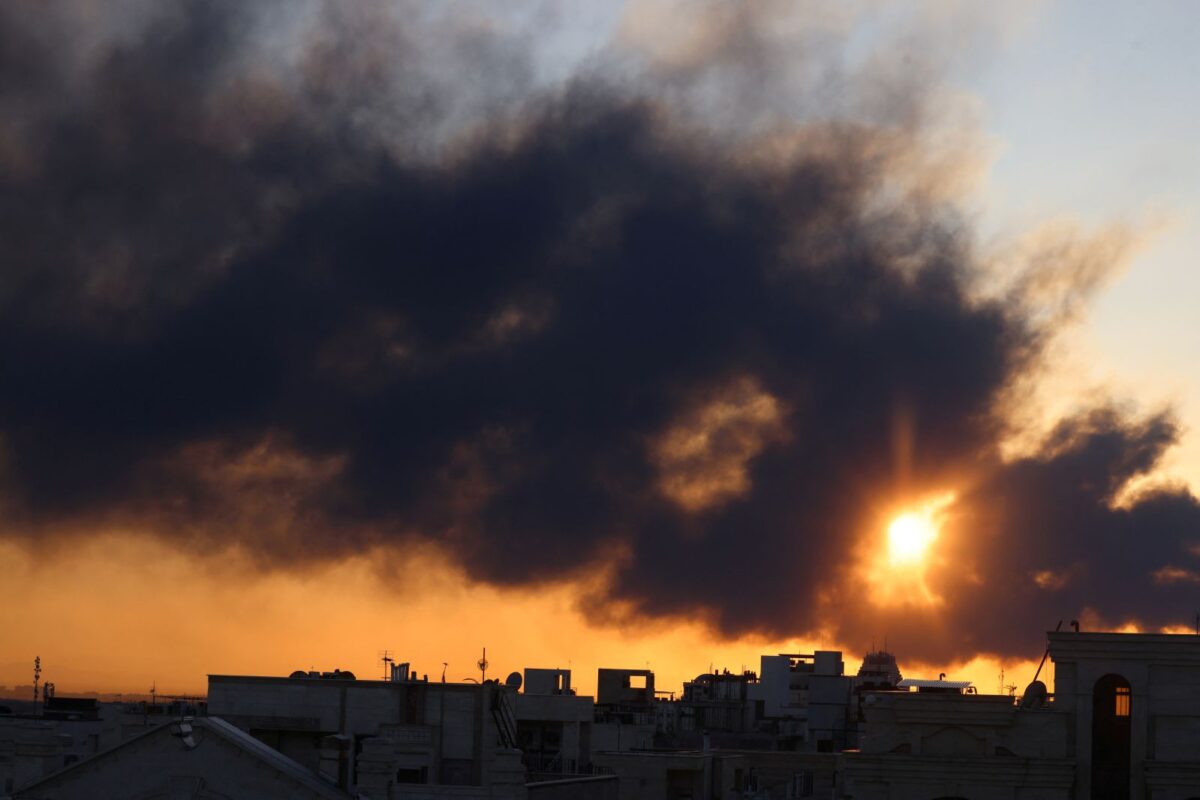
In the final days of February 2026, developments in Iran entered an unprecedented—and potentially decisive—phase. Ali Khamenei, the Supreme Leader of the Islamic Republic, was killed during joint military strikes by the United States and Israel. A number of senior military commanders and high-ranking Islamic Republic officials were killed in the same wave of attacks.
As the conflict continues at high intensity and U.S. officials signal further escalation, the Islamic Republic has responded by launching missiles toward Israel and several Gulf states. Yet field assessments and available reporting suggest that, at least so far, the balance of damage and operational superiority has tilted meaningfully toward Israel and its allies, with Iran’s military, missile, and nuclear-related infrastructure suffering extensive losses.
Inside Iran, following the Leader death, a “Provisional Leadership Council” has been formed in line with mechanisms anticipated in the country’s constitution. The council—composed of the head of government, the head of the judiciary, and a jurist from the Guardian Council—has assumed responsibility for the state’s highest direction pending the selection of a new leader.
In this volatile environment, the question of succession—already controversial due to Khamenei’s age and health—has become an immediate and defining crisis. Mojtaba Khamenei, the Leader’s son and long viewed as a serious contender, was also killed in the recent strikes.
Potential Successors
Several figures have been raised as possible successors: Ayatollah Alireza Arafi a member of the Provisional Leadership Council, Hojjatoleslam Gholamhossein Mohseni-Ejei the current head of the judiciary and a member of the council, Hassan Khomeini and Ali Khomeini grandsons of Ruhollah Khomeini the Islamic Republic’s first Leader.
Other traditionalist or conservative clerics close to the system’s hard core, including Hassan Rouhani (former president), Sadeq Larijani (former head of the judiciary), Ahmad Alamolhoda (Friday prayer leader in Mashhad), and Mohammad Mehdi Mirbagheri (a member of the Assembly of Experts)
Ali Larijani, currently serving as secretary of Iran’s Supreme National Security Council—an office that, under current circumstances, reportedly wields wide de facto authority—has also been mentioned in some circles. However, he lacks the level of formal religious credential widely seen as a prerequisite for the position of Supreme Leader, reducing his prospects. Many of the above figures, moreover, face significant opposition within the power structure.
Four intersections – five scenarios
Iran now sits at the intersection of four major forces: Widespread and multi-layered domestic protests, Unprecedented economic pressure and financial exhaustion, Direct military confrontation with Israel and the United States.
The convergence of these variables has made Iran’s near-term future more opaque than at any point in recent decades.
1) Managed Transition from Within
In this scenario, key power centers—especially the armed forces and affiliated economic networks—accept a tightly controlled transfer of authority to preserve institutional cohesion and protect entrenched interests. The likely outcome would be partial continuity of the existing system, accompanied by limited and carefully managed reforms.
However, given the depth of social dissatisfaction and the explicit anti-system slogans that have defined recent protest waves, this model would remain highly fragile.
“Samaneh,” 46, a Shiraz resident with years of political activism and a history of repeated summonses by security institutions and imprisonment as a political detainee, points to the Israel–U.S. attack on Iran’s nuclear and missile infrastructure in June 2025 as a turning point.
“The future is shrouded in uncertainty, and things are no longer the way they were,” she says. Recalling the bloody November 2019 protests and the Islamic Revolutionary Guard Corps’ shootdown of a Ukrainian passenger plane that same year, she argues that Iran has undergone profound change since then: the Islamic Republic has lost legitimacy “more than ever” among the public and has “even begun to fracture within its own ranks.”
2) A Pressure-Driven Compromise
Here, under the combined stress of war and internal crisis, the state reaches a limited arrangement with segments of the political class inside the system—such as reformists or other so-called moderate forces—to project a managed “recalibration” of power to a restive society. The immediate effect could be a temporary reduction in violence and a narrow, controlled political opening.
But the underlying structure would remain vulnerable, with core crises unresolved.
Samaneh, referencing the “Mahsa movement” of September 2022 and the intense confrontations over mandatory hijab laws, says the religious system’s legitimacy was again “thrown into question,” costing the Islamic Republic “one of its most central ideological strongholds—women and the veil.” In her view, slogans in the streets during and after the June 2009 protests largely targeted governments and officials, but from November 2019 onward increasingly shifted toward the Supreme Leader and “the very top of the political order.”
Describing the Islamic Republic as a “mafia family,” she adds that internal rifts have widened and it is unclear whether other powerful stakeholders would accept any successor—or instead move against him. Such dynamics could produce repeated, intra-elite power rotations. “And if war breaks out on a wider scale,” she says, “the question of succession could become completely different—or even irrelevant.”
3) Fragmentation and Decentralization
If elite splits deepen while economic capacity and critical infrastructure continue to erode, the central state’s control over provinces may weaken. In such a scenario, parallel local power centers or armed networks could emerge, intensifying competition over resources and raising security risks for civilians and strategic infrastructure.
This pathway could generate a temporary period of internal instability—until a new nationwide balance of power consolidates.
Samaneh believes succession has faced far more serious challenges since the 2019 protests. Khamenei, she argues, had long lacked broad popularity, but before 2019 he was rarely targeted openly in the streets; that changed during the Mahsa movement, when Khamenei became a direct focus of protest slogans and regime change became a central demand—culminating, in her account, in the December 2025 protests.
“People aren’t arguing about this administration or that one anymore,” she says. “The entire system is what’s being contested.” Even if Khamenei could once have arranged a low-friction succession, she argues, “that is no longer as feasible as it once was.”
4) Intensified External Military Intervention
With strikes continuing and the potential targeting of additional command centers and vital infrastructure, a rapid collapse of the central political structure is increasingly discussed. Without a credible post-war stabilization plan, however, this scenario could create a dangerous power vacuum.
Some domestic analysts counter that opposition forces outside the ruling system—particularly monarchist currents led by Reza Pahlavi, the exiled crown prince of Iran’s former monarchy—are more cohesive than in the past and enjoy substantial support inside the country.
“Payam,” 44, from Karaj near Tehran, a university lecturer with a PhD in political science, points to the visible rise of pro-monarchy sentiment and protesters chanting Reza Pahlavi’s name in multiple cities.
“Unlike in the past, there’s less fear of a vacuum or the absence of an alternative,” he says, arguing that large numbers of people have taken to the streets and “have at least named a transitional leader,” while that figure’s “behavior and programs have become more coherent and stronger than before.”
5) Authoritarian Survival
If a military or security arrangement reduces hostilities, the state may pursue a combination of intensified repression and limited economic openings. This model would preserve the existing structure with minimal changes—effectively postponing rather than resolving the crisis.
What is unfolding is not merely an internal Iranian crisis. Missile strikes toward Israel and several Gulf states raise the risk of broader regional escalation. Meanwhile, the concentration of U.S. forces and the rhetoric of Western officials have strengthened the outlook for a wider confrontation.
Iran is therefore facing a situation without precedent in the past four decades: the Supreme Leader is dead, succession is uncertain, an external war is underway, and society is marked by profound discontent.
Iran’s future is unlikely to be decided in a single, predetermined moment. It will be shaped by a complex interaction of domestic forces, intra-regime competition, regional pressures, and international calculations. The central question is no longer whether change will occur—but how it will unfold, at what cost, and with what consequences for Iran and the broader region.
Armin Soleimani is a Middle East reporter
The views in this story reflect those of the author alone and do not necessarily reflect the beliefs of NOW.