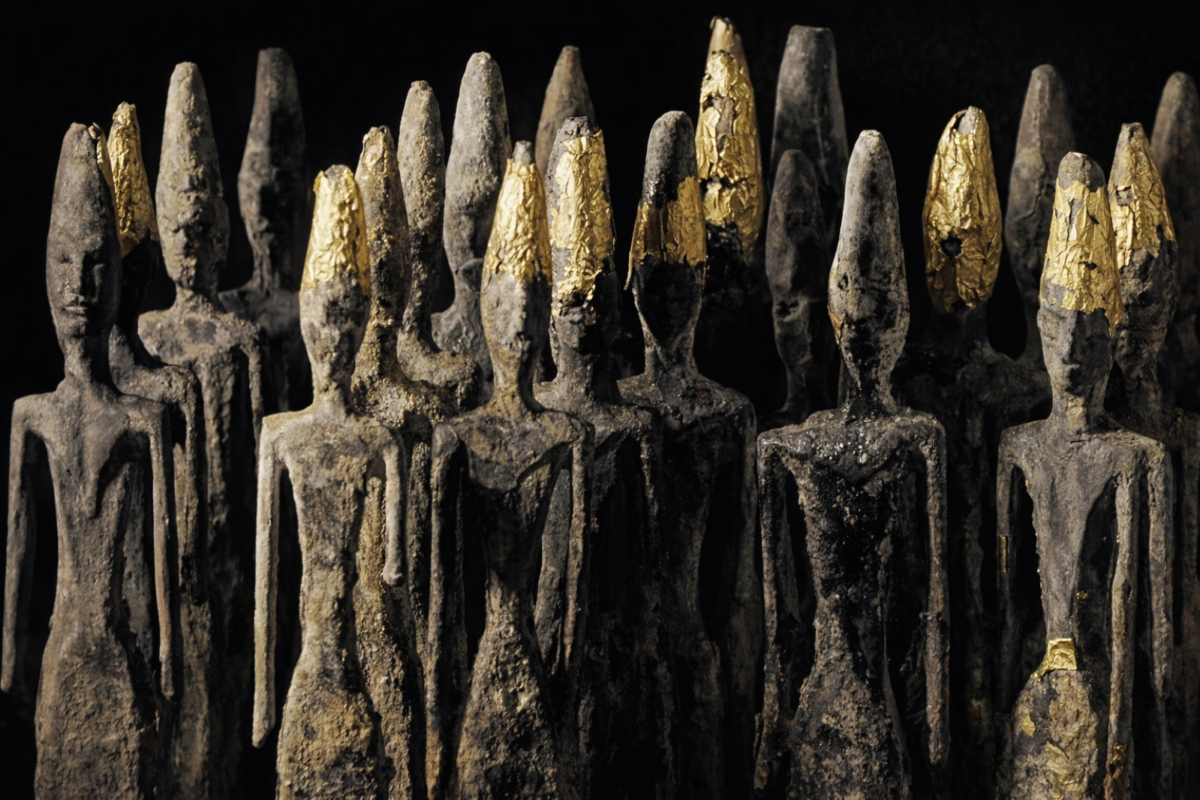
Two of my favorite scholars, Charles Hayek and Franck Salameh, are talking about identity in NOW Lebanon. Where, I am certain, another favorite of mine, Makram Rabah, was hovering in the background like a drone.
There is a measure of truth in what Charles wrote, and a great deal of justified anger in what Franck expressed, the kind that usually requires strong coffee and a weak tolerance for nonsense.
“If one narrative seeks to monopolize history in the name of resistance, another retreats into a past that never was. Though they differ in substance, both converge in effect: they fracture the present and foreclose the possibility of a shared national future.
This second tendency, circulating within certain fringe Christian political and cultural circles, is best understood not as a project of renewal, but as a symptom of decline. After centuries during which Christian communities, particularly the Maronites, played a central role in shaping Lebanon’s political and cultural life, they now find themselves grappling with a deep sense of displacement and loss.”
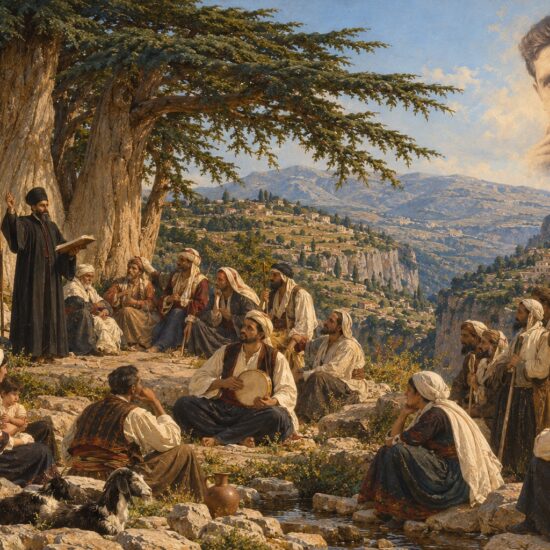
Charles’ parallelism between cross-national religious fantasies and national identity constructs can render any “Phoenicianist” – myself included – furious, and not in a subtle, academic way. The mere fact that some Christian, and even Druze, zealots draw on Phoenician roots to support sectarian self-identification mechanisms does not make all those who view Phoenician heritage as foundational to a modern Lebanese identity the equivalent of Hassan Nasrallah, for example, however tempting such shortcuts may be in our national pastime of exaggeration.
The most aggravating sentence, in my view, is: “they fracture the present and foreclose the possibility of a shared national future.” This may hold true for those who seek to render Phoenician exclusively Christian, or those who dismiss it entirely as a Christian fantasy alike, both camps equally committed to missing the point with confidence.
Whether either side chooses to cloak sectarian impulses beneath identity; or the rejection of it, is a different argument altogether, and one we seem determined to recycle indefinitely. At the end of the day, Phoenicianism, Islamism, or Arabism, like any cultural identity, are largely imagined constructs, some just marketed better than others.
While Charles is neither anti-Phoenicianist nor pro-Umma, but chose to dissociate from both equidistantly making him sound a bit like a closet resistant, or at least a man trying not to be invited to either dinner table. Franck is clearly in favor of the former and against the latter, and never shies away from making the point sometimes over harshly.
And, as you may have guessed, I tend to agree more with Franck; albeit from a slightly different angle, and with slightly fewer decibels.
Phoenicianism is, in essence, a non-religious identity; one that exudes the spirit of the land and its social locality. While Islamism, and Arabism, are a distant yet neighboring counter-locality, deeply intertwined with religion, despite repeated attempts to dress them in nationalistic or secular drab.
To Quantum-explain: Identity, like the universe, is what your brain makes it to be. And Phoenician is one hell of a picture to imagine. For both your past and your future, and possibly your next argument.
Charles Hayek wrote: https://nowlebanon.com/between-history-and-hallucinations-parallel-myths-and-a-fragmented-nation-part-ii/
Franck Salameh replied: https://nowlebanon.com/response-to-charles-hayeks-between-history-and-hallucinations/
Eli Khoury is the publisher of NOW and is a co-founder of the Lebanon Renaissance Foundation. He is on Twitter @eli_khoury.