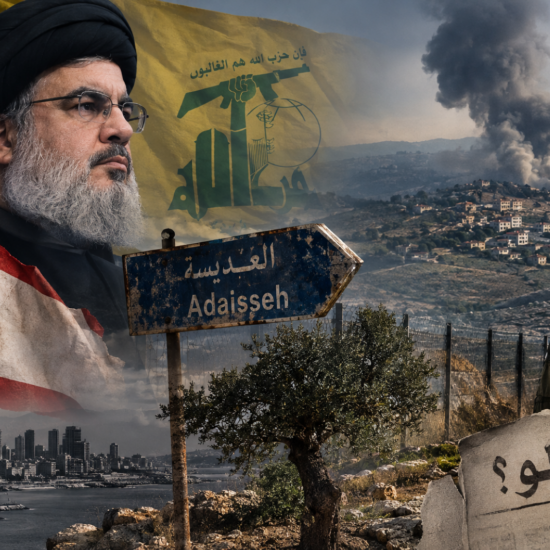
Once again, Hezbollah has openly confirmed an agreement with President Joseph Aoun. This is not speculation. In September 2025, MP Hassan Fadlallah revealed a presidential understanding designed to block international resolutions and undermine government efforts. Then, on Monday, Hezbollah official Nawaf Al Mousawi confirmed that what had been called a political compromise now faces shifting positions and is considered a deviation from legitimacy. These are not political whispers, they are declarations.
If this agreement exists, Lebanese citizens have the right to demand that the Quintet of ambassadors investigate immediately if President Joseph Aoun does not deny it clearly and decisively.
Silence at this level is complicity.
If such an agreement exists, Lebanon is no longer governed by its constitution, its institutions, or its obligations. Power is exercised outside public accountability, beyond the reach of oversight, and above the law. International commitments are not just ignored, they are actively obstructed.
Government authority is not weak, it is deliberately constrained. And if there is no such agreement, the refusal to clarify is equally damning.
Government authority is not weak, it is deliberately constrained. And if there is no such agreement, the refusal to clarify is equally damning.
President Joseph Aoun speaks in careful abstractions, acknowledging crises without naming the actors or explaining the decisions behind them. This is no longer prudence. It is a deliberate evasion that leaves the Lebanese people in the dark.
Yesterday, Ain Saade paid the human cost. An armed element hiding within a civilian building made the neighborhood a target. The victims were Pierre Moawad and his wife, Flavia. These were real lives with families and futures. They were killed because the state cannot control armed groups within its borders. When weapons operate outside state authority, civilian areas become corridors, shields, and targets.
This is the unavoidable reality. Yet even after blood is spilled, the official language remains indirect, sanitized, and evasive. This is not caution. It is institutionalized neglect.
Lebanon suffers not only from a sovereignty crisis but from a collapse of transparency.
Citizens no longer rely on their own government for answers. Many wait for statements from the Israel Defense Forces to understand what happens on their own soil. A sovereign nation depending on external military statements for domestic clarity, this is not dysfunction; it is inversion.
Information no longer flows from the state to the people. It flows around the state, often in spite of it. And in that vacuum, trust disintegrates.
Information no longer flows from the state to the people. It flows around the state, often in spite of it. And in that vacuum, trust disintegrates.
The Lebanese state survives on a structure of illusions: the illusion of sovereignty while decisions are shaped elsewhere, the illusion of authority while power is fragmented, the illusion of stability while civilians pay the price. The most dangerous illusion is that avoiding the truth preserves peace. It does not. Avoidance postpones collapse, and the cost rises with each passing day. Ain Saade is a result and living proof.
The hidden truth is no longer hidden. Lebanon is governed by arrangements beyond public scrutiny, where power exists without accountability, where decisions are made but not declared, and where reality is understood but not spoken. If there is an agreement, the Lebanese people have the right to know its terms. If there is none, the silence must end. Beyond agreements or denials, there is a deeper obligation: to speak plainly.
Nations do not collapse only from conflict. They collapse when reality can no longer be spoken out loud. Pierre Moawad and Flavia were not abstractions. They were not “incidents.” They were the human cost of ambiguity and evasion.
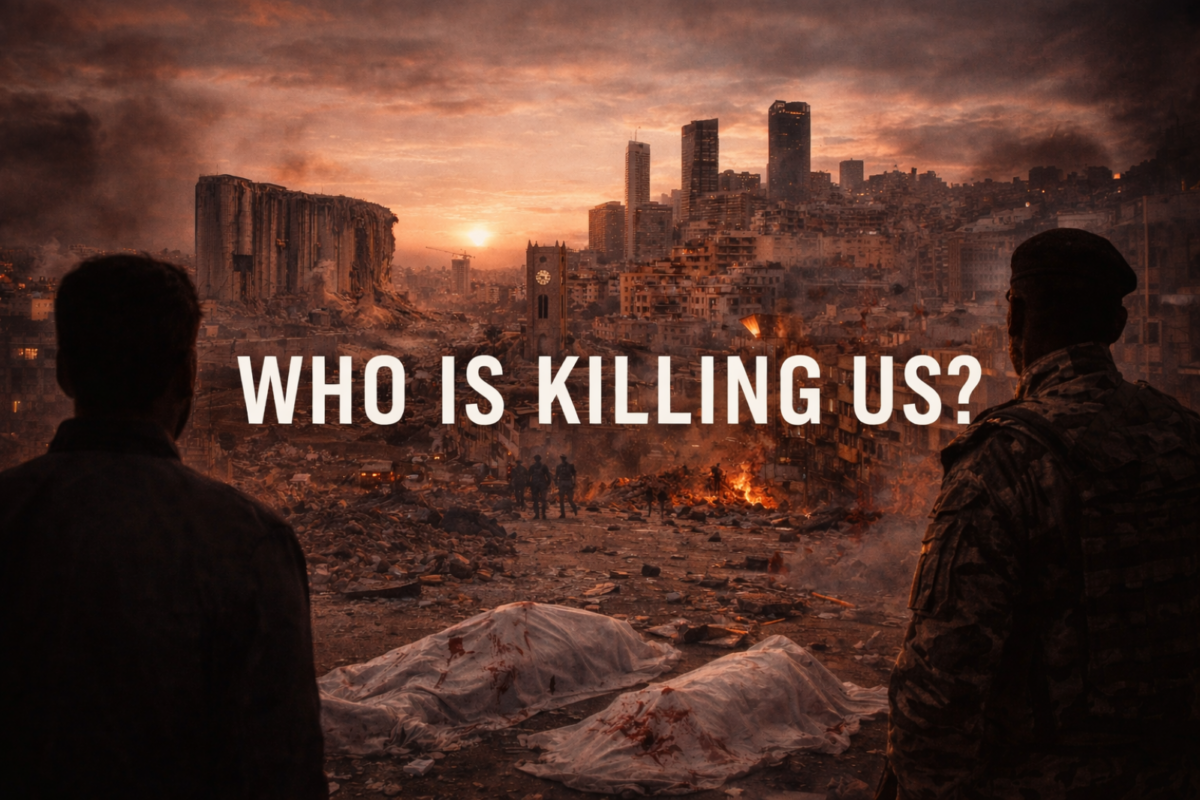
Until this system is confronted- not managed, not disguised, but confronted- the same question will grow louder with each passing day: Who is killing us?
Elissa E Hachem is a journalist and political writer specializing in regional affairs and governance. Former Regional Media Advisor at the U.S. State Department’s Arabic Regional Media Hub, with broad experience in strategic communication across government and private sectors.
The views in this story reflect those of the author alone and do not necessarily reflect the beliefs of NOW.