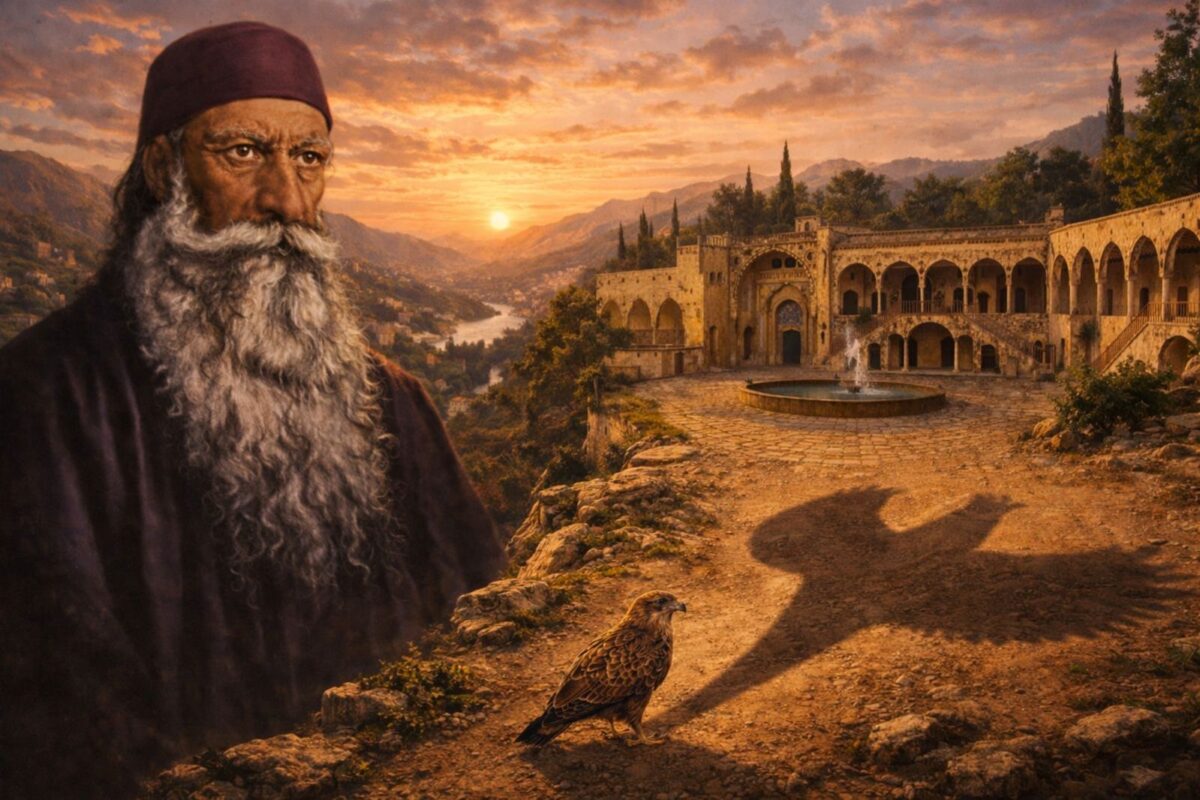
When Emir Bashir II was asked, during his exile, to describe the temperament of the Lebanese, he reached for a parable, the story of the Abu Far bird, a figure from the local cultural heritage that carries troubling resonances with the present.
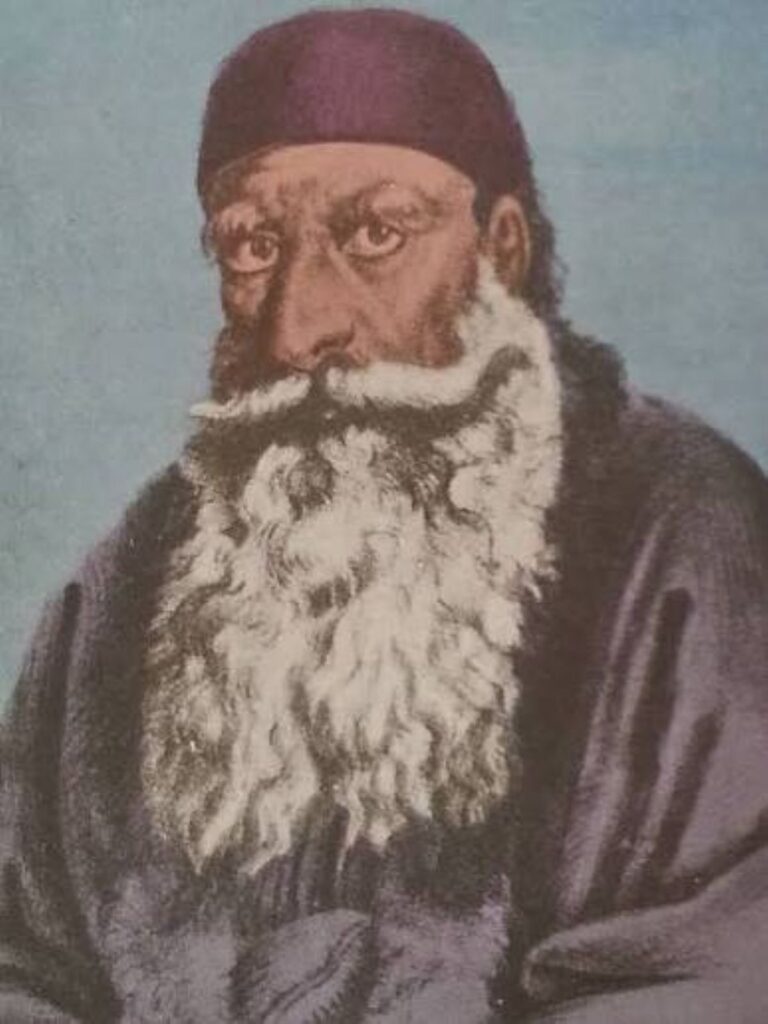
A painted portrait of Emir Bashir Shihab II, taken from an original drawing published in Charles Henry Churchill’s book entitled: “Mount Lebanon. A ten years residence, from 1842 to 1852”
In 1897, Rustum Baz (1819-1902), the last secretary of Emir Bashir Shihab II, sat down to write his memoirs. He had accompanied the Emir into exile as a young man and remained beside him for a decade, from 1840 to 1850, until the Emir’s death, serving as his trusted chamberlain. The memoir he produced stands as a significant source on the political and social life of the Mountain at the close of the Shihabi emirate era. In 1955, the historian Fuad Ephrem al-Boustani, one of the founders of the Lebanese University, published the text, giving it scholarly circulation.
Emir Bashir Shihab II had ruled Mount Lebanon from 1789 to 1840 through decades of turbulence. He was instrumental in the Egyptian interregnum under Ibrahim Pasha, and his politics deepened sectarian strife between Maronites and Druze, ultimately causing his own fall in the context of the Ottoman restoration and the broader Oriental Crisis of 1840. Offered a choice of exile between Malta and Istanbul, he spent eleven months on the island before relocating to the Ottoman capital with his Circassian wife, Husn-Jahan, his three sons and two daughters, and his secretary Rustum Baz.
It is in the chapter that Rustum dedicates to the governorship of Omar Pasha, the Serbian-born convert Ottoman field marshal appointed to administer Mount Lebanon following the dissolution of the Emirate in 1842, known in local historiography as al-Namsawi, that the episode at the heart of this reflection occurs. The Druze leadership of Mount Lebanon had submitted a petition to the Sublime Porte alleging abuses under Omar Pasha’s administration. The Ottoman authorities dispatched Khalil Pasha, an admiral holding the title of Damât by virtue of his marriage to one of the sultan’s daughters, on an inspection mission to Lebanon.
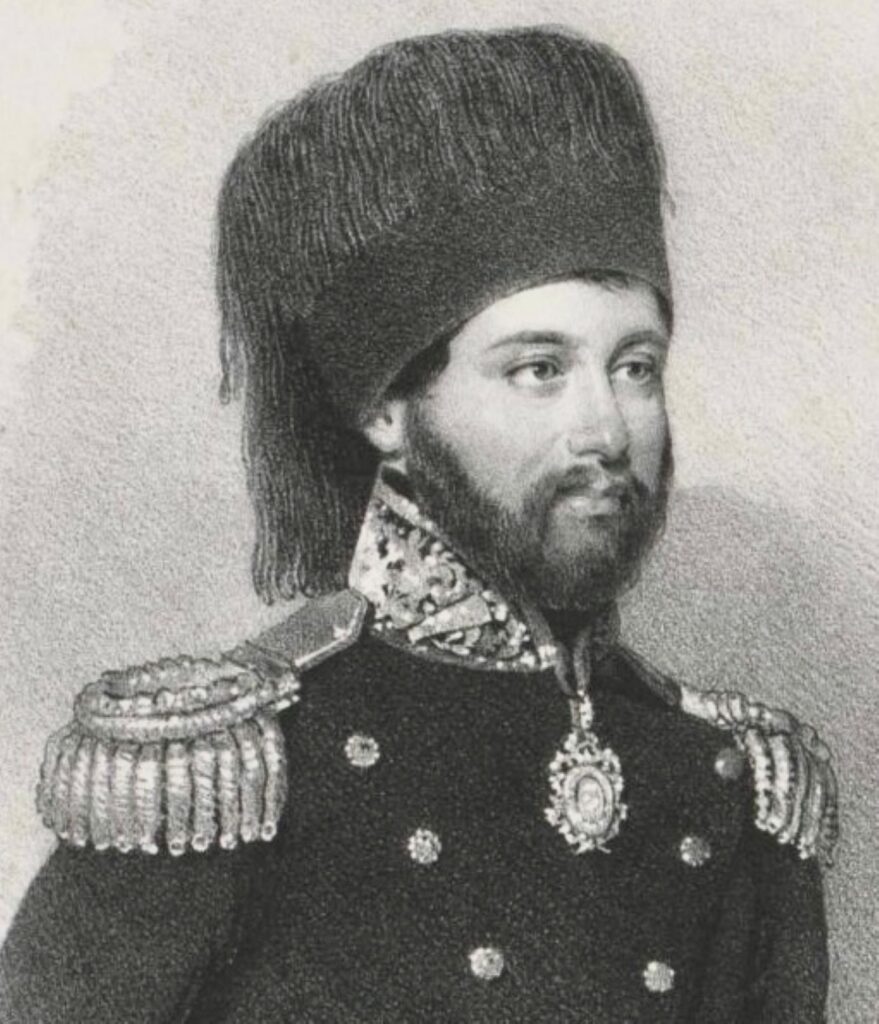
Portrait of Damat Gürcü Halil Rifat Paşa (1795-1856), Ottoman admiral and statesman sent to Lebanon on a mission in 1842.
Before his departure, he visited the Emir at his residence in the Samatya quarter of old Istanbul. Rustum records the exchange as follows:
“Before Khalil Pasha’s departure to Beirut, he came to visit Emir Bashir, who was at Samatya. The Emir received him with great honour. After the sherbets, sweets, and coffee were served, he said: ‘Your Highness the Emir, I am heading to Lebanon to examine its affairs. I have been told that you have ruled Lebanon for fifty-five years. Will you not tell me about its people, what are their characters and temperaments, and what is the means by which you have been able to govern for all this time?’
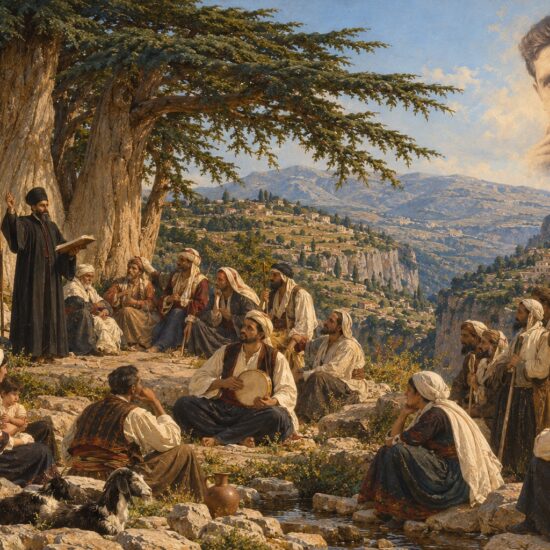
The Emir replied: ‘Effendim, it is true that I have ruled for all this time. Yet every three or four years, or more, they would rise up against me, and not once did they succeed. I would kill, hang, imprison, and beat without opposition until they were humbled. As for their temperament, allow me to offer Your Excellency’s government a fitting example. In Lebanon and elsewhere there is a bird called Abu Far. It is larger than a falcon. It perches on a tall tree, and when the sun rises, it looks at its shadow and finds it larger than it truly is, and says: “Today I must hunt a camel.” As the sun climbs higher, the shadow grows smaller, and it moves from a camel to something lesser, until the sun reaches its zenith and bears down directly upon it. It then looks at its shadow and finds it smaller than it truly is, and so it returns to hunting mice.’
When the Emir reached this point, Khalil Pasha was struck with admiration. He said: ‘Your Highness the Emir, I have understood more than a lengthy explanation could convey.’ When he rose to leave, the Emir accompanied him to the gate of the house.”
Translation by the author from the Arabic original. The text is preserved in the memoirs of Rustum Baz, pp. 108–109 in
منشورات الجامعة اللبنانية، قسم الدراسات التاريخية، مذكرات رستم باز، حقق نصها ونشرها مع مقدمة وحواش فؤاد افرام البستاني، رئيس الجامعة اللبنانية، بيروت 1955
The parable of the Abu Far bird, “Father of the Mice”, so named for his hunting habits, and possibly identifiable as the Long-Legged Buzzard, concerns a small bird of prey that mistakes the length of its shadow for the measure of its strength. It is well established in Lebanese cultural wisdom.
Emir Bashir’s warning to Khalil Pasha was, perhaps unknowingly, a warning to posterity. The bird that measures itself by its morning shadow and resolves to hunt camels, only to be reduced by the clarity of noon to hunting mice, is more than a parable, it is a diagnostic.
The Abu Far syndrome runs through Lebanese public life with remarkable consistency: communities, movements, and media ecosystems alike have demonstrated a recurring capacity to substitute a fictional reading of the past and the present alike, generating visions of weight and capacity that the actual balance of forces does not sustain.
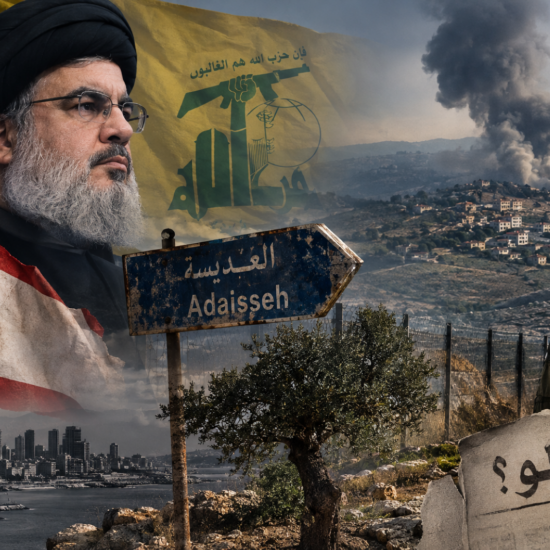
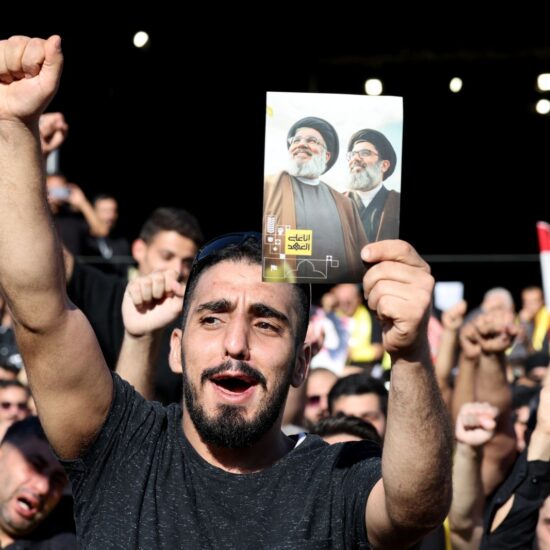
None of its manifestations is more consequential than Hezbollah’s instrumentalisation of history and violence. The movement’s ideological alignment with the Islamic Republic has generated recurring patterns of entanglement whose costs Lebanon continues to bear. The journalists and self-styled analysts who orbit this universe only deepen the damage. By feeding their audiences a steady diet of events packaged as surprise and achievement, they help sustain an ecosystem in which self-deception continually reproduces itself, intensifies the crisis, and offers nothing in return but meagre consolation amid disaster.
The challenge before Lebanon is no longer about the past. It is about the future: the country’s sense of purpose, the role of the republic, and at this moment, even its continued existence. One hundred years after the establishment of the Republic in 1926, the ethical imperative is to abandon the logic of Abu Far altogether and reckon with what Lebanon definitively cannot be: a front in the service of a foreign theocracy. The warning delivered in a quiet room in Istanbul 186 years ago has lost none of its force. A bird that does not know its size will not survive the midday sun.
Charles al-Hayek is a Public Historian and the founder of Heritage and Roots.
The views in this story reflect those of the author alone and do not necessarily reflect the beliefs of NOW.