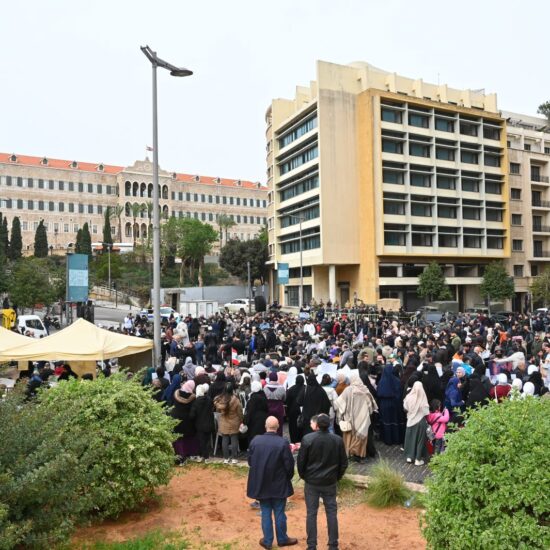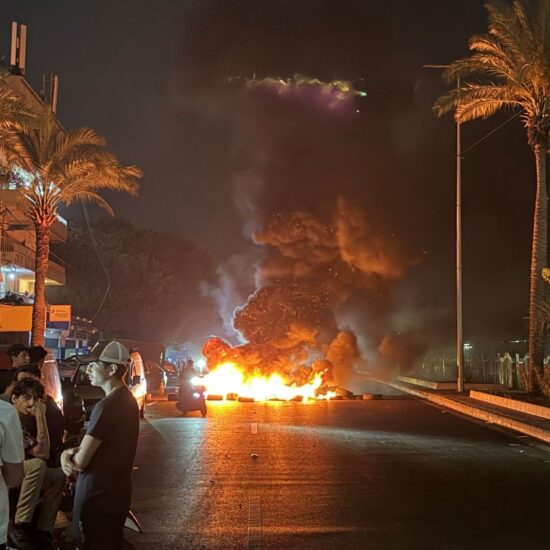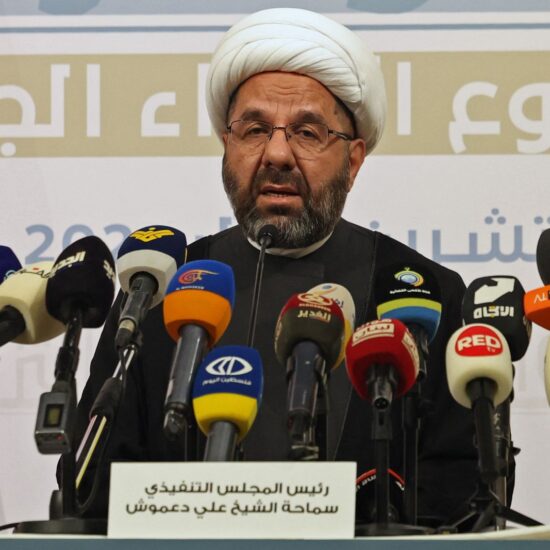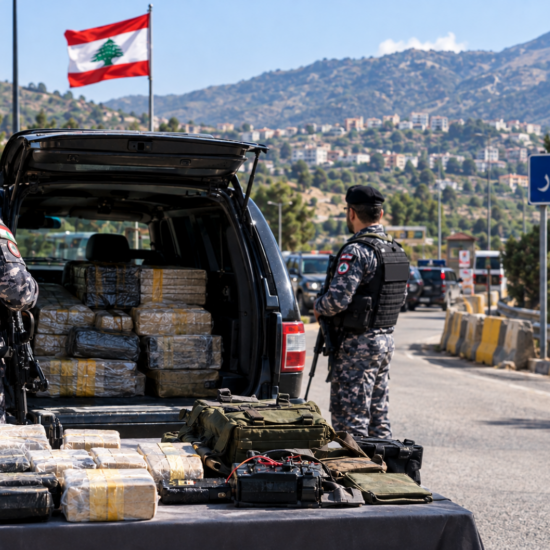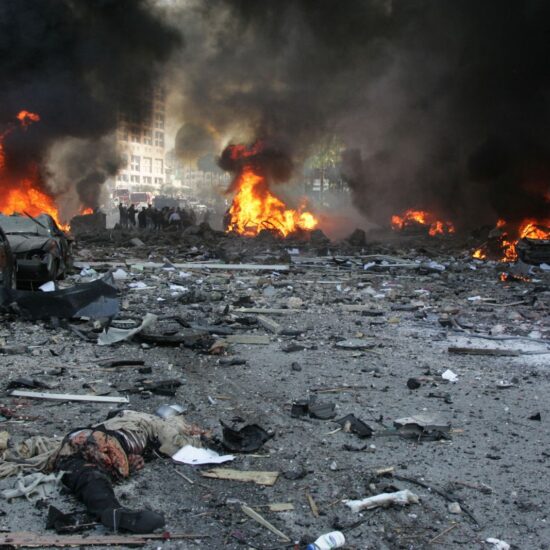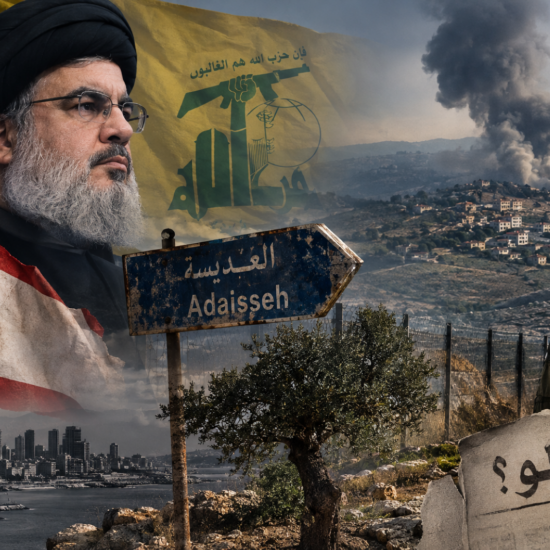
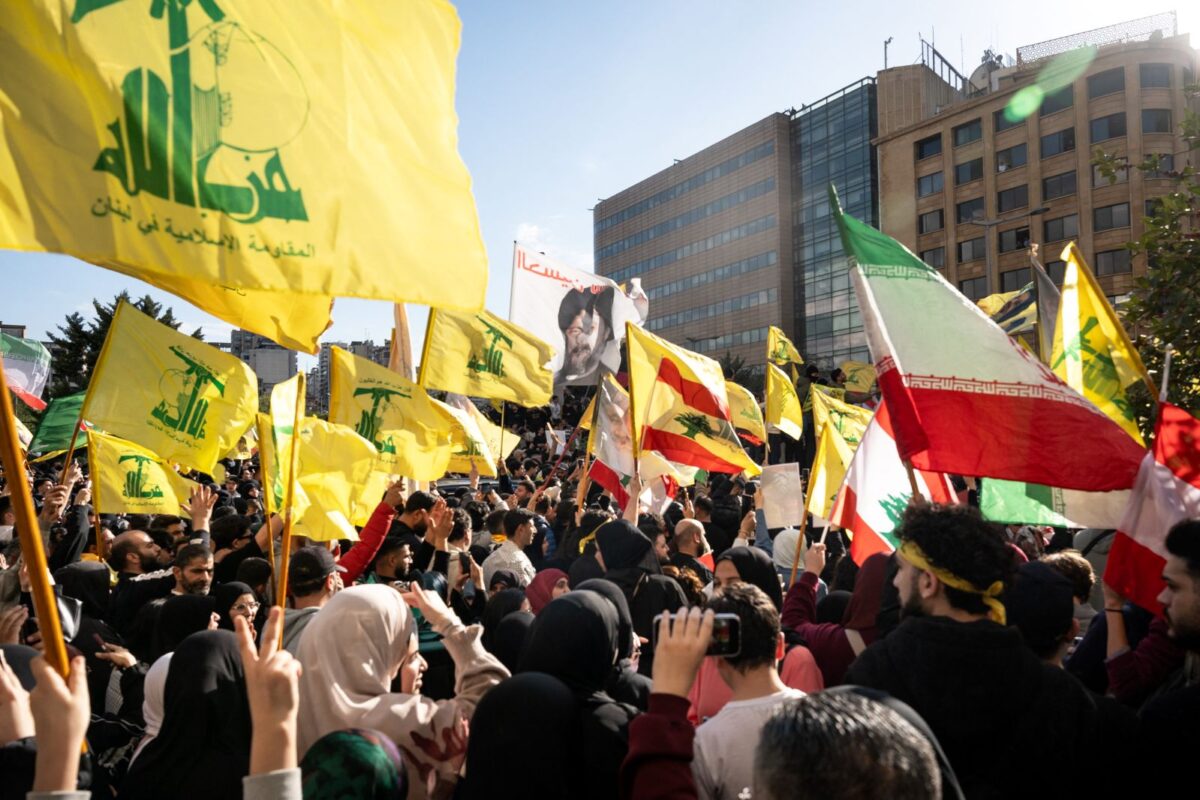
There is no hierarchy of lives, and therefore, one cannot compare the Beirut Port double explosion on August 4, 2020 (8/4), to the Israeli strikes on Lebanon on April 8, 2026 (4/8).
The Olympics of Destruction
On Wednesday, April 8, 2026, an equation emerged: 8/4 = 4/8.
Q: What is the purpose of equating the double explosion at the Port of Beirut with the Israeli bombings? And more importantly, who benefits from this equation?
A: The IRGC, through their local arm, Hezbollah.
The cataclysm of 8/4 – that of the Beirut port double explosion in 2020 – received tremendous worldwide condemnation.
8/4 also held Hezbollah globally responsible for having contributed the explosives that detonated in Beirut.
Despite rejecting the blame through public intimidation, crackdowns on protesters, threats to the judiciary, and disruption of investigations, Hezbollah was never able to change the emotional signature they were associated with to 8/4.
Univocally, public opinion looked at Hezbollah as the culprit. Data and behavior confirmed this.
If 8/4 was too poignant to alter, Hezbollah needed another cataclysm. One that they could spin into portraying themselves as victims. Higher numbers and stronger words would also help.
The Israelis offered the opportunity.
On 4/8, at 2:30 p.m. local time, fifty Israeli fighter jets carrying one hundred and sixty precision-guided munitions fired at one hundred targets across three geographic zones spanning 170 kilometers from Beirut’s southern suburbs to the Bekaa Valley to southern Lebanon – all within ten minutes and without warning.
Social media went ablaze.
At first, posts shared the death toll, the number of injured, and the number of displaced. Then, new posts comparing these figures with those of 8/4 started circulating.
Figures outline the magnitude of the 4/8 hits, and in comparison to those of 8/4, they help us understand the gravity and the damage, and resuscitate the worldwide attention that 8/4 garnered.
Language Enablement
But figures come with language, and language is not random.
On 8/4, there were victims.
On 4/8, there were martyrs.
Martyrs, a sacred term used to describe those who die in the pursuit of something bigger than them – faith, the motherland, etc.
Martyrs, a term foundational to the lexicon of Hezbollah, that Hezbollah uses to refer to those who fall while fighting; a term that Hezbollah overuses to refer to those who perish simply for being around a target or for just calling themselves Hezbollah supporters.
Martyrs, a term shrouded in sacrality, so sanctified that challenging its use backfires on the challenger. After all, which insensitive, inconsiderate person would argue about the qualification bestowed upon the more honorable people who sacrifice their lives in defense of __________?
Well, I do, and therefore, do many others.
Pseudo-sacred language cannot be used to stifle questions and to prevent (critical) thinking.
Moreover, recognizing Hezbollah’s political exploitation of the event does not reduce the gravity of the Israeli strikes or the suffering they caused.
No. Those who died on 4/8 are not martyrs. They are victims. Being killed or murdered does not automatically make someone a martyr.
Just like those who died in Ain Saade on April 5, 2026.
Just like most of the Lebanese who perished before them.
Hezbollah is a terror group,
And terrorism does not always involve central command.
Terrorism is also atmospheric, when you create conditions to mobilize a person to take up arms and carry out attacks.
The arm can look as benign as a social media post,
And emotions can turn anyone into this person.
Relative Spaces
While competing over destruction, the Islamic Revolutionary Guard Corps forget that figures and language alone are insufficient to spin an event.
8/4 had one epicenter. It targeted a specific location: the Beirut Port, and the radius around it included the city of Beirut and the Mediterranean Sea. While the sea absorbed the shock waves and the grain silos prevented the destruction of the western part of Beirut, the eastern part was devastated. The recorded damage includes 218 deaths, 7,000 injuries, approximately 300,000 displaced people, and an estimated US$15 billion in destruction.
4/8 had multiple epicenters. It targeted a variety of locations. So far, the recorded damage includes 254 deaths and 1,100 injuries. 4/8 added to the more than one million people displaced nationally since March 2, as well as to the $14 billion in infrastructure damage reported on March 24.
Thankfully and luckily, the distributed locations of 4/8 cannot be compared to the spatial containment and damage concentration of 8/4.
The Context
While 8/4 appeared to be an isolated event and a form of premeditated negligence, it was that Tuesday that preceded the Friday on which the Special Tribunal for Lebanon would deliver its final ruling on the assassination of Prime Minister Rafik Hariri and the other Lebanese individuals who were killed in the following months. Hezbollah members were already considered the culprits and executors. The verdict confirmed their guilt.
4/8 is part of a regional war aimed at ending the presence and influence of armed groups in the Middle East and cutting off their supply chains worldwide. These armed groups are dogmatically and logistically tied to the Iranian mullah administration, which has governed Iran since the Iranian Islamic Revolution of 1979. They are established, supplied, and led by the Supreme Leader of Iran (Mojtaba Khamenei, successor to his father Ali Khamenei, himself successor to Ali Khomeini), to whom they pledge unconditional allegiance. They are local branches of the Islamic Revolutionary Guard Corps.
To secure their continued presence in countries where they want to operate, the IRGC identifies weaknesses in the societies of the countries they want to infiltrate. They reach out to those susceptible to financial incentives and the illusion of affluence, and perform interest in local grievances, claiming they want to help “to support Muslims, to liberate Palestine, to oppose imperialism, to avenge someone, etc.” Over time and in the closed community environment that they foster, it becomes difficult to distinguish between the locals and the IRGC, and infiltration becomes complete. The local IRGC branch appears to be a purely domestic entity, while money, intimidation, and armament stifle internal and external opposition. Whether (useful) idiots or traitors, politicians become complicit and entangled in corruption, trafficking, and other crimes. The deep state is always infiltrated to the bone. When a new leadership takes office, it usually fails to enact reform, claiming to fear for “social cohesion.”
This is the case in Lebanon. Similar cases include Iraq, Yemen, and Syria. Since 1982, Hezbollah has infiltrated every aspect of Lebanese society through assassination, intimidation, and the sale of influence. They have taken over border control, the banking system, and the security apparatus; blocked institutional processes; established parallel economies; and even coerced non-Shia religious leaders, either directly or through proxies. The political equation was simple: corrupt politicians covered for Hezbollah’s arms, and Hezbollah covered for their corruption – before largely partaking in it themselves. Hezbollah speaks Lebanese, piggybacks on the Shia denomination that they control with intimidation, a welfare system (social benefits, schools, universities, medication, hospitals, etc.), only to liquidate those who play rebels. In 2024, Hezbollah launched rockets at Israel to “support Gaza military,” which led to a grounding Israeli retaliation, before Hezbollah capitulated in November 2024 under an agreement that they never upheld, granting Israel full access to liquidate and target. On March 2, 2026, Hezbollah fired six rockets at Israel to avenge the death of Khamenei, thus prompting Israeli strikes and destruction in many places throughout Lebanon because Hezbollah operatives and IRGC commanders chose to use Lebanese as human shields. Meanwhile, the Lebanese leadership chose not to implement its own cabinet decisions for fear of endangering “civil peace.”
It is therefore demonstrated that the ineptitude, impotence, unwillingness, or even blackmailing of Lebanon’s current and past leadership (presidents, speaker of parliament, and prime ministers) is bringing Israel to Lebanon. The current president, speaker of parliament and prime minister have agreed to terms they have not upheld, preferring that Israel do the job and eradicate Hezbollah.
This has led to 4/8,
And for all presented hereabove, 8/4 ≠ 4/8.
ARTICLE HIGHLIGHTS
The equation 8/4 = 4/8 is not a neutral humanitarian comparison. It is a political framing operation that tries to transfer the moral weight, symbolic force, and international resonance of the Beirut port double explosion of August 4 onto a different event with different causes, spatial dynamics, and political functions.
The result is not clarity but narrative laundering: a recoding of victims into “martyrs,” of dispersed strikes into a singular national trauma, and of Hezbollah’s long political burden into a new claim of sanctified victimhood.
Those killed on 4/8 should first be recognized as victims; elevating them automatically into ‘martyrs’ is a political act, not a neutral description.
April 8 may be devastating, deadly, and politically consequential. But it is not August 4. To equate them is not analysis. It is narrative engineering.
The views in this story reflect those of the author alone and do not necessarily reflect the beliefs of NOW