
Lebanon’s ambassador to Washington, Nada Hamadeh Moawad, and her Israeli counterpart Yechiel Leiter will sit at the negotiating table in Washington on Tuesday. The meeting is meant to prepare for future direct negotiations between Israel and Lebanon, tackle the issues of Hezbollah’s armed wing, and establish possible ways towards peace between the two countries.
“This is something that we wouldn’t have thought was possible a few years back,” Hussain Abdul-Hussain, research fellow at the Foundation for Defense of Democracies, told NOW. A lower-level civil track last year, led by Simon Karam on the Lebanese side, helped lay the groundwork. But the upcoming talks mark a higher-level, official step, with Moawad reporting to President Joseph Aoun. “This is as official as it could get now,” Abdul-Hussain added.
“Our country paid a very high price,” coordinator of the Greater Lebanon State Gathering, Hayat Arslan, told NOW. “We are hurt, we are suffering, we are bleeding,” she added. The end of the fighting depends on discussions, compromises and an agreement, she argued. Besides the toll that the war has taken on Lebanon, she remains optimistic: “No wars can last forever.”
Lebanon is entering the talks with an important signal to the United States and Israel. Moawad is described not only as a modern and competent woman, but also as someone who “represents a broad segment” of Lebanese society, former Lebanese parliamentarian Basem Shabb told NOW. Beirut’s ambassador to the U.S., he added, embodies a liberal and modern vision of Lebanon, in contrast to Hezbollah’s more conservative and rigid image.
A new era of Lebanese politics
Direct talks with Israel were long considered impossible in Lebanon. The government “broke a taboo. And once the taboo is broken, there’s no going back,” Shabb said. Public attitudes toward Hezbollah have also shifted during the war, creating political space for diplomacy.
The Lebanese government has emphasized it alone holds the mandate for negotiations and has distanced itself from Iranian involvement. Foreign Minister Youssef Raggi said on Monday the talks “reinforced the separation between the Lebanese file and the Iranian track.”
Analysts say this reflects that Beirut is asserting authority over Hezbollah and reducing Iranian influence. “There’s no reason why Lebanon should be under Iranian tutelage,” Abdul-Hussain said.
Lebanon’s decision to negotiate with Israel was also largely driven by Lebanese Prime Minister Nawaf Salam. Historically, it has been the Christians who have been closer to Israel, Arslan said. With a major Sunni figure standing up for the talks, there is a new dimension. “Now it’s a political stand, and no more the sectarian direction,” she added.
The U.S. role in the talks
The U.S. administration is backing the negotiations, as the talks will be held in its capital, with the U.S. ambassador to Lebanon, Michael Issa, also present. The current administration has made clear that it is ready to talk to “the Lebanese state as an adult. This hasn’t been the case in a very, very long time,” Abdul-Hussain said.
“In the past, everyone negotiated with Hezbollah,” Shabb said, adding that the situation is different now. Israel likewise has made clear it does not want to negotiate with Hezbollah.
“In the past, everyone negotiated with Hezbollah,” Shabb said, adding that the situation is different now. Israel likewise has made clear it does not want to negotiate with Hezbollah.
Several key players are of Lebanese origin, which means that there is empathy inside the U.S. administration for Lebanon, Shabb argued. A prominent example is Issa, who will also take part in Tuesday’s talks. He was born in Lebanon, before moving from Paris to the U.S. But Issa is not alone. The U.S. ambassador to Turkey, Tom Barrack and Trump’s senior advisor on Arab and Middle Eastern Affairs, Massad Boulos, were also born in Lebanon.
Hezbollah’s weakened role
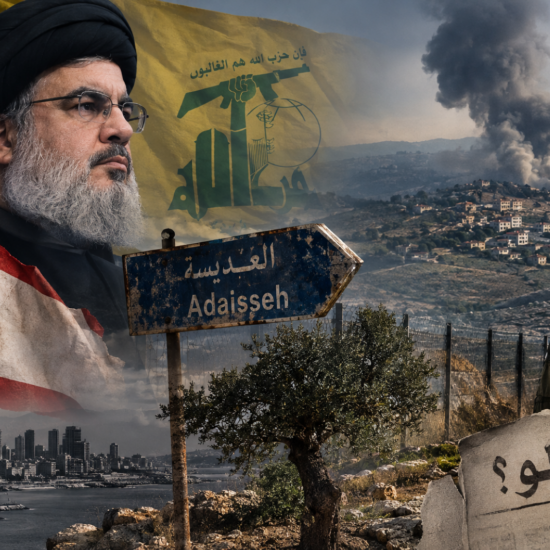
Hezbollah’s entry into the war about a month ago has further underlined that the militia is doing Iran’s bidding and not the Lebanese interest, experts analyze. “Hezbollah is an important card in Iran’s hand,” Arslan said.
Many “now understand that Hezbollah is not fighting the Lebanese fight, but the Iranian one,” Abdul-Hussain said. The talks also underline the demise of the militia’s power. “If Hezbollah really had full control, this meeting would not be happening,” he argued.
Lebanon made clear that it does not want to stand under the shield of Iran, as Tehran has demanded that the ceasefire also includes Lebanon.
With this move, Lebanon made clear that it does not want to stand under the shield of Iran, as Tehran has demanded that the ceasefire also includes Lebanon. “The Lebanese issue is separate from the Iranian-Israeli confrontation,” Shabb said.
An essential part of the talks will be the disarmament of Hezbollah — a topic that Israel has been focusing on and one that is also in the interest of the Lebanese government.
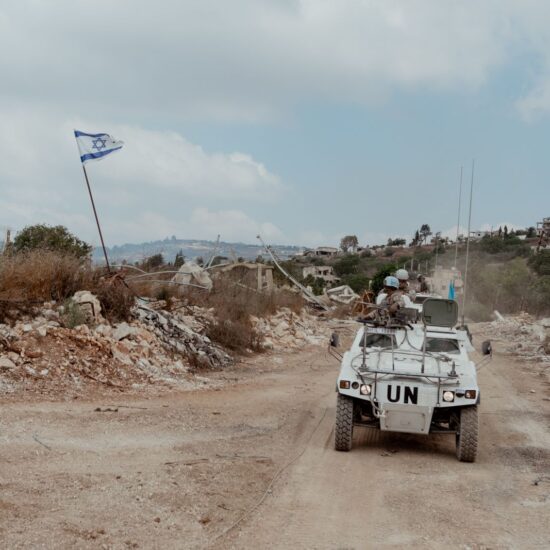
Israel is currently setting up a security zone along the border on Lebanese land, systematically destroying villages in the area. This could pose a serious problem for Lebanon. “We don’t want to lose a meter,” Arslan said. Moreover, Lebanon cannot accept peace if the country is losing its rights and its resources, she added.
Instead of Israeli presence in the South, she advocated for a stronger role of the Lebanese military. “The only accepted military power is the Lebanese army,” and therefore should be present there.
Destroying Hezbollah’s military wing is essential for establishing peace in the South, she argued. “We cannot let Hezbollah dominate the South and then ask why Israel is doing this.”
According to Abdul-Hussain, Israel’s buffer zone will be dependent on Hezbollah’s disarmament. “If Lebanon wants its land back, it has to disarm Hezbollah,” he said. It is unlikely that the militia will give up its arms voluntarily. For the disarmament to be successful, broad consent is essential, Abdul-Hussain argued.
“You have to get every Lebanese who does not support Hezbollah on board to demand that Hezbollah surrenders its arms to the Lebanese army”, Abdul-Hussain argued. This includes political heavyweights like Speaker of Parliament Nabih Berri and the Jumblatt family.
The Shia community inside Lebanon however cannot be sidelined in the process, Arslan underlined. “There is a big part of the Shia who are not Hezbollah,” and those people identify as Lebanese, above anything else, she added.
This community, however, is now facing strong displacement amid the war. But according to the human rights activists, this is not acceptable. “People need to go back to their houses… we don’t want to lose the South,” she added.
The actions required for credible commitment
The prospect of the negotiations is fragile, but their outcome could be historic. But Lebanon still faces an essential problem.
“Where Lebanon is still lagging behind is its actions”, Abdul-Hussain said. Since the onset of the war, the government in Beirut made several decisions, which are yet to be implemented. Among them is the expulsion of the Iranian ambassador as well as the dismantling of Hezbollah’s military wing. Moreover, Abdul-Hussain said Beirut should also be made weapons-free.
While the talks are historic, the relations between Israel and Lebanon are still at the early stages. Hezbollah has actively been trying to underline these diplomatic ambitions. “This is not a one-way street. It can be reversed at any point,” Abdul-Hussain warns.
On Sunday, Israeli Prime Minister Benjamin Netanyahu said that the war will go on — shedding grim light on the prospect of a quick resolution. “I’m expecting it in weeks and a few months… but I’m afraid it will happen under fire,” Hayat Arslan said. Nevertheless, the continuous war does not destroy the possibility of negotiations, she argued. “Peace will not be implemented without war. It is always after war — peace is the contrast of war.”
Nevertheless, the Lebanese government is on its way to making history.