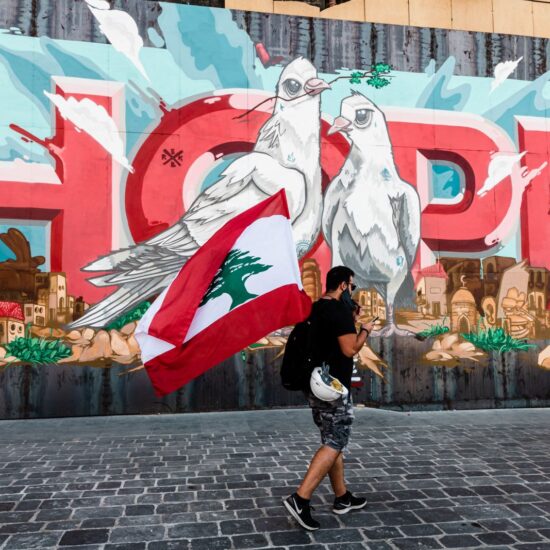
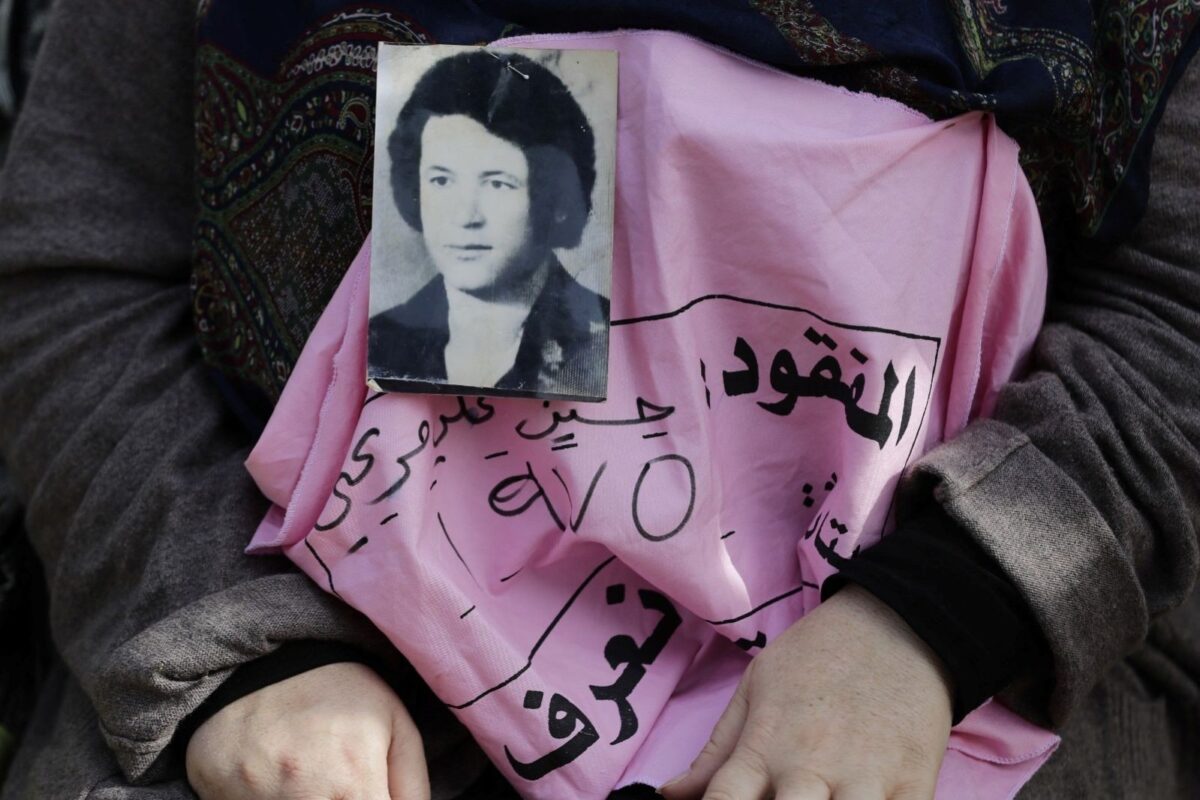
Yesterday was April 13. In Lebanon, dates carry a weight that calendars elsewhere are spared. This one marks fifty-one years since the beginning of what we euphemistically call the Lebanese war, or the civil war, as though it were merely a political dispute that got out of hand, rather than the organized fracturing of a society long held together by denial and convenience. We mark it every year. We almost never learn from it.
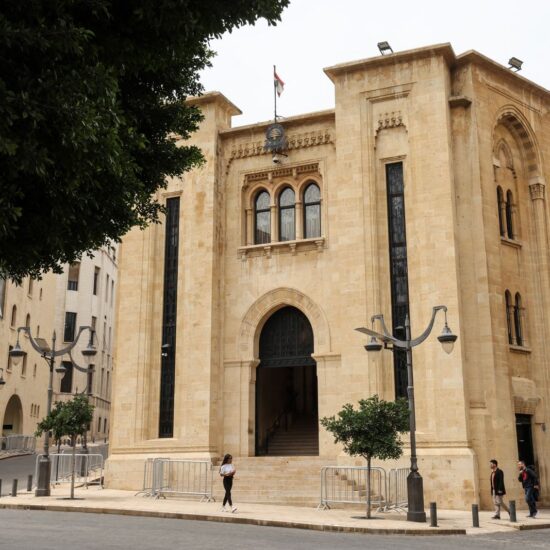
This year, April 13 arrived while Bint Jbeil was under siege, while Israeli strikes had killed over two thousand Lebanese since March, while hundreds gathered outside the Grand Serail last Saturday to call Nawaf Salam a Zionist, and while the Lebanese state sat in Washington preparing to negotiate the terms of a sovereignty it has never fully possessed. The symmetry is not accidental. It is structural.
Lebanon does not repeat itself. It sediments. Each catastrophe does not replace the last. It layers over it, and we build the next crisis on top of the accumulated weight of all the ones we never resolved. The civil war did not end in 1990. It was suspended. What we are living through now is another chapter in the same unfinished story, written by different actors but governed by the same pathology: the impossibility of a state that cannot monopolize force negotiating with powers that know it cannot.
The protests outside the government palace deserve an honest reading, not comfortable dismissal. The people who took to the streets waving Hezbollah flags, carrying Nasrallah’s portrait, and calling the prime minister a traitor are not simply manipulated. They are in pain. They have lost people. They have lost homes. And they have been formed, over a generation, by an organization that taught them to interpret that pain as righteousness, loss as martyrdom, and the state as the enemy. When Hezbollah spent thirty years replacing the school, the hospital, the employer, and the horizon of meaning for an entire community, it did not merely build a militia. It built a world. You cannot bomb a world out of existence. Military defeat does not dismantle a cosmology.
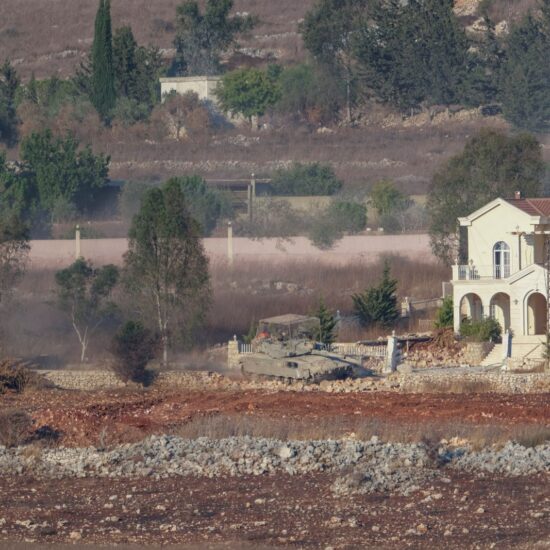
This is what most commentary misses. Hezbollah can lose the war and win the culture. The rockets are degraded. The command structure is shattered. Ground in the south is being taken. But the young man who grew up in Dahiyeh with Hezbollah as his only frame of reference does not emerge from the rubble as a liberal democrat. Trauma does not dissolve identity. In a closed ideological system, suffering functions as confirmation. His radicalization is not reversed by bombardment. It deepens.
But here is what the protesters outside the Grand Serail have wrong: the betrayal they feel is real, and its author is not Nawaf Salam. It is Tehran. In Islamabad last week, Iran negotiated a ceasefire for itself and left Lebanon outside the parentheses. The language about Lebanon being “an inseparable part of the agreement” was posturing that collapsed under the first serious American pressure. Hezbollah, reading the room, hastily shifted: indirect negotiations, Iran should not speak for Lebanon, a language of strategic autonomy that no one believes. That is not flexibility. It is an organization processing abandonment in real time and searching for language that preserves dignity while the ground beneath it is literally being taken.
The anger on the street is misdirected. The surrender was not in Beirut. It was in Islamabad.
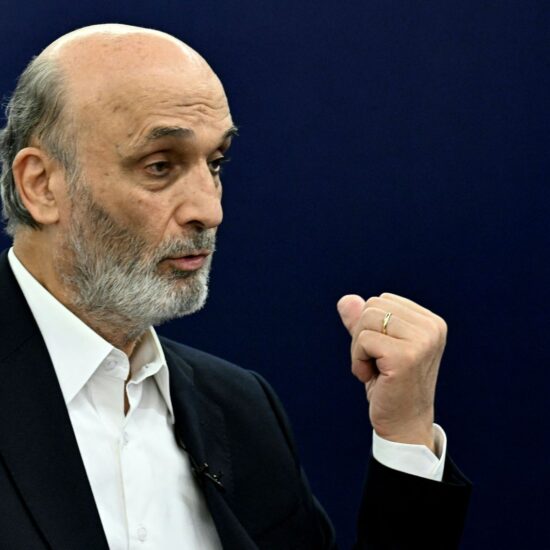
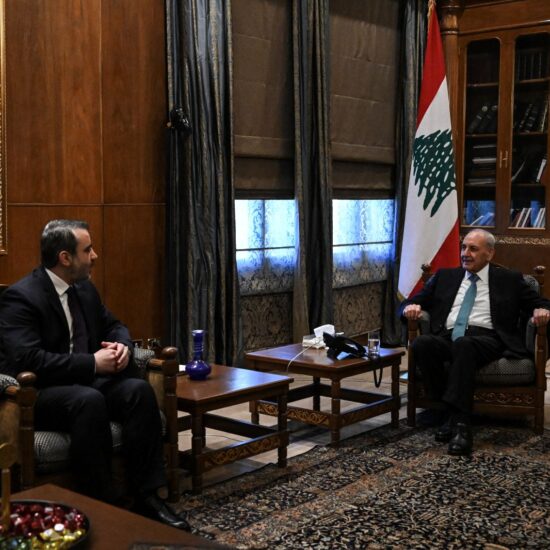
Meanwhile, the Lebanese state finds itself in a trap it has occupied before. Nawaf Salam is being asked to negotiate away weapons he does not control in exchange for a ceasefire Israel has refused to grant, before a community that considers his presence at the table a form of treason. He is negotiating in the passive voice, representing a sovereignty that does not fully exist. Israel knows this. The refusal to grant even a symbolic pause before Tuesday’s talks is not an oversight. It is strategy. Keep the state unable to deliver, ensure that whatever framework emerges cannot be implemented, and the resulting failure belongs to Lebanon, not to the party that continued bombing throughout the negotiations.
This is a script Lebanon has read before. Every agreement it has entered under fire, from the May 17 Accord to Taif, has either been imposed or eventually hollowed out by the gap between what the Lebanese state signed and what it could actually enforce. Tuesday in Washington will produce, at best, a process. Israel will call it historic. Lebanon will call it a beginning. The bombs will continue to fall in the south while diplomats shake hands elsewhere on the map.
What, then, is the future? Not civil war in the 1975 sense. Lebanon no longer has the factional symmetry that 1975 required. What it has is something arguably more corrosive: slow, layered degradation. A Hezbollah militarily broken but culturally undefeated. A state that gains nominal sovereignty over the south without the institutional capacity to exercise it. A Shiite community that is simultaneously the most victimized and the most politically isolated it has ever been, mourning losses that the rest of the country is not permitted to fully witness, holding a grief that has no political container.
And a generation of Lebanese youth across all communities, not just Shiites, carrying accumulated trauma with no horizon that makes sense. That is the wound beneath the wound.
April 13, 1975 did not cause Lebanon’s collapse. It revealed a collapse already structurally underway. The question we should be asking today, on this anniversary, is not whether Lebanon will survive. Lebanon always survives. The question is what kind of thing it becomes in the surviving. What gets built on top of this new layer of sediment. What our children will have to excavate when their turn comes.
So far, the answer our generation has given them is the same one we inherited: not yet. Not now. We will deal with it later.
Later is becoming a very heavy word.
Ramzi Abou Ismail is a Political Psychologist and Senior Research Fellow at the Institute for Social Justice and Conflict Resolution at the Lebanese American University.
The views in this story reflect those of the author alone and do not necessarily reflect the beliefs of NOW