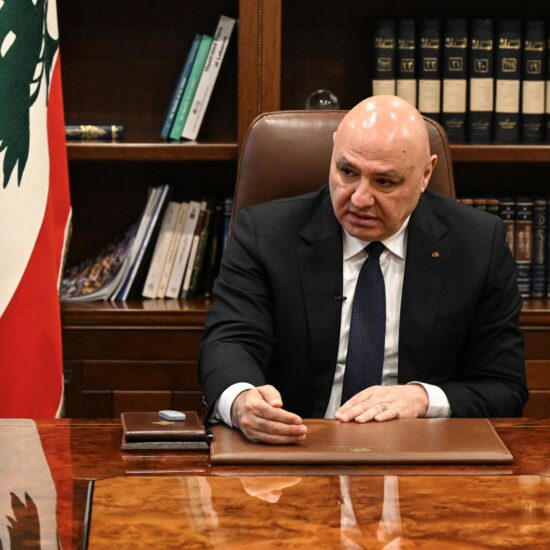

BEIRUT| Secretary of State Marco Rubio has already spoken with Lebanese President Joseph Aoun, but an earlier push, reportedly backed by President Donald Trump, to arrange a direct or trilateral call between Aoun and Israeli Prime Minister Benjamin Netanyahu did not materialize, exposing both the limits of U.S. pressure and Lebanon’s internal fault lines.
Why it matters:
The failed attempt at a direct call underscores that Washington is not just seeking de-escalation, it is actively testing whether Lebanon is willing to engage with Israel directly under fire, without clear guarantees of a full ceasefire.
What’s happening:
According to available information, the proposal for a direct or trilateral call was relayed to Baabda through a narrow, informal U.S. channel. Internal logistical steps at the presidency, including canceled appointments, suggested preparations were underway.
But Parliament Speaker Nabih Berri was also informed, and firmly rejected the move, revealing a clear internal divide over the risks of direct engagement with Israel while military operations continue.
Between the lines:
The U.S. objective appears to be testing the possibility of a rapid ceasefire, even if limited in duration or geography, followed by a technical negotiation track.
The catch: no binding Israeli commitment. On the contrary, Israeli leaks point to continued operations up to the Litani River. In practice, Lebanon is being asked to enter a political process while Israel retains full operational freedom.
Behind the scenes:
The handling of the proposal is as telling as its substance. Lebanese officials have denied receiving a formal notification, while U.N. Special Coordinator Jeanine Hennis-Plasschaert has denied any role, suggesting the effort is being managed through a tight U.S. backchannel, outside traditional international frameworks.
The regional angle:
Berri’s parallel call with Iranian Parliament Speaker Mohammad Bagher Ghalibaf signals Tehran’s direct monitoring of developments, underscoring how any de-escalation path remains intertwined with U.S. pressure, Israeli strategy, and Iranian influence.
The bottom line:
This is less of a diplomatic breakthrough than a pressure test. Rubio’s call with Aoun confirms active U.S. engagement, but the collapse, at least for now, of the Trump-backed idea of a direct Aoun–Netanyahu call highlights the political constraints in Beirut. With no guarantees, ongoing Israeli operations, and deep internal divisions, the proposal remains a high-risk maneuver rather than a clear path to de-escalation.