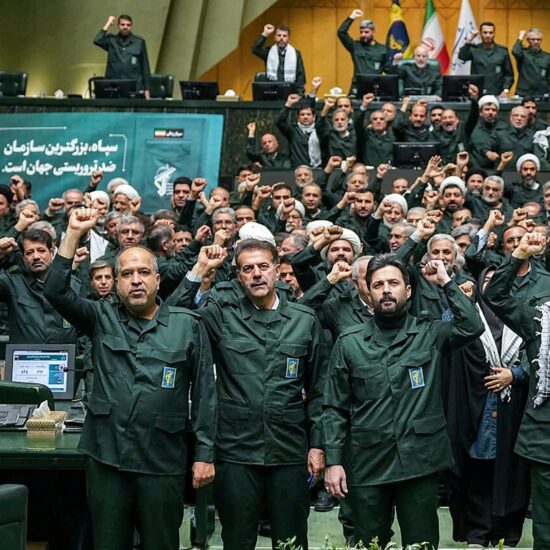
In targeting campuses, the IRGC reveals a deeper conflict over knowledge and power.
At a moment when the Middle East is already engulfed in fire, the latest threat issued by Iran’s Islamic Revolutionary Guard Corps reveals something deeper than escalation—it reveals fear.
Fear of ideas. Fear of openness. Fear of education itself.
The IRGC’s warning that it may target universities across the region is not merely a military threat. It is a declaration of war against knowledge.
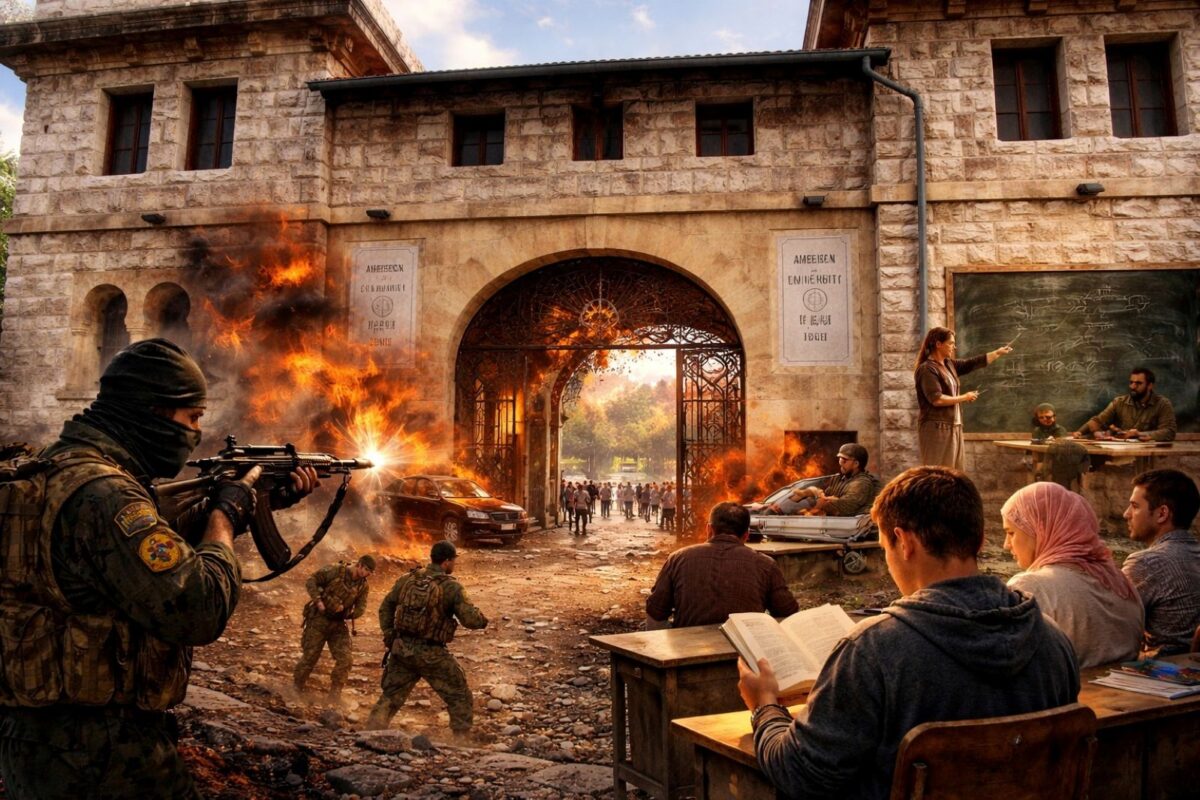
Let us be clear: universities are not military installations. They are not bases. They are not command centers. They are spaces where the future of this region is still being imagined—often in defiance of the very forces now threatening to destroy them.
Institutions like the American University of Beirut are not abstractions. They are living ecosystems of diversity, argument, and possibility. They educate students regardless of race, ideology, religion, or class. They host debate instead of dogma. They produce citizens, not subjects.
Institutions like the American University of Beirut are not abstractions. They are living ecosystems of diversity, argument, and possibility. They educate students regardless of race, ideology, religion, or class. They host debate instead of dogma. They produce citizens, not subjects.
And this is precisely what makes them intolerable to regimes and militias that survive on uniformity and fear.
If this threat still sounds abstract, Lebanon offers a very concrete answer.
When violence has struck—whether through targeted attacks, bombings, or moments when entire neighborhoods of Beirut were thrown into panic—people did not run toward militias. They ran toward institutions. They ran toward hospitals. They ran toward campuses like the American University of Beirut.
AUB was not a symbol in those moments; it was a refuge. Its medical center opened its doors to the wounded without asking about affiliation, ideology, or allegiance. Its campus became, as it has so often in Lebanon’s darkest hours, a space where life was preserved while everything outside seemed intent on destroying it.
This is what is now being threatened.
And here lies another uncomfortable truth: these universities are not foreign enclaves detached from their societies. They are deeply embedded within them. Their faculty, staff, and employees reflect the full spectrum of the region—including individuals who support Hezbollah and other political movements.
To suggest that such institutions can be collectively punished—targeted as if they were military assets—is not only morally bankrupt, it is intellectually absurd. It would mean criminalizing an entire community of educators, doctors, and workers simply because of who they are or what they believe.
It would mean turning universities into battlefields for ideological revenge.
And if the contradiction still needs spelling out, consider the most striking image of all:
A father who threatens to bomb universities, and a son who builds his career inside one, Naim Kassim’s son is a case in point.
Across the region, this is not a metaphor—it is a reality. The same political leadership that denounces so-called “American” universities and now places them in the crosshairs has, within its own inner circles, families who have benefited directly from these institutions. Sons are educated, mentored, and even employed within the very academic spaces their fathers publicly vilify.
What does it mean when a father speaks the language of destruction, while his son lives the language of knowledge?
It means the rhetoric is hollow.
It means that even those who claim to reject these institutions ultimately rely on them to secure a future they cannot otherwise provide.
And perhaps the deepest irony of all is this: these universities have educated generations across the region—including many who would later support the very political projects that now threaten them. That is the nature of open education: it does not indoctrinate; it empowers.
It gives even its critics the tools to think.
But the IRGC does not build thinkers. It builds fighters. It does not produce opportunity—it produces death.
This is why the language must be stripped of euphemism.
What we are witnessing is not the behavior of a state defending itself. It is the behavior of barbarian hordes standing at the gates of knowledge—terrified of what lies inside.
What we are witnessing is not the behavior of a state defending itself. It is the behavior of barbarian hordes standing at the gates of knowledge—terrified of what lies inside.
Because universities expose a simple truth: there is another way to live.
A student sitting in a classroom in Beirut, Doha, or Abu Dhabi represents something fundamentally dangerous to the IRGC’s worldview. That student is not bound by sect, militia, or imposed ideology. That student has the capacity to question, to imagine, to dissent.
And that is far more threatening than any missile.
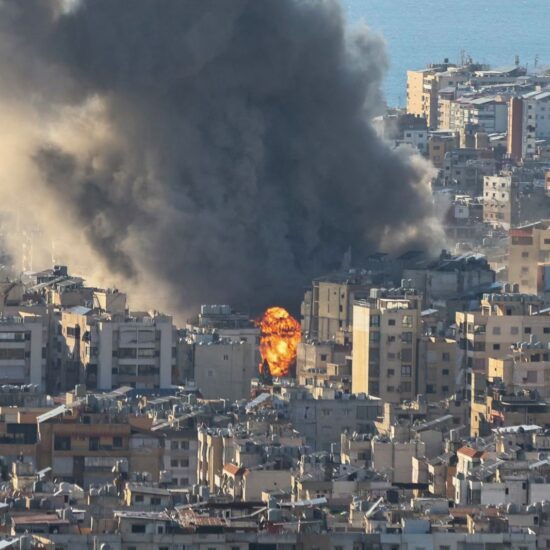
Across the region today, the evidence is undeniable. Infrastructure is targeted. Cities are turned into battlegrounds. Civilian life is reduced to collateral damage.
And now, universities—among the last sanctuaries of civilian life—are being placed on that list.
This is why the current conflict must be understood for what it truly is.
This is not simply a war between Israel, the United States, and Iran.
It is a far more consequential struggle.
It is a war that the Middle East itself must win.
A war against a machinery of violence that presents itself as resistance but operates as a guardian of death and destruction.
On one side are institutions—imperfect, contested, but ultimately rooted in the belief that knowledge, dialogue, and human dignity matter. On the other side stands a project that has consistently chosen coercion over coexistence, indoctrination over education, and destruction over creation.
This is not a geopolitical abstraction. It is a civilizational divide.
The Middle East does not need more militias. It does not need more “guardians” who, in reality, guard nothing but cycles of ruin.
The Middle East does not need more militias. It does not need more “guardians” who, in reality, guard nothing but cycles of ruin.
What it needs—desperately—is more universities, more classrooms, more spaces where young people can imagine a future that is not defined by war.
Because in the end, the real threat to those who rule through fear is not a foreign army.
It is a student with a book.
And that is a battle they cannot win.
This article original ran in Elaf
Makram Rabah is the managing editor at Now Lebanon and an Assistant Professor at the American University of Beirut, Department of History. His book Conflict on Mount Lebanon: The Druze, the Maronites and Collective Memory (Edinburgh University Press) covers collective identities and the Lebanese Civil War. He tweets at @makramrabah