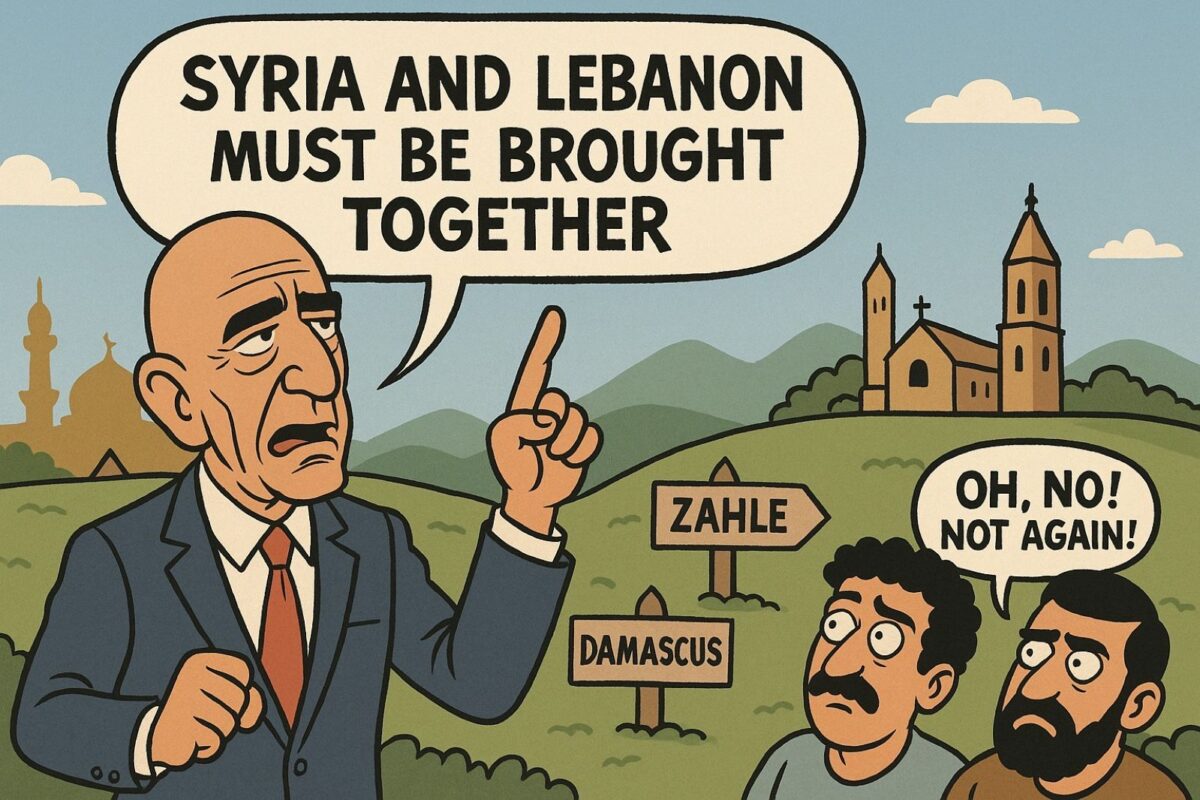
Tom Barrack’s remarks at the Doha 2025 Forum were not merely naïve—they were dangerously ignorant of history and insulting to the peoples whose futures he casually folded into a bureaucratic fantasy. To suggest that “Syria and Lebanon must be brought together” because they share a “remarkable civilization” is to confuse poetic rhetoric with political reality—and to ignore the brutal record of forced unity imposed at gunpoint.
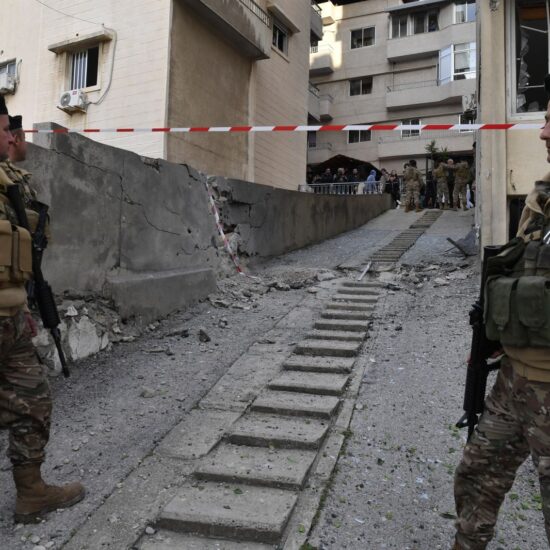
Barrack should begin where his own ancestry does: in Zahleh. The city he publicly claims would never consent to being “brought together” with Damascus—not now, not ever. Zahleh nearly vanished under Syrian shelling in the early 1980s precisely because it resisted the Assad regime’s occupation of Lebanon. Its people paid in blood to preserve Lebanese sovereignty against the same “unity” Barrack now romanticizes from the comfort of diplomatic abstraction. The descendants of Zahleh are not waiting to reverse that history for the sake of a phrase about civilization.
Nor do Syrians yearn to “bring together” what Bashar al-Assad’s father treated as a colonial possession. Lebanon under Syrian tutelage was not a partnership—it was a hostage state: governed by intelligence officers, ruled through assassinations, blackmail, disappeared civilians, and political terror. Syrians were not uplifted by that project either. They were themselves crushed by the same kleptocratic security apparatus that exported violence to Lebanon while impoverishing Syria at home. No Syrian who has lived through the regime’s massacres, prisons, torture chambers, and chemical attacks is nostalgic for an era when that mafia ruled both Damascus and Beirut.
Barrack’s talk of giving Syrians “time and opportunity” rings hollow when he simultaneously proposes dissolving the hard-fought independence of two states into one vague concept of civilizational unity. What Syrians want is freedom from tyranny, not the resurrection of imperial dreams dressed up as diplomacy. What Lebanese want is sovereignty secured at last, not reviewed and re-negotiated as a regional bargaining chip.And Israel’s “perplexing situation,” invoked as moral punctuation, does nothing to legitimize this historical amnesia. Stability in the Levant will never be achieved by erasing borders forged precisely to prevent domination by any single power center—nor by resurrecting the political geography Assad used to extend his dictatorship.
Finally, Barrack’s warning that “democracy cannot be achieved in 12 months” is a true platitude deployed to excuse inaction and to lower expectations. Democracy indeed takes time—but it cannot begin where sovereignty is denied and historical crimes are erased. You cannot build democracy by proposing political mergers that no people have asked for and that history has already tested—and rejected violently.
Lebanon and Syria need liberation, reform, accountability, and reconstruction—each on its own terms. Not another chapter of foreign theorizing that mistakes nostalgia for wisdom and collective memory for inconvenience. “Bringing together” two societies without their consent is not diplomacy. It is the first step back toward the disasters both peoples have already survived.
Makram Rabah is the managing editor at Now Lebanon and an Assistant Professor at the American University of Beirut, Department of History. His book Conflict on Mount Lebanon: The Druze, the Maronites and Collective Memory (Edinburgh University Press) covers collective identities and the Lebanese Civil War. He tweets at @makramrabah