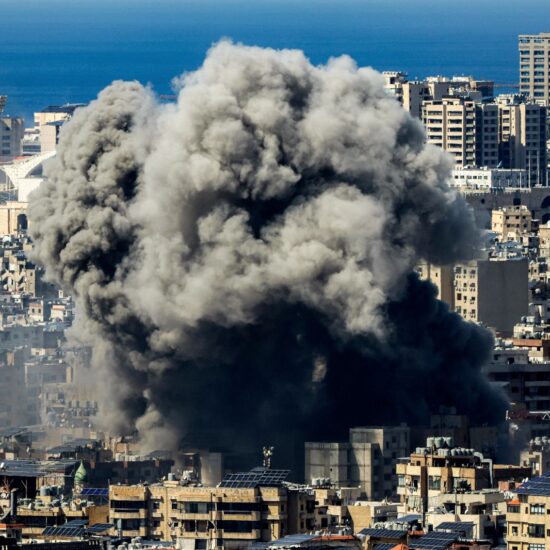

Beirut- As Lebanese civilians continue to pay the price of Hezbollah’s war, Israel’s strike on an apartment in Beirut’s Ramada hotel exposed a deeper obscenity at the heart of this conflict: while ordinary Lebanese — especially Shiite families in the south, the Bekaa, and the southern suburbs — are displaced, terrified, and left to absorb the consequences, Iranian Revolutionary Guard operatives and their local partners appear to have been hiding in comfort in one of Beirut’s better-known hotels, in the middle of a civilian neighborhood.
Why it matters: The image is politically devastating. The people told to endure war in the name of “resistance” are not the ones insulated from its costs. Those costs are borne by Lebanese civilians whose homes are turned into battlefields, whose neighborhoods become targets, and whose lives are treated as expendable by an axis that claims to defend them.
What happened: At least four people were killed and ten others wounded after an Israeli strike hit an apartment in the Ramada hotel in the Raouche area of Beirut early Sunday. Israel claimed it was targeting senior Iranian operatives linked to the Quds Force who were allegedly working out of the Lebanese capital. Whether or not Israel’s full account is accurate, the broader picture is unmistakable: foreign military actors tied to Iran were reportedly operating from inside Beirut, in and around civilian spaces, while the Lebanese public is left exposed.
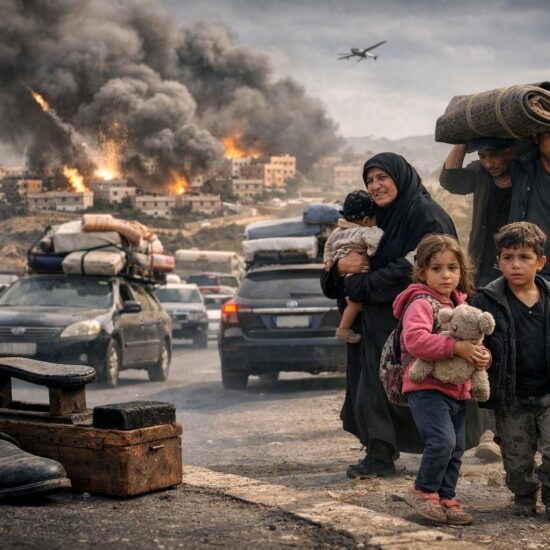
The big picture: This is the logic of human shields in its clearest form. Iran and its proxies do not merely drag Lebanon into wars it cannot survive; they embed themselves within civilian life and let Lebanese society absorb the retaliation. The result is a grotesque hierarchy of sacrifice: Lebanese civilians die, Lebanese families flee, and Lebanese neighborhoods are reduced to military maps, while the men claiming to lead the confrontation shelter themselves in hotels and densely populated urban areas.
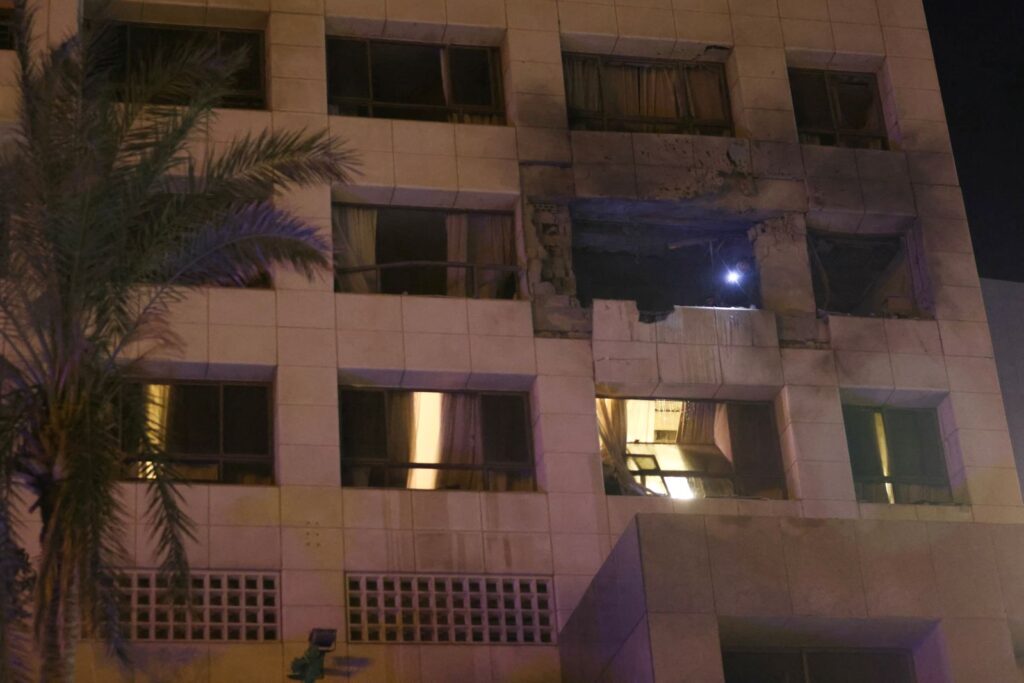
First aid responders inspect a Ramada hotel room targeted by an Israeli strike, in Beirut’s seaside Rawche area, on March 8, 2026. (Photo by Ibrahim AMRO / AFP)
Between the lines: The greatest irony is that the Shiite community — in whose name Hezbollah and Iran justify endless militarization — is once again paying the heaviest price. It is Shiite towns that are emptied, Shiite families that are uprooted, and Shiite civilians who are told to accept devastation as proof of loyalty. Meanwhile, the architects of this war appear to reserve for themselves a very different standard of living and safety.
What to watch: The strike on central Beirut marks a dangerous escalation not only militarily but symbolically. It reinforces the argument that Lebanon is no longer merely suffering from spillover violence, but from the direct consequences of allowing Iranian military networks and Hezbollah’s security infrastructure to operate from within the fabric of civilian life.
The bottom line: Lebanon is being used twice over — first as a launchpad for Iran’s regional agenda, and then as a shield behind which its operatives hide. The Lebanese, and particularly the Shiite civilians most exposed to this war, are not being defended. They are being sacrificed.
Later: Regional media reports identified the Iranian operatives allegedly targeted in the strike. According to sources cited by Al Arabiya, four senior figures linked to the Iranian Revolutionary Guard Corps’ Quds Force Lebanon branch were killed in the attack on the Ramada hotel apartment in Beirut’s Raouche district.
Those reportedly killed include:
• Hossein Ahmadlou – described as head of the “Zionist file” within the Quds Force’s Lebanon branch.
• Ahmad Rasouli – a senior intelligence official in the Quds Force structure operating in Lebanon.
• Ali Ba’azar – reported to be responsible for intelligence activities within the Lebanon branch of the Quds Force.
• Majed Hosseini – identified as the financial officer for the Quds Force’s Lebanon branch.
If confirmed, the presence of multiple senior IRGC-Quds Force figures in a Beirut hotel would reinforce growing concerns that Iranian military operatives are operating from within civilian spaces in the Lebanese capital, further exposing Lebanese civilians to the risks of retaliation in an escalating regional confrontation.