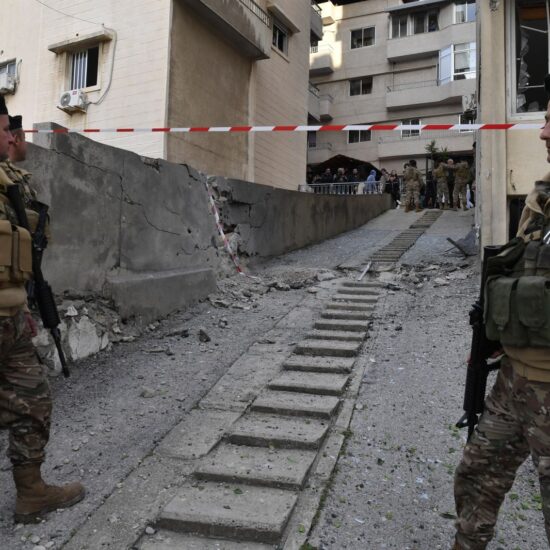
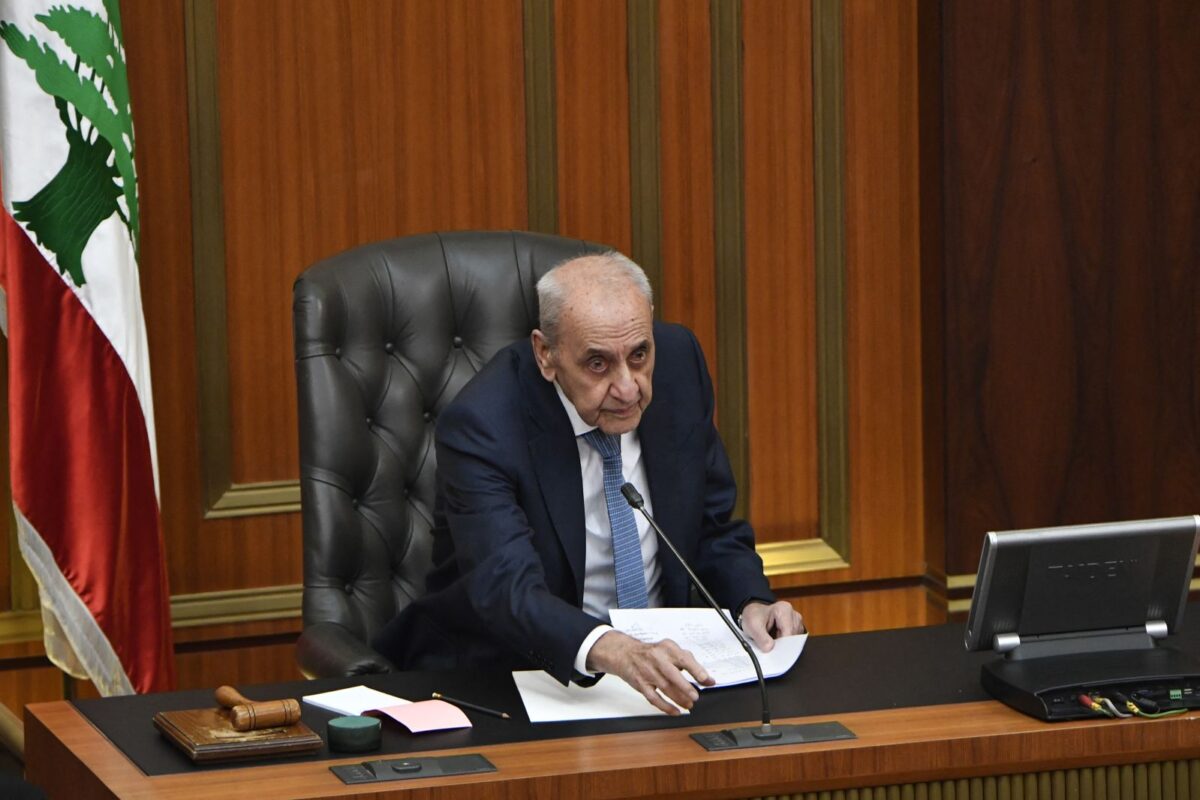
Last Friday, the Lebanese parliament opened its doors to this year’s first extraordinary parliamentary session. With a few months left until the May legislative elections, President Joseph Aoun is taking a gamble — one that risks handing decisive power to Speaker of Parliament Nabih Berri.
Two weeks ago, Aoun and Berri agreed to start a special parliamentary session. The agenda included the financial gap law and the budget — both part of the broader economic reforms frequently demanded by the international community — but the electoral law was excluded. Critics argue that by deferring the issue to Parliament, Aoun is effectively handing control to Berri, who opposes changes to the current electoral framework.
At the heart of the month-long dispute is the question of representation. The anti-Hezbollah faction wants expats to vote for all 128 seats of parliament, as in the 2018 and 2022 elections. But Hezbollah and Amal — backed by Speaker Berri — prefer to limit the diaspora vote to six seats, because they traditionally gain little support from Lebanese voters abroad. Although a majority of MPs want the Lebanese diaspora to vote for all 128 seats, Berri has opposed amendments, leaving parliament deadlocked.
“Today, President Aoun claims ‘the ball is in Parliament’s court’ under the pretext of the separation of powers. Meanwhile, the Speaker is blocking any path toward amending the law,” election expert Nazih Darwish told NOWLebanon. “This puts the elections at imminent risk, not just for expatriates but for residents as well, while the President and the Government remain bystanders.”
The diaspora’s vote has largely influenced the past elections — giving more independent MPs a chance to run and succeed, and also challenging the existing power structures. “The concept of change was pushed and influenced by the diaspora. They vote independently, not as blocks and they are very critical, because they’re not under the same emotional and day-to-day pressures as Lebanese inside the country,” assistant professor of Entrepreneurship & Organizational Studies Amr El Kebbi said.
Time has become the key battleground. The government’s delay in submitting a draft law allowed Berri to treat it as a new proposal, merge it with existing bills, and refer it to parliamentary committees — a slow process that sidelines the urgency of the elections, Darwish explained. “So far, Aoun does not want a confrontation with Hezbollah, neither politically nor militarily. He is relying on the cover provided by Speaker Berri, who seems to be humoring him on certain projects,” Darwish said.
While Aoun has turned a blind eye to the electoral vote, Berri has decisive leverage. Parliament can only vote on the law, after Berri has put it on the agenda. “This might require ‘outside-the-game’ pressure, as he is currently acting according to his own whims,” Darwish said.
With time running out, both men appear to be waiting — Aoun for international help, and Berri for the months to pass by. “What the current Lebanese system is good at is stalling, blocking and delaying. Many actors are not actually acting. They freeze decisions and believe somebody will come from outside and solve their problem — but nobody is coming, and outside will soon lose interest,” El Kebbi warns.
With elections planned in May, time is scarce, Darwish warns. But in practice, parliament could convene if a last-minute deal is reached — potentially even suspending the diaspora vote altogether, citing time constraints.
The Deputy Speaker Elias Bou Saab “continues to call for a ‘political agreement,’ or else the elections will be cancelled,” Darwish explained. “This resembles political blackmail.” Faced with the deadlock, Aoun has one last card to play. He could send a formal letter to Berri requesting action. “Legally, Speaker Berri would then have three days to discuss the President’s request,” according to Darwish.
Most likely, the elections will be postponed from spring to summer — requiring expatriates to return to Lebanon to ensure their right to vote, Darwish expects. “This represents a democratic setback and violates a fundamental principle of electoral democracy: equal opportunity for all voters.”
Laura is a German journalist. She has previously worked in Brussels and Berlin for POLITICO Europe.
The views in this story reflect those of the author alone and do not necessarily reflect the beliefs of NOW