How public history in Lebanon became a battleground of myth, identity, and power
“History is the most dangerous product that the chemistry of the intellect has ever elaborated…”
— Paul Valéry, 1931
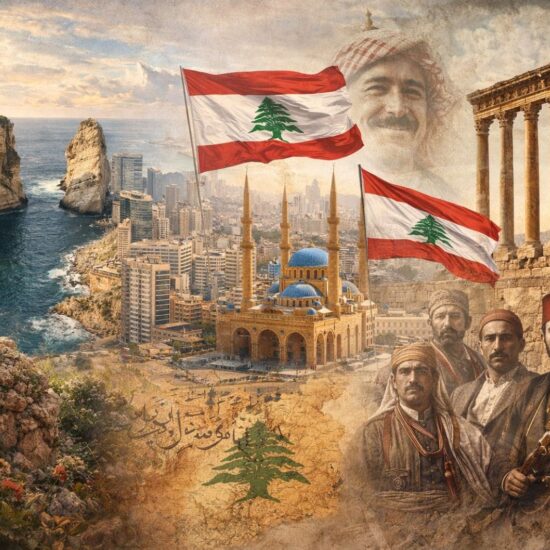
In a country defined by contested visions of the past, public engagement with history is not merely educational; it is a civic and moral necessity. At minimum, it serves three functions. First, it introduces the general public to the fundamentals of historical method and critical thinking. Second, it challenges origin stories that, over time, have acquired an almost sacred and therefore unquestionable status. Third, it cultivates a public curiosity that leads people toward scholarly history rather than away from it.
Since the 2019 popular uprising, a number of public history initiatives have emerged across the Lebanese cultural landscape. Many have produced informative, educationally rigorous, and genuinely important work on the multiple dimensions of Lebanese memory and heritage. Many have also brought the history of the Civil War into the public sphere, often in collaboration with leading scholars. This movement represents a meaningful effort to democratize historical knowledge and engage a broader public in an honest reckoning with the past, reclaiming a measure of public agency in the process.
Yet alongside this work, a parallel phenomenon has taken root; one that echoes precisely the warning articulated by Valéry. This is not a dismissal of the past, but a caution against its weaponization: the confusion of historical inquiry with historical mythology. It is a distinction that has rarely felt more urgent than it does in Lebanon today.
In a country afflicted by near-constant crisis and recurring violence, public history carries an additional burden. Mythology dressed as history does not merely misinform; it constructs false pasts, false purposes, and ultimately drives communities toward fatal decisions. In terms of reach and influence, one dominant tendency has been particularly visible: narratives that orbit around Hezbollah, or that are directly sustained by its propaganda apparatus.
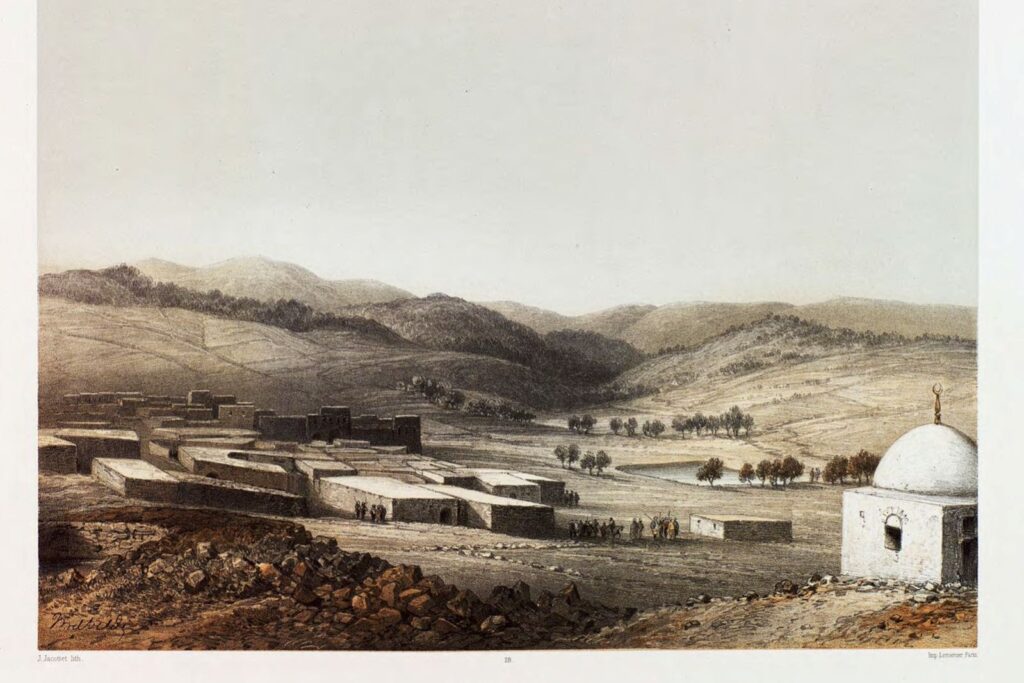
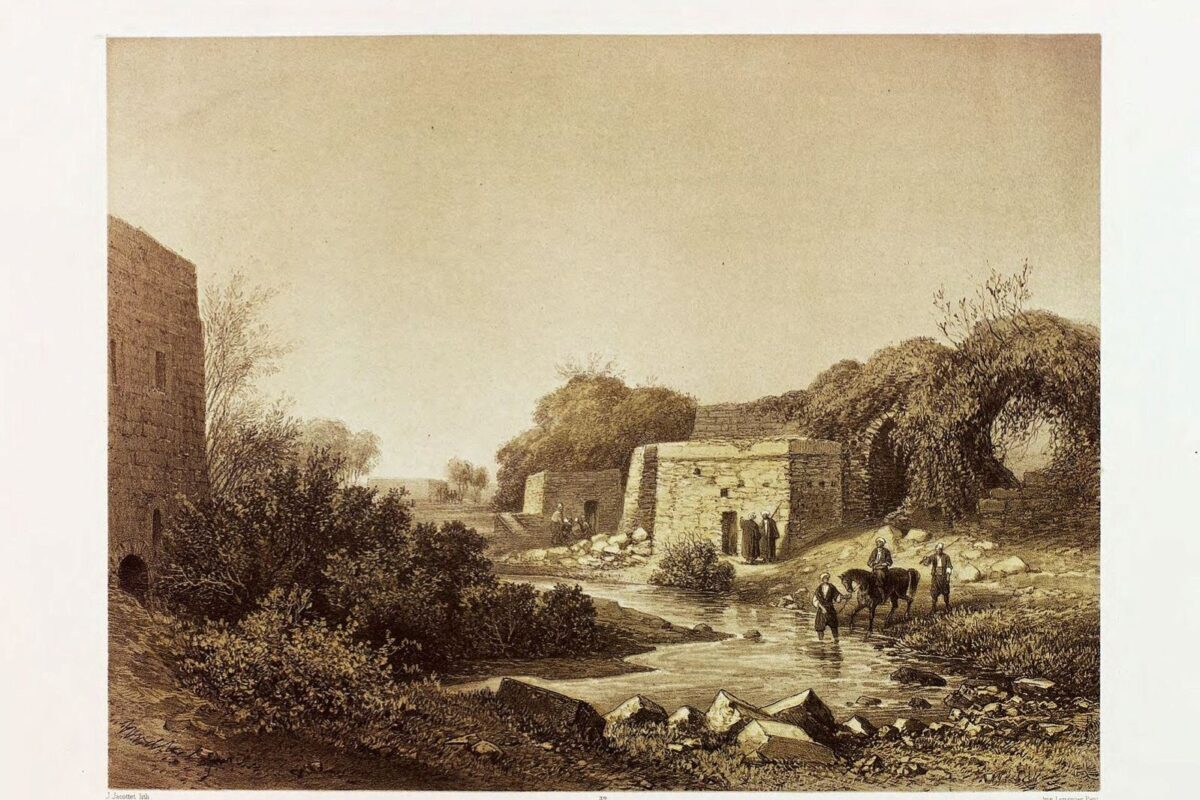
Bint Djebail, Lebanon, by Charles William Meredith van de Velde, 1857
These narratives frame victimhood and historical vindication as the defining dynamics of Twelver Shia history in Lebanon. A significant volume of media content has been devoted to celebrating the supposed deep historical roots of Twelver Shiism in Lebanon, often advancing the historically untenable claim that Lebanon is, in essence, a Shia historical space, with other communities relegated to secondary roles.
Central to this narrative is the interpretation of the Kisrawan campaigns, the military expeditions that reshaped the highlands of Mount Lebanon in the early Mamluk period. In this retelling, Twelver Shiites are cast as primordial victims, persecuted for their faith and resistance. What is consistently omitted, however, is a basic scholarly fact: the confessional identity of Kisrawan’s inhabitants remains unresolved. Whether they were Twelver Shiites, Alawites, Ismailis, or a heterogeneous population is still a matter of debate. Any responsible historical account must acknowledge this ambiguity. Indeed, it is precisely this kind of ambiguity that makes such episodes especially vulnerable to ideological appropriation.
More consequential than selective omission is the narrative framework itself. Hezbollah’s near-hegemonic claim over Shia political representation is projected backward onto the historical record. Episodes as diverse as the Kisrawan campaigns, the eighteenth-century campaigns of Ahmad Pasha al-Jazzar, and anti-colonial resistance under the French Mandate are recast as part of a continuous tradition of muqāwama. Resistance, in this context, is not a contingent political choice, but a sacred and uninterrupted destiny.
What this account silences is equally significant. It largely ignores the profound transformation of Lebanese Shia society following the Iranian Revolution of 1979, transformations that reshaped religious practices, communal structures, and cultural heritage. It also omits the long trajectory of political integration of Shia communities into the Lebanese state.
From the 1861 Règlement Organique, which granted representation within the Mount Lebanon Mutasarrifate, through the 1926 recognition of the Twelver Shia as an independent community, to the allocation of the parliamentary speakership under the 1943 National Pact, and the establishment of the Higher Islamic Shia Council in 1967, the historical trajectory was one of structured, if imperfect, inclusion. This process was not one of marginalisation, but of gradual incorporation into the state.
That trajectory was interrupted, first by the Lebanese Civil War, and later by the rise of Hezbollah, which replaced it with a counter-narrative. In this narrative, Shia communities are no longer participants in the state, but stand in opposition to it, invited to view it either as subordinate to their project or as an existential threat.
Another dimension systematically erased is the impact of the 1969 Cairo Agreement. By sanctioning the presence of Palestinian armed factions in southern Lebanon, the agreement transformed the region into a frontline of the Arab–Israeli conflict. The consequences were devastating: widespread displacement, the collapse of rural life, and the emergence of the southern suburbs of Beirut as a new socio-political space, later consolidated as Hezbollah’s stronghold.
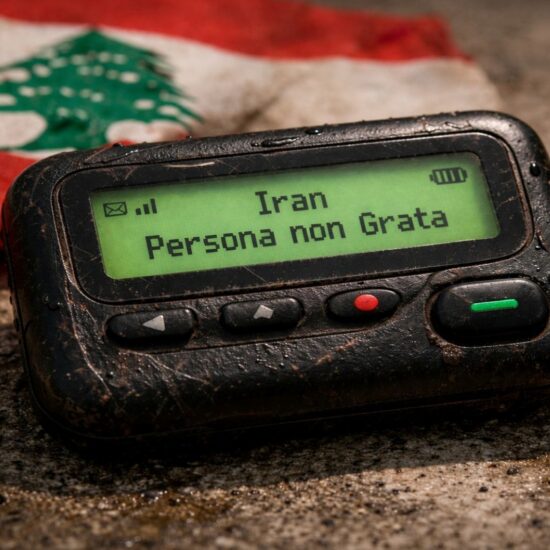
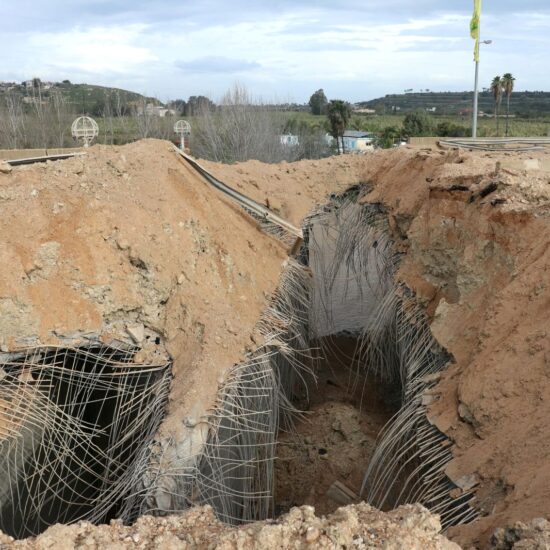
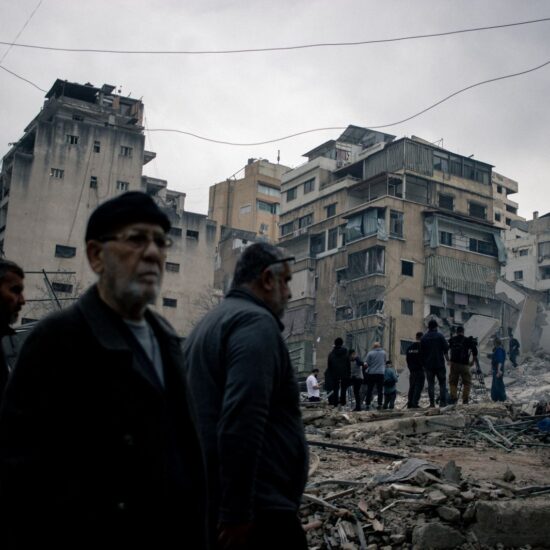
The effects of this narrative extend far beyond historiography. They shape how the present war is understood. By framing ongoing conflict as part of a long arc of resistance and anti-imperial struggle, this version of public history conceals a more immediate reality: a proxy war in which Lebanese lives are expended in service of the strategic objectives of the Islamic Republic of Iran.
What is presented as liberation becomes, in practice, a mechanism of mobilization and sacrifice, one that continues even at the cost of mass displacement, unprecedented destruction, and the termination of the Lebanese state as we know it.
But this distortion of history is not confined to one political camp. A parallel mythology is emerging elsewhere, different in content, but equally as dangerous in its implications.
Charles H. al-Hayek is a public historian and the founder of Heritage and Roots
The views in this story reflect those of the author alone and do not necessarily reflect the beliefs of NOW.