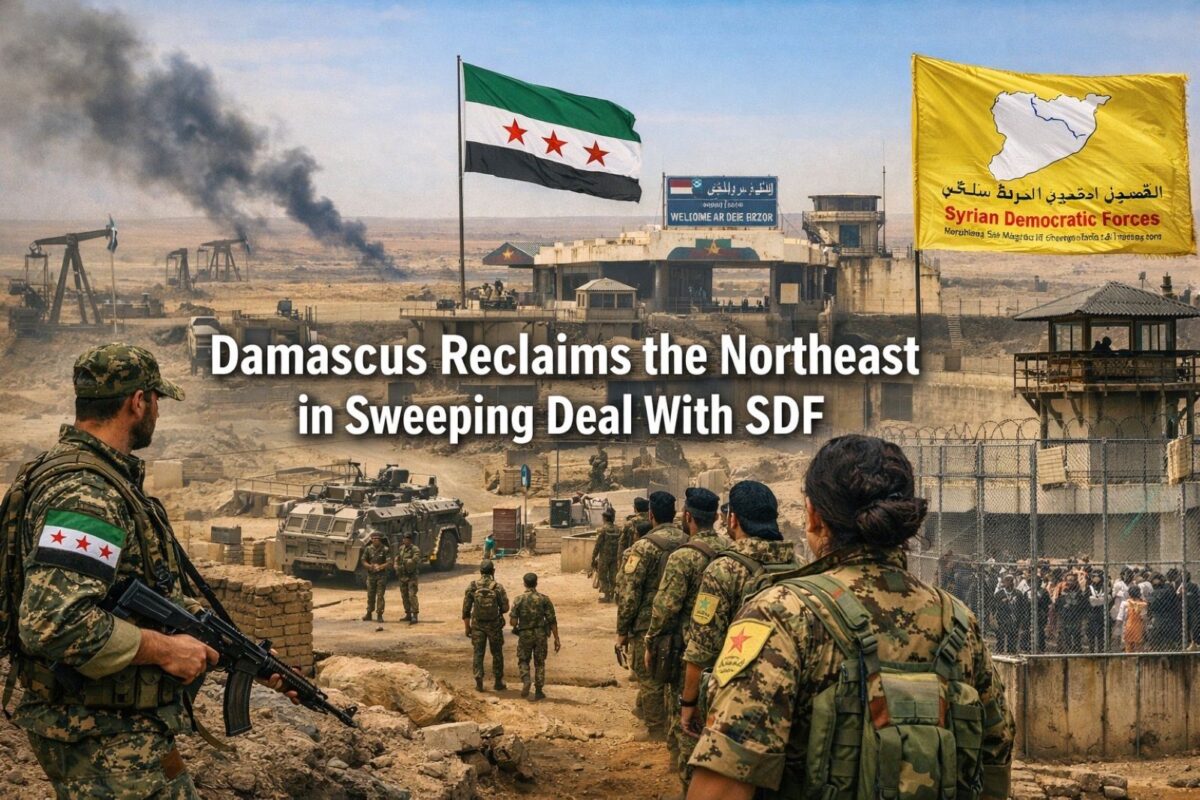
Syrian President Ahmad al-Sharaa announced Sunday (Jan. 18) a new agreement with the Kurdish-led Syrian Democratic Forces (SDF) that orders an immediate nationwide ceasefire and lays out a rapid path to reimpose central state authority across the country’s northeast and east.
The big picture:
If implemented, the deal would mark the most consequential rollback of SDF autonomy since the fall of the Assad regime, shifting three strategic portfolios back to Damascus: territory, energy revenue, and the ISIS prisons/camps file.
What’s in the deal (key points):
- Immediate ceasefire on all fronts, alongside an SDF withdrawal/redeployment toward east of the Euphrates.
- Handovers of Raqqa and Deir ez-Zor administratively and militarily to the central government, with state institutions re-entering and current civil employees retained.
- Damascus control of border crossings and oil/gas fields, with protection by regular forces to “return resources to the state.”
- Individual integration of SDF military and security personnel into Syria’s Defense and Interior ministries after security vetting, with ranks and entitlements—paired with language about safeguarding Kurdish local “specificity.”
- Kobani (Ayn al-Arab): removal of heavy military presence and a locally recruited security force under Interior Ministry oversight.
- ISIS detention infrastructure (prisons and camps) and guarding forces fold into the state, making Damascus legally and operationally responsible.
State of play:
The announcement lands after days of fast-moving battlefield gains by pro-government forces in oil-rich eastern Syria and around strategic infrastructure like Tabqa and the Euphrates dam—pressure that likely narrowed SDF negotiating space.
Why it matters for Lebanon:
- ISIS file spillover: Any disruption to prison/camp security could reverberate through the region’s security environment—including Lebanon’s already strained counterterror capacity.
- Borders and smuggling networks: A unified Syrian state posture over crossings and the northeast’s revenue streams could reshape the political economy of smuggling routes and patronage networks that often intersect with Lebanon’s crisis.
What to watch next:
Implementation details: timelines for withdrawals, the scope of “individual” integration, command-and-control arrangements, and whether Damascus can realistically absorb the ISIS detention burden without a new international framework.