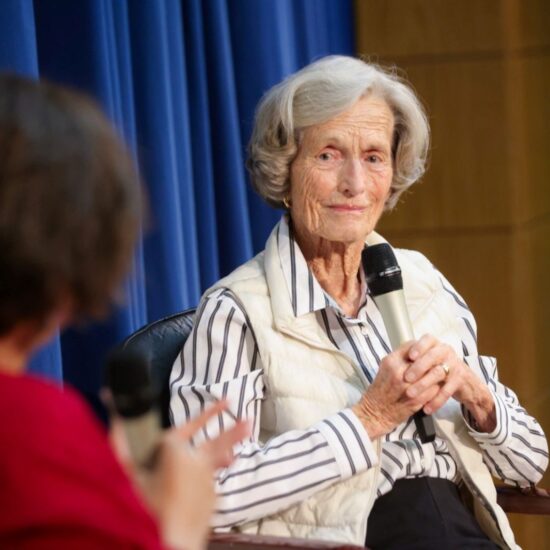
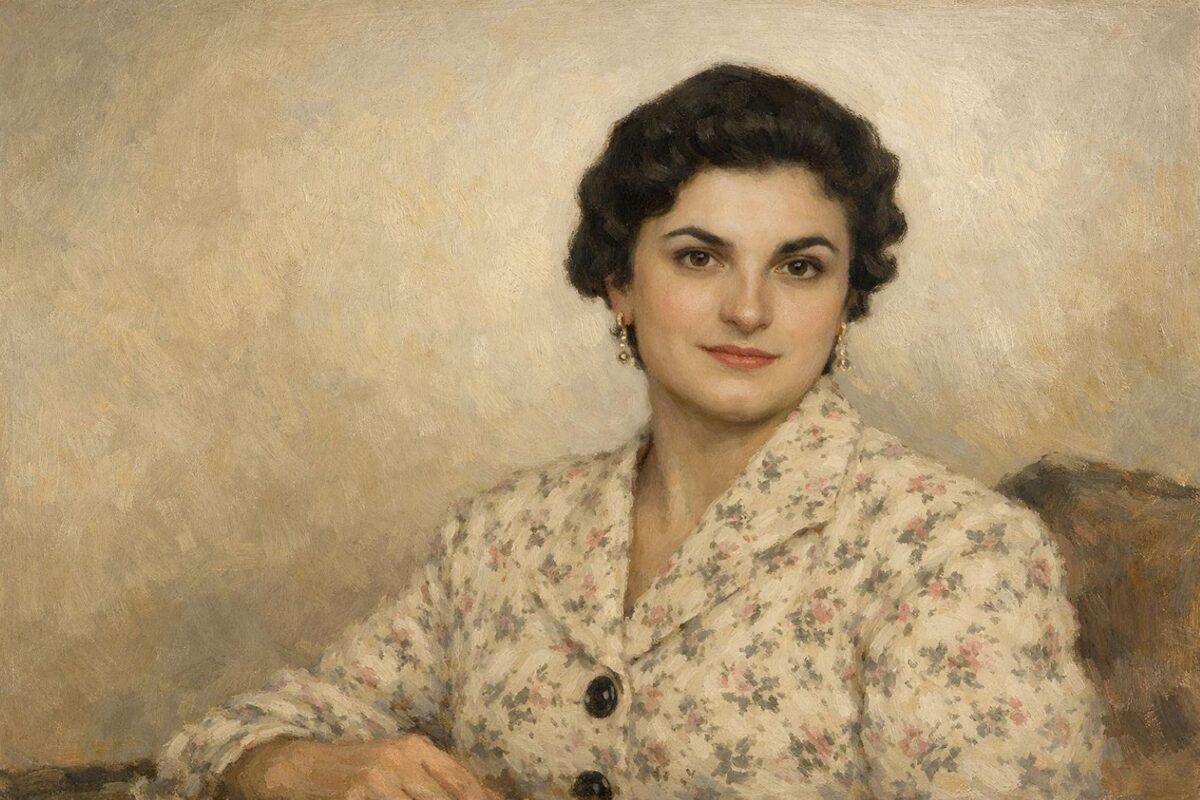
Since the passing of Salma Mershak was announced, many rushed to offer their condolences for the death of “Lokman Slim’s mother.” That may seem natural in a country that has long learned to recognize women through their sons rather than as individuals in their own right. Yet Salma was never merely the mother of a slain intellectual. She was herself a thinker, a writer, and an equal partner in the cultural and intellectual project she built alongside her late husband, Mohsen Slim—one that helped cultivate an environment consciously resistant to the culture of violence and denial that continues to govern this country.
Salma Mershak was a Levantine (Shawam) in the Lebanese sense of the word—part of that generation born in Egypt to Syrian families who had settled there in the early twentieth century, only to return later to Lebanon carrying with them a civic intellectual tradition that treated public debate not as a luxury, but as a daily practice. When Salma arrived in Haret Hreik in the late 1950s, she did not enter it as an outsider, but as part of a broader civil integration project that once defined the southern suburbs of Beirut —an area that was never meant to become the concrete sprawl and ideological fortress it is today, but was instead an open space marked by social and cultural plurality.
In her home—later to become a meeting point for countless researchers, writers, and activists—Salma did more than raise Lokman. She helped nurture Rasha and Hadi in the same ethos that fused intellectual freedom with public responsibility. The three children became living extensions of a domestic environment that saw knowledge as a commitment rather than a decorative asset, and debate as a duty rather than a pastime. It was this very climate that would later give rise to the family’s cultural and documentation initiatives—efforts that played a critical role in safeguarding Lebanon’s public memory against the many forces invested in erasure and collective amnesia.
It is no coincidence that the family home itself would evolve into a hub for publishing and archival projects, part of an ongoing attempt to confront the culture of forgetting imposed by armed power.
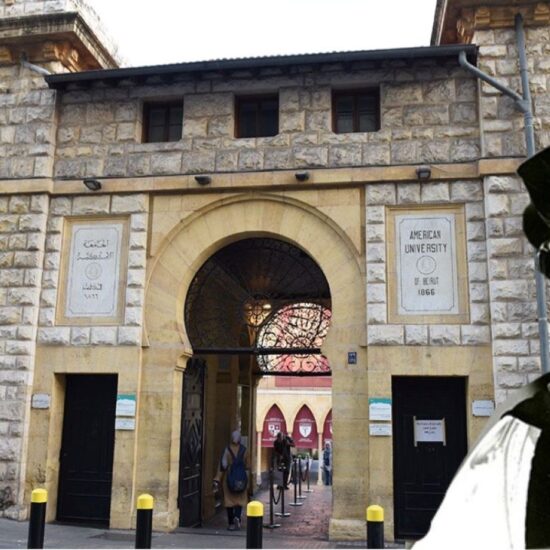
What stands out most in Salma’s life, however, is that her intellectual journey never ceased. After raising her children, she returned to the classroom at the American University of Beirut, later pursuing research and writing on the intellectual history of the Levant. Even in her later years—before Lokman’s assassination—her presence at Jafet Library remained familiar: an elderly woman diligently tracking down sources and annotating texts in a society where carrying a book has become an act of quiet resistance.
And yet, the broader public only came to know Salma Mershak after the murder of her son. In her few media appearances—made at a time when grief or rage would have been expected to dominate—Salma offered a radically different model of motherhood. She redefined the maternal role in a society that has long reduced mothers to either silent witnesses to senseless wars or instruments of mobilization, expected to consent to the sacrifice of their sons in the service of sanctified violence.
Her stance at Lokman’s grave was not simply an emotional gesture, but a moral position. She did not call for vengeance, nor did she sanctify violence. Instead, she reminded us that civilization is built through reason rather than instinct, and that no disagreement—however severe—justifies the use of arms. In doing so, Salma shattered the familiar image of the mother who is expected to celebrate martyrdom and replaced it with that of a mother who refuses to allow her son’s death to fuel yet another cycle of bloodshed.
For Salma Mershak, knowledge was never a form of cultural capital; it was a means of defending the very idea of Lebanon she believed in: a Lebanon of debate rather than erasure, of plurality rather than enforced unanimity.
With her passing, we lose one of the last Levantine women who refused to bargain away her place in the public sphere or accept reduction to the role of mother alone—however noble that role may be. We lose a woman who wove herself into the social fabric of the southern suburbs of Beirut not through declarations of belonging, but through the daily practice of coexistence and an unwavering belief that ideas cannot be defeated by bullets.
Today, we bid farewell to Salma Mershak as she lived: quietly, intellectually, and always on the side of the written word in a country that continues to glorify violence and the gun silencer.
This article originally appeared in Elaf
Makram Rabah is the managing editor at Now Lebanon and an Assistant Professor at the American University of Beirut, Department of History. His book Conflict on Mount Lebanon: The Druze, the Maronites and Collective Memory (Edinburgh University Press) covers collective identities and the Lebanese Civil War. He tweets at @makramrabah