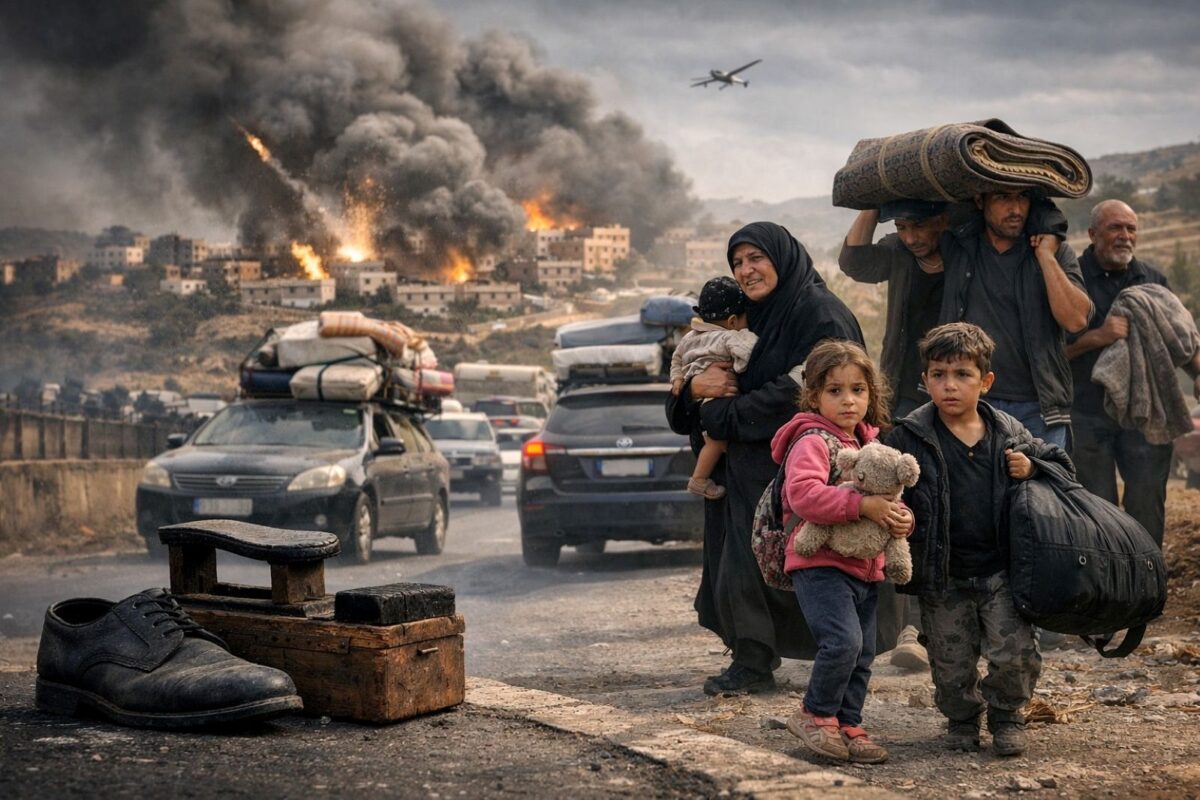
“You want to take us back to being shoe shiners and porters at the docks.”
For years, Hezbollah’s late secretary-general Hassan Nasrallah used this phrase to frighten Lebanon’s Shiites into submission. Without Hezbollah’s weapons, he warned, the community would return to a humiliating past of poverty and marginalization.
It was an effective slogan. It turned a militia into a supposed guarantor of dignity and transformed weapons into symbols of communal survival.
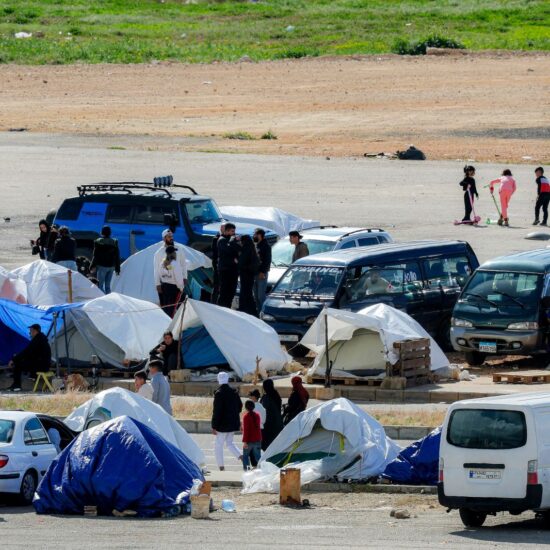
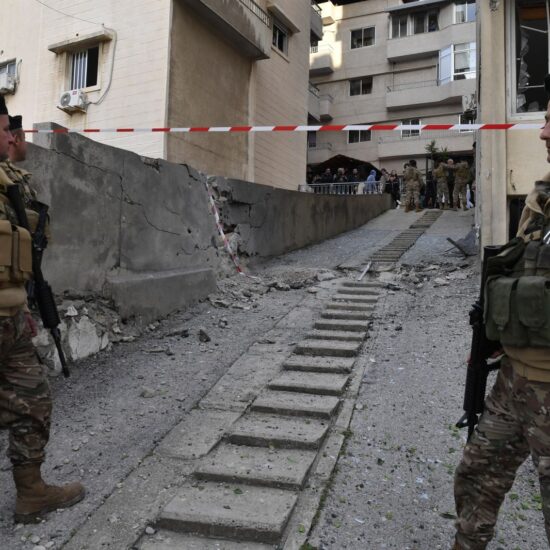
Yet those words returned to mind recently as I watched tens of thousands of residents flee southern Lebanon and Beirut’s southern suburbs after Israeli evacuation warnings. Entire neighborhoods emptied almost overnight. Families packed their cars with whatever they could carry. Schools filled with displaced people. Others sought refuge with relatives or friends or simply slept outdoors.
These images were not merely another tragic episode in Lebanon’s long history of war. They were also a stark demonstration of the central lie on which Hezbollah built its political legitimacy.
The organization that promised protection and dignity has repeatedly left its own community exposed to devastation. The weapons that were presented as the ultimate guarantee of Shiite security have instead turned Shiite homes into military targets and driven their inhabitants into displacement.
Today Hezbollah’s current secretary-general, Naim Qassem, insists that the latest escalation is merely a response to Israeli violations. According to his narrative, Hezbollah showed restraint for months before being forced to act. But the truth is far simpler.
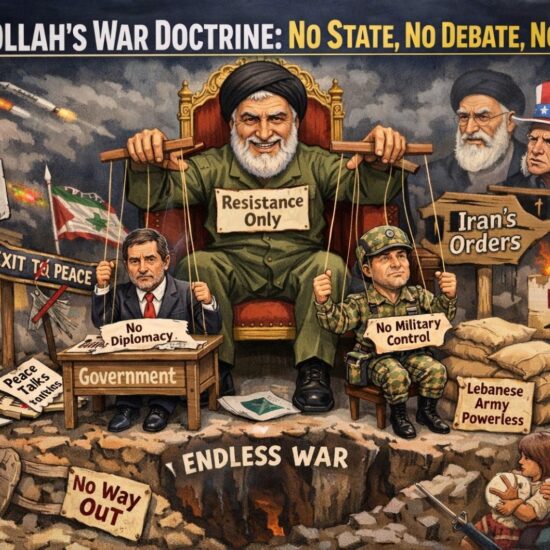
Lebanon did not decide to go to war, the Lebanese state did not vote for war. The Lebanese people did not choose war, nor did the Shiite community wanted to live through another war. The decision was made by an armed organization that operates outside the authority of the state and ultimately answers to a regional axis led by Iran.
For decades Hezbollah has justified this reality through a powerful narrative: that its weapons are necessary to defend Lebanon and protect the Shiite community from vulnerability. Yet the reality unfolding today exposes the opposite.
Those weapons have not shielded the community from war. They have ensured that the community will always be at the center of it.
This contradiction is particularly tragic because the Shiite community in Lebanon has never been a monolithic political bloc. Its intellectual history is rich with figures who championed pluralism, reform, and civic engagement. From Sheikh Mohsen al-Amin in the early twentieth century to Imam Musa al-Sadr in the 1960s and 1970s, and later intellectuals such as Hani Fahs and Lokman Slim, Shiite thinkers repeatedly advocated for dignity through citizenship and social justice rather than through militias and permanent war. Hezbollah systematically dismantled that tradition.
Over the past decades, independent voices within the community were marginalized, intimidated, or eliminated. A stark political binary was imposed: support the “resistance,” or be labeled a traitor. Accept Hezbollah’s weapons as sacred, or risk accusations of serving Israel.
The result has been the gradual erasure of the pluralism that once defined the community.
Today, however, the consequences of that transformation are becoming impossible to ignore. Villages in southern Lebanon are once again emptying. Beirut’s southern suburbs are under bombardment. Tens of thousands of families are displaced for a war whose timing and rationale they never chose.
Meanwhile Hezbollah’s leadership continues to recycle the same slogans that once mobilized its supporters but now sound increasingly hollow. The irony is painful.
Nasrallah once warned Shiites that abandoning Hezbollah’s weapons would reduce them to “shoe shiners and porters.” Yet those professions, like any form of honest labor, represent dignity earned through work.
A porter or a shoe shiner survives through sweat and hard work, not through war economies, smuggling networks, or proxy conflicts. Manual labor is not humiliation. Turning an entire community into expendable manpower for regional military strategies is.
Lebanon’s Shiites today face a historic choice. They can reclaim the intellectual and political legacy of figures such as Mohsen al-Amin, Musa al-Sadr, Hani Fahs, and Lokman Slim—a legacy rooted in citizenship, pluralism, and the authority of the state. Or they can remain bound to a militia whose strategic priorities lie far beyond Lebanon’s borders.
This is no longer merely a political debate. It has become an existential question.
The weapons that were once presented as a guarantee of dignity have become a source of vulnerability. The wars launched in the name of defending Lebanon have repeatedly brought devastation to Lebanese communities.
Perhaps the most tragic element of this story is that Hezbollah’s rise was not made possible by force alone. It was also enabled by silence.
For years many Lebanese—especially within the Shiite community—remained silent while Hezbollah monopolized political representation and militarized communal identity. Fear, fatigue, and resignation allowed the organization to present itself as the sole voice of the community.
That silence had consequences.
Hezbollah succeeded in transforming mourning into propaganda, encouraging mothers to celebrate the “martyrdom” of their sons while the militia turned personal grief into political capital. Such rituals normalized a culture in which death and sacrifice became tools for sustaining an armed movement rather than tragedies to be prevented.
This is not a culture of resistance. It is a culture of death.
A society that learns to celebrate the loss of its children and the displacement of its families is a society being pushed toward self-destruction.
History rarely shows mercy to those who remain silent in the face of such transformations. Nations that allow their sons to be turned into fuel for endless wars eventually lose the right to claim victimhood.
Perhaps it is time for Lebanese—and Shiites above all—to say openly what Hezbollah tried for decades to suppress.
There is no shame in honest labor. The real humiliation lies in surrendering a nation’s future to a militia that thrives on war. Better to be a society of shoe shiners, teachers, judges, and doctors living with dignity than a society condemned to make a profession out of death and displacement.
This article originally appeared in Elaf.
Makram Rabah is the managing editor at Now Lebanon and an Assistant Professor at the American University of Beirut, Department of History. His book Conflict on Mount Lebanon: The Druze, the Maronites and Collective Memory (Edinburgh University Press) covers collective identities and the Lebanese Civil War. He tweets at @makramrabah