SEVERAL GERMAN POLITICIANS HAVE VISITED LEBANON IN RECENT WEEKS — UNDERLINING THE GROWING IMPORTANCE OF THE COUNTRY FOR BERLIN’S MIDDLE EAST FOREIGN POLICY. DISARMING HEZBOLLAH IS ESSENTIAL FOR LEBANON’S SOVEREIGNTY, THE GERMANS UNDERLINE.
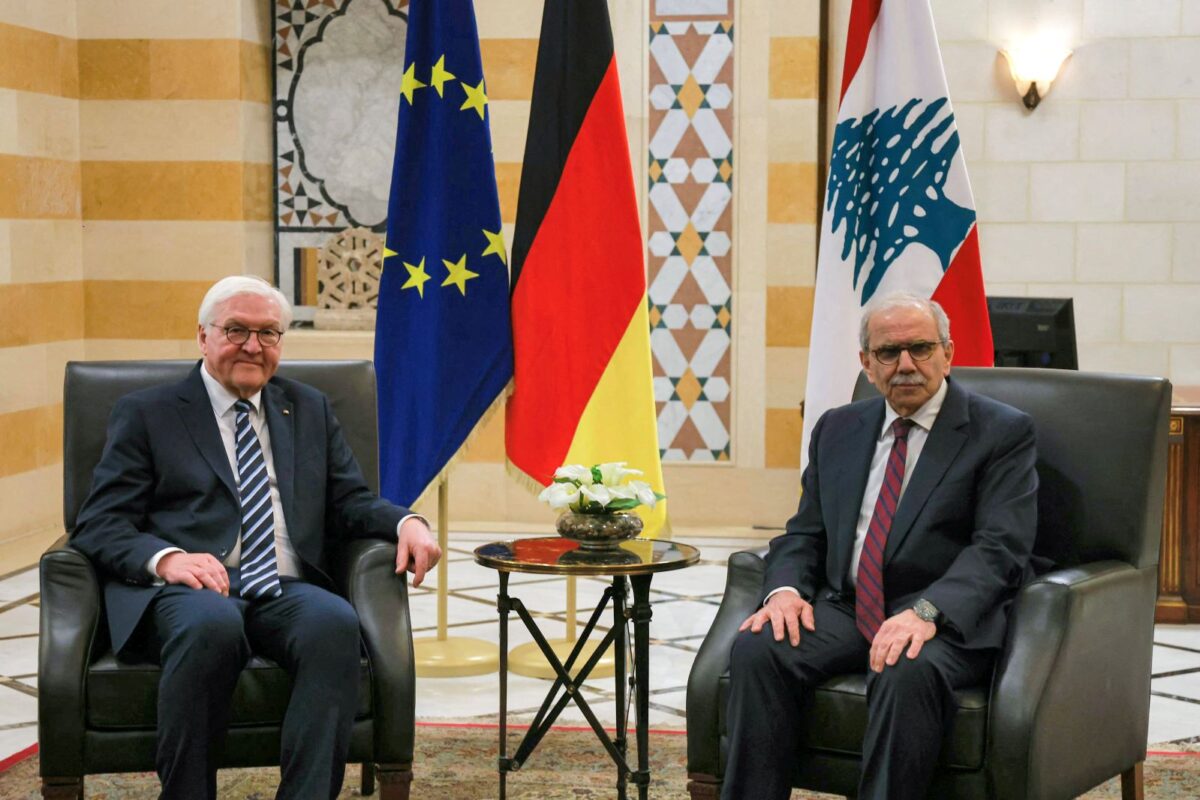
Last week, Germany’s President Frank-Walter Steinmeier traveled to Lebanon before continuing to Jordan — both countries that Germany firmly supports, he said. His visit came at a critical time for Lebanon. The country finds itself in the midst of the escalating conflict between Iran on one side and the U.S. and Israel on the other side. There is speculation about Hezbollah’s possible strategy in the event of war.
Lebanon’s sovereignty is a key issue for German foreign policy. It at once curbs the influence of foreign interference — like that of Iran through its proxy Hezbollah — while ensuring stability in the country and the broader region. “Germany and Europe will continue to support Lebanon on its path to normality: sovereign, free from foreign influence and illegitimate internal structures,” German politician Jürgen Hardt told NOW. He is the parliamentary spokesperson for foreign affairs and he visited Lebanon in early February with a delegation of high-ranking German conservative politicians, including parliamentary leader of the Christian Democratic party Jens Spahn.
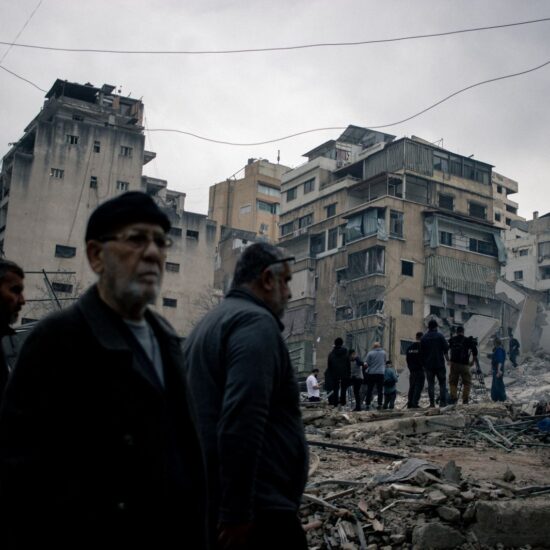
The Iranian-backed militia has largely opposed the government’s demand to disarm. While Steinmeier underlined the importance of this process, he also stated that “this is a challenging task.” Lebanese President Joseph Aoun, in turn, raised another concern. Israel continues to attack Lebanese territory — despite the ceasefire agreement from November 2024. These attacks delegitimize the Lebanese government by allowing Hezbollah to use them as a pretext to oppose the disarmament process.
At the same time, Germany maintains a strong and longstanding partnership with Israel. Berlin affirms Israel’s right to self-defense while also emphasizing the importance of adhering to international law and avoiding escalation in Lebanon. German leaders have repeatedly stated that stability in Lebanon and security for Israel are not mutually exclusive goals.
With the upcoming parliamentary elections, scheduled for May this year, the question arises as to what choices the Shia population in Lebanon has. While the Shia duo has lost considerable power since the war between Hezbollah and Israel began in 2023, their reach in parliament remains large.
Currently, the Shia duo — Amal and Hezbollah — enjoy the strongest support among Shia Lebanese. Other political alternatives are scarce, have limited power and are barely represented in parliament. To establish a sovereignty, “disarming Hezbollah is crucial, but so is giving Lebanon’s Shia options to make their voices heard and participate outside of Hezbollah”, Hardt said.
But the war with Israel has also drained Hezbollah’s capacity. Important parts of the militia’s leadership were killed. The war led to heavy casualties, destruction and displacement. The Iranian-backed milita suffered another major political setback when Nawaf Salam, a fierce opponent of the militia, was appointed Lebanon’s Prime Minister.
In this fragile security environment, UNIFIL is playing an important role in aiding the Lebanese army in disarming Hezbollah. But by the end of 2027, the peacekeeping mission is set to wrap up its operations inside the country. Several European countries, like Italy, have raised the idea of a continuous military presence south of the Litani River even after the UNIFIL withdrawal. Hardt considers the UNIFIL mission to be essential in ensuring political stability inside Lebanon.
“If it is abolished, Germany should also seriously consider continuing to provide military support to Lebanon in coordination with international partners, for example in the training and equipping of the regular armed forces,” Hardt said.
Last November, Germany’s foreign minister Johann Wadephul met with the Lebanese government in Beirut during his Middle East trip. Lebanese counterparts raised the importance of a foreign presence in their country even after the UNIFIL mandate ends, Wadephul later said.
Wadephul and Hardt are part of the Christian Democratic Union of Germany (CDU). The CDU currently governs in coalition with the Social Democratic Party (SPD). Macit Karaahmetoğlu, a politician from the SPD, told NOW that Germany is closely monitoring the situation. Berlin is taking the warning from its European partners “very seriously” that “a hasty withdrawal could create a power vacuum that Hezbollah could exploit before the Lebanese army is ready to secure the border on its own.”
Karaahmetoğlu underlines that the disarmament process “remains an extremely challenging task for which there is no military shortcut and which requires strengthening the state’s monopoly on the use of force.” While the planned UNIFIL withdrawal is a turning point, it does “not in any way mark the end of our support to Lebanon,” according to Karaahmetoğlu. Whether Germany will send troops to Lebanon after 2027 needs to be examined, he argues, but Germany should coordinate with its European and international partners on this question.
Ultimately, Germany has a clear interest in a stable Middle East. Yet in a region shaped by major powers such as Iran, Israel and the United States, Berlin’s room for maneuver remains limited. Its influence is likely to depend less on unilateral action and more on whether the European Union can act cohesively.
Laura is a German journalist. She has previously worked in Brussels and Berlin for POLITICO Europe.
The views in this story reflect those of the author alone and do not necessarily reflect the beliefs of NOW