After Hezbollah attacked Israel in the morning, Israel launched severe “retaliatory” strikes on Beirut
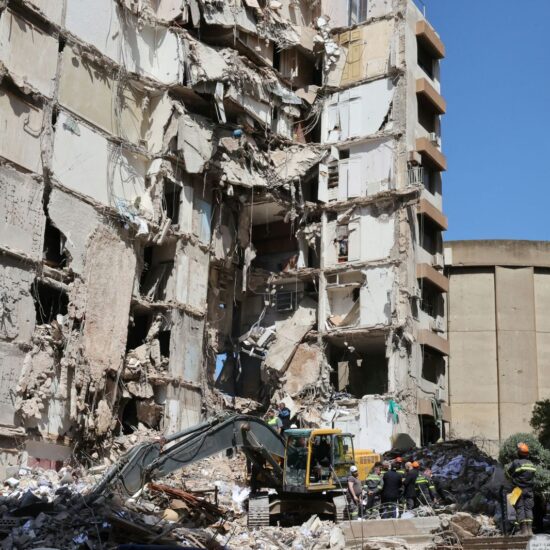
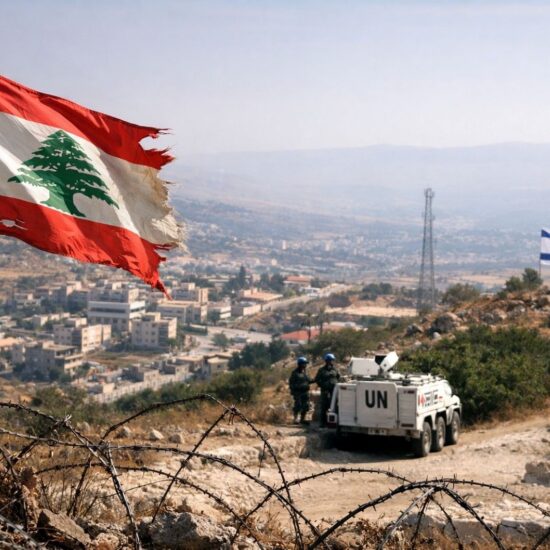
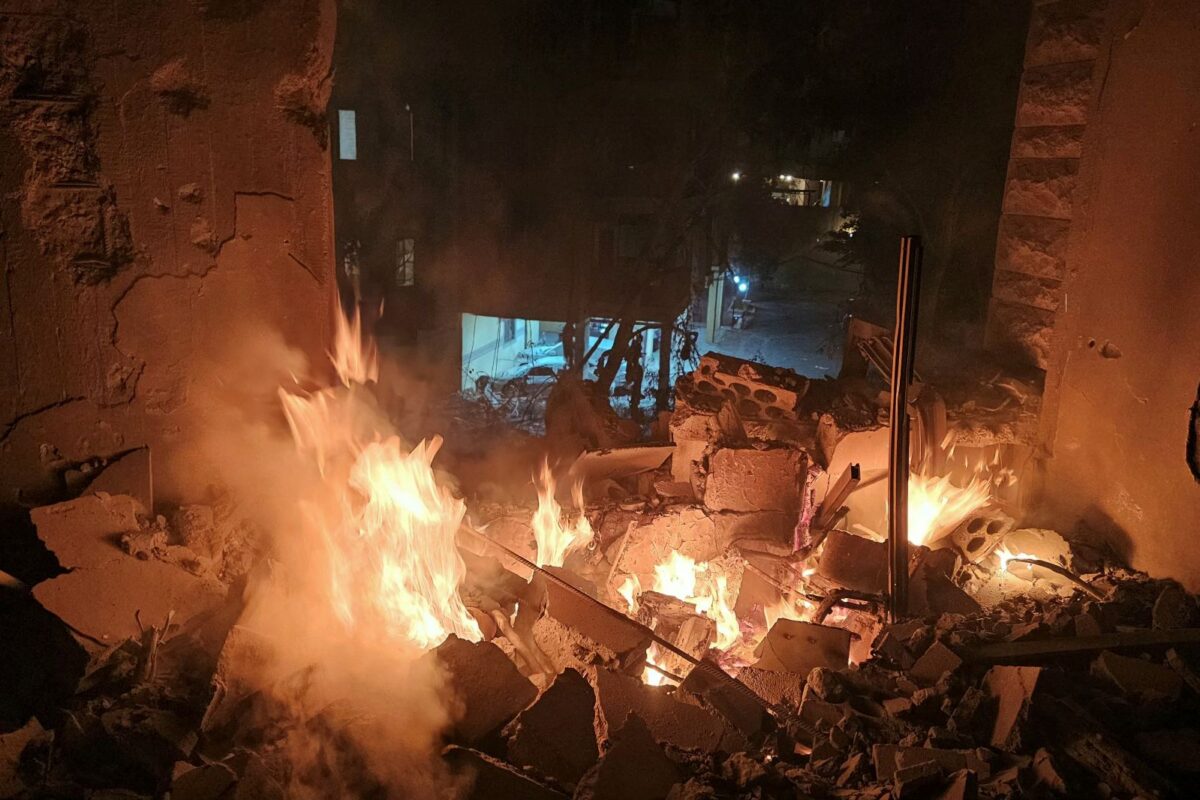
Overnight, Lebanon was pulled into the escalating war between the United States and Iran. In the early hours of Monday, Hezbollah launched missiles and drones toward Israeli territory. Israel responded with extensive strikes on southern Lebanon and on Beirut’s southern suburb of Dahieh, prompting residents to flee in search of safety.
Hezbollah said its attack was an act of revenge and “retaliation” for the killing of Iranian leader Ali Khamenei, according to a statement issued by the group. On Sunday afternoon, thousands of supporters gathered in Dahieh to commemorate him after he was killed in a joint U.S.-Israeli strike in Tehran on Saturday.
Israel subsequently launched what it described as a major retaliatory campaign targeting Hezbollah positions in Lebanon. Senior Hezbollah militants were killed in Beirut, Israel’s Defense Forces said on Monday afternoon — but did not specify their names nor positions. Additionally, “dozens” of Hezbollah and Iranian command centers as well as a weapon storage in Lebanon’s southern city of Tyre were targeted. According to Israel’s Defense Minister Israel Katz, Hezbollah Secretary-General Naim Qassem “is now a target to be eliminated”.
Lebanon’s government has largely tried to avoid being dragged into the regional war, condemning Hezbollah’s attacks on Israel. After a meeting this morning, the Lebanese Cabinet issued a “total ban on all military activity” by Hezbollah, condemning their military action and calling on the militia to “surrender its illegal weapons.” Prime Minister Nawaf said that the Lebanese Army should “continue [with] its plan” to disarm Hezbollah.
On Monday morning, President Joseph Aoun warned that Hezbollah’s attacks might bring Lebanon to the forefront of the regional conflict — making the country “a platform for proxy wars.” He underlined that Hezbollah carries responsibility for its attacks and that the Lebanese government “will not allow this to happen again.” Salam said the action was “irresponsible” — warning that it “endangers Lebanon’s security and safety, and gives Israel pretexts to continue its attacks.”
Israel Defense Forces Chief of Staff Eyal Zamir announced a day-long offensive operation, declaring that Israel would not only defend itself but also “go on the offense” with increased intensity.
Ahead of the Israeli strikes, senior Israeli military official Rafi Milo warned that Hezbollah would “pay a heavy price” for its attack. Israel also issued evacuation orders for more than 50 Lebanese towns in anticipation of further bombardment. According to the Lebanese health ministry, at least 31 people were killed and 149 injured.
On Sunday, Lebanon’s Higher Defense Council convened, with Aoun and Salam discussing strategies to keep the country out of the war. “The decision of war and peace belongs exclusively to the Lebanese state,” Aoun said — a remark interpreted as a warning to Hezbollah.
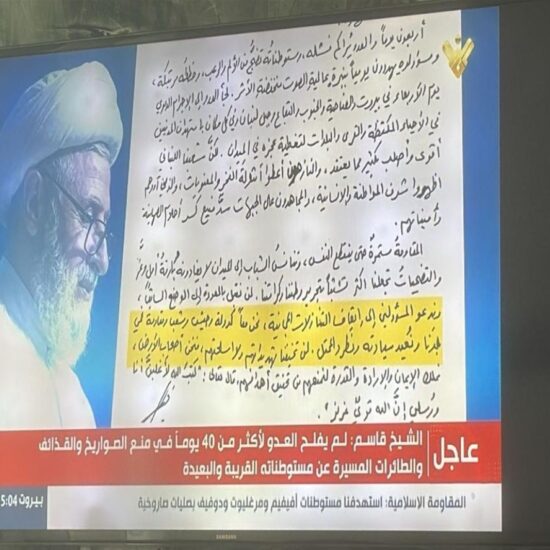
Despite these calls for restraint, Qassem signaled on Sunday that the group would press ahead. He said the killing of Khamenei would have consequences and that Hezbollah was preparing to “fulfill [its] duty to confront the aggression,” describing the assassination as “the height of crime.”
Interior Minister Ahmad Hajjar reportedly stressed on Sunday that Lebanon does not require Hezbollah’s approval to decide its stance on war. However, Qassem indicated that the group would not be bound by the government’s position, declaring that Hezbollah stands ready “to defend [its] land, dignity, and independent choices.”
In Lebanon
Postponement of the Paris-based conference for the Lebanese army: Amid the ongoing war between Iran and the U.S., French President Emmanuel Macron and Lebanese President Joseph Aoun decided to delay the conference during a phone call. The conference is set to foster support for the Lebanese Armed Forces, as Lebanon is seeking to disarm Hezbollah and establish a monopoly on weapons. While the conference was first scheduled for March 5, it is now planned for April. The French and Lebanese leaders argued that the current situation is not suitable for holding the conference on time, but the ongoing regional conflict further underlines the necessity of a strong Lebanese army.
Several flights were canceled from Beirut Airport. Many airlines — like Aegean Airlines, Lufthansa and Turkish Airlines — have canceled their flights to Beirut and other Middle Eastern destinations. According to the Beirut Airport website, some flights from MEA, Egyptair, Flydubai and Air Arabia were still scheduled to fly as of Sunday evening. The airspace above Iran, Iraq, Syria, Kuwait, Jordan, Lebanon and Israel is close to empty, the website Flightradar24 indicates.
Beirut breaks Guinness record with biggest Iftar. More than 5,700 people gathered at Beirut’s waterfront last week to celebrate the breaking of the Ramadan fast together in the evening. Beirut has broken a Guinness World Record due to the celebration.
In The Region
U.S. ready to talk: American President Donald Trump on Sunday signaled his readiness to talk to the Iranians, an American news outlet reported. However, some of the people who previously were part of these negotiations are now no longer alive, he added. On Sunday, Trump also told Iran not to retaliate against the assassination of Khamenei, warning that the U.S. reaction would include “a force that has never been seen before.”
Iran sees “no limit” in retaliation: The Iranian Foreign Minister, Abbas Araghchi, said that his country will not adhere to American warnings. “We are defending ourselves whatever it takes, and we see no limit for ourselves to defend our people, to protect our people,” he said. As of Sunday evening, 201 people in Iran were killed, while 747 were injured.
3 U.S. soldiers killed: According to the US Central Command, three American soldiers were killed as a result of Iranian attacks on the Middle East. “Several others sustained minor shrapnel injuries and concussions — and are in the process of being returned to duty. Major combat operations continue and our response effort is ongoing,” they said on X. These are the first American casualties since the onset of the war on Saturday.
U.S. destroyed Iranian naval ships: The American military has “destroyed and sunk” nine Iranian naval ships, U.S. President Donald Trump said on Sunday on social media. The U.S. seeks to destroy the rest of the Iranian naval fleet, but the naval headquarters have already been “largely destroyed”, Trump claimed.
100,000 reservists mobilized in Israel. The Israeli army plans to call 100,000 reservists into duty, while about 50,000 are already mobilized. As of Sunday evening, 9 people were killed in Israel, while 121 were injured.
What We’re Reading
Lebanon says it wants neutrality. Hezbollah makes that impossible. Now’s Managing Editor Makram Rabah examines the effects of the ongoing war between the U.S. and Israel on one side and Iran on the other. While the Lebanese leaders have underlined the desire not to be dragged into the war, Hezbollah poses a threat to Lebanon’s neutrality. With the Iranian-backed militia still operating in Lebanon, the country finds itself in the middle of the conflict, making it a likely front in the Iran-Israel war. Without full state control over the monopoly of weapons, neutrality at the moment is more rhetorical than real in Lebanon, Rabah argues.
Germany’s Lebanon Policy — Between Hezbollah, UNIFIL and Sovereignty: Now’s visiting fellow Laura Hülsemann examines the relations between Lebanon and Germany, as several German politicians have recently visited Beirut. They stress that Lebanon’s sovereignty depends on disarming Hezbollah. Amid increasing fears that Hezbollah could exploit the power vacuum left by UNIFIL after its withdrawal in 2027, German officials consider future steps. Germany says it will continue backing Lebanon in coordination with European partners, though its influence remains limited in a region shaped by Iran, Israel, and the United States.
Farewell to a Levantine: Salma Mershak as We Knew Her. Now’s Managing Editor, Makram Rabah, commemorated Salma Mershak for her work as an intellectual writer who fostered an environment of debate and civic engagement in Lebanon. Rabah argues that Mershak was more than the mother of Lokman Slim, but an intellectual herself. Her home became a meeting point for activists, intellectuals and researchers — a space that fostered debate and intellectual freedom and a hub for archives and publishing. While Mershak only enjoyed public appreciation after her son’s murder, her work stands on its own, Makram argues.
Who decides May 2026? Lebanon’s elections between domestic deadlock and foreign influence. Now’s author Rodayna Raydan analyses whether the parliamentary elections, scheduled for May this year, will be held in time, as the country struggles with economic collapse, political deadlock and foreign influence. Analyst Ziad Abdel Samad, Executive Director of the Arab NGO Network for Development told Now that there is no constitutional justification for postponing the elections. Political analyst Camille Mourani notes that domestic leaders and international actors may prefer postponement to maintain stability and pursue reforms, especially regarding Hezbollah’s role. Ultimately, the 2026 elections will test Lebanon’s ability to uphold constitutional timelines and political legitimacy, Raydan argues.