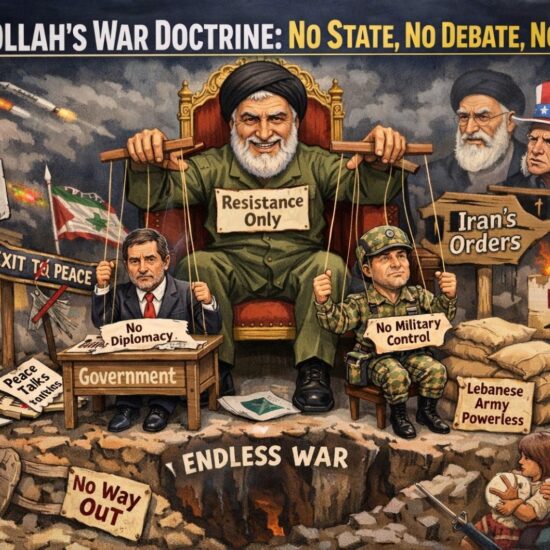
Hezbollah and Parliament Speaker Nabih Berri reportedly oppose the government’s move to expel Iran’s ambassador, risking wider sectarian divisions amid war.
Iran’s ambassador in Beirut, Mohammad Reza Sheibani, has decided to stay in Lebanon — despite being declared a persona non-grata by the Lebanese government. He was ordered to leave the country by Sunday.
“Our ambassador … will continue his work as Iran’s ambassador in Beirut and remains present there,” said the spokesperson of the foreign ministry, Esmaeil Baqaei. The Iranian embassy in Beirut will remain operational, according to the spokesperson.
Parliament Speaker Nabih Berri and Hezbollah oppose the government’s decision to expel Sheibani, according to a news report. The Amal Movement has also sided with Hezbollah, asking the government to reconsider the move to avoid a political crisis in Lebanon.
On Tuesday, Lebanon’s Foreign Ministry told Iranian officials that Beirut had withdrawn the accreditation of their ambassador to Lebanon. Iran had interfered too strongly in Lebanese internal politics, was the argumentation.
Hezbollah has rejected the decision since its announcement on Tuesday, claiming it to be devoid of any legal basis and accusing the government of acting on behalf of foreign actors. On Thursday, the Shiite duo boycotted the cabinet session.
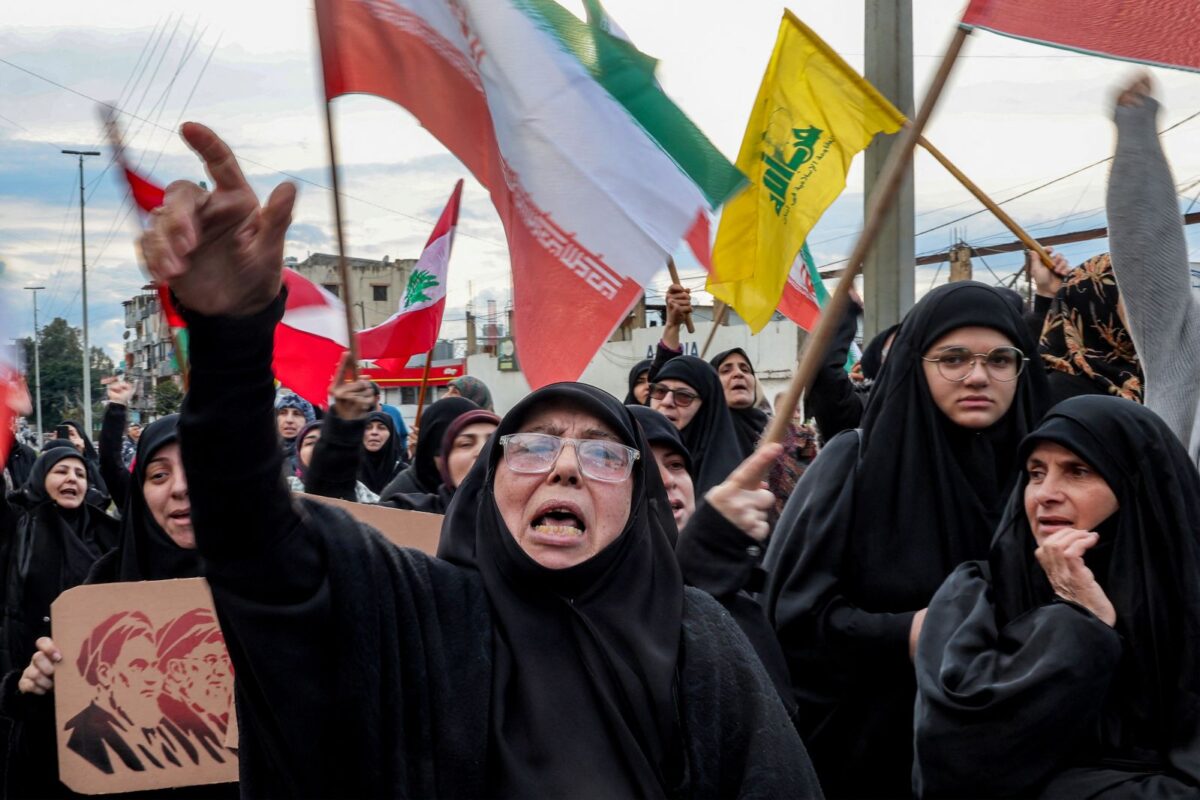
On Friday, Pro-Hezbollah people protested against the decision to expel the Iranian official — in front of the Iranian embassy. Some were waving Lebanese, Iranian and Hezbollah flags and singing anti-American and anti-Israeli chants.
Sheibani’s decision to stay in Lebanon puts the country under further strain. The country is paralyzed in war, raising the question as to what the government will do to enforce its decision to expel the Iranian official.
Amid Hezbollah’s opposition and Amal’s reluctance, this diplomatic spat risks dividing the country even further along sectarian divisions.
At the moment, Lebanon’s government is trying to decrease Iran’s influence on the country. Hezbollah, which is backed by Tehran, has drawn Lebanon into another war. At the onset of this year’s war, Nawaf Salam declared Hezbollah’s military wing to be illegal — however, little followed after the announcement.
In Lebanon
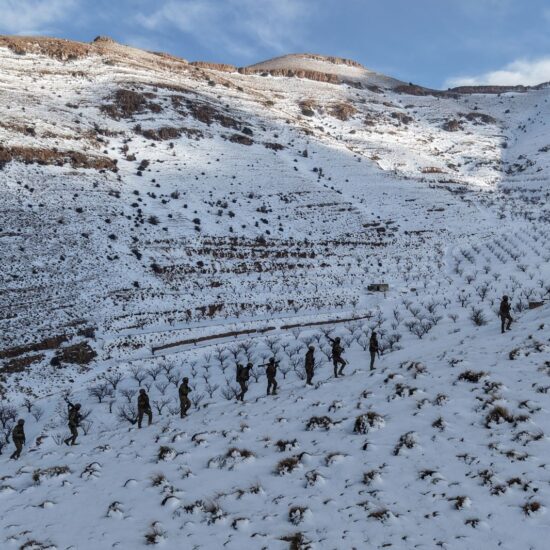
Fighting in the South: The fighting in the South between Hezbollah and the Israeli military continues, with ground fighting expanding to several locations. Israeli Prime Minister Benjamin Netanyahu announced last week that he wanted to extend the buffer zone in South Lebanon.
UNIFIL peacekeepers wounded in South Lebanon: On Sunday evening, an Israeli barrage wounded several peacekeepers close to Adshit al-Qusayr, a UNIFIL spokesperson said. Lebanese President Joseph Aoun has condemned the attacks.
AUB offline amid Iran threats: After Iran’s Revolutionary Guard Corps threatened to retaliate against American universities in the region, the Beirut-based American University of Beirut moved to remote study in the first days of the week. The U.S. warned universities in Iraq of becoming an Iranian target. Iran demanded the U.S. to condemn the attacks on Iranian schools. Overnight from Friday into Saturday, a building of an Iranian university in Tehran was struck.
Three journalists killed in an Israeli airstrike: Fatima Ftouni, Ali Choeib and Mohammad Ftouni were killed on Friday by an Israeli strike. Shortly after, protestors gathered at Beirut’s Martyrs’ Square and walked to Riad Al-Solh Square — they strongly criticized Prime Minister Nawaf Salam and called him a “Zionist”. On Saturday, the victims were buried.
In The Region
Peace talks with Iran and U.S.: Both Washington and Tehran are going into the possible negotiations with their maximal demands. In the U.S. 15-point plan, Washington signaled wanting an end of Iran’s nuclear program and seeking the reopening of the Strait of Hormuz. Iran wants an end to U.S. and Israeli aggression and assassinations and payments of reparations, amongst others.
Pakistan in the middle: Islamabad has the task of hosting such possible negotiations — however it remains unclear whether the discussions would be held directly between the war-waging parties or through intermediaries. The Egyptian, Turkish and Saudi foreign ministers traveled to Islamabad on Sunday to discuss the ongoing U.S.-Israeli war with Iran with Pakistani Deputy Prime Minister Ishaq Dar. Pakistan is a neighboring country to Iran and enjoys good connections to Saudi Arabia — therefore finding itself in a complex position.
U.S. troops on the ground in Iran: According to an U.S. Pentagon report seen by the Washington Post, the U.S. outlined a ground invasion of Iran — including seizing the important oil hub based on the Kharg Island and securing the Strait of Hormuz. Iran has accused the U.S. of using the negotiations as a cover-up for a ground invasion.
Extended deadline: Trump has pushed the deadline for Iran to open the Strait of Hormuz to April 6. He has also claimed that the talks with Iran are “going very well”.
Israel denied priest entry to Holy Sepulchre: On Palm Sunday, the Israeli police did not allow the Latin patriarch of Jerusalem, Cardinal Pierbattista Pizzaballa, to enter the Church of the Holy Sepulchre in Jerusalem.
What We’re Reading
Wafiq Safa: When the Smuggler Speaks the Language of “Resistance”. Now’s editor Makram Rabah criticises the high-ranking Hezbollah-official Wafiq Safa for using Lebanon as an area of the militia’s self-defined ‘resistance’ role. Instead of resisting, Rabah argues Safa is creating a parallel security network while systematically hollowing out the state. Through this, Safa is jeopardizing the safety of Lebanon by acting like the South of Lebanon is Hezbollah’s private property.
Between History and Hallucinations: Parallel Myths and a Fragmented Nation | Part II. Charles H. al-Hayek analyzes how myths have shaped narratives about Lebanon’s past. He argues that focusing on a single lineage—such as Phoenician or Maronite identity—excludes other groups and distorts history. These narratives foster sectarianism and undermine a shared national identity. He also stresses that culture, language, and identity evolve over time, challenging claims of fixed or pure origins.
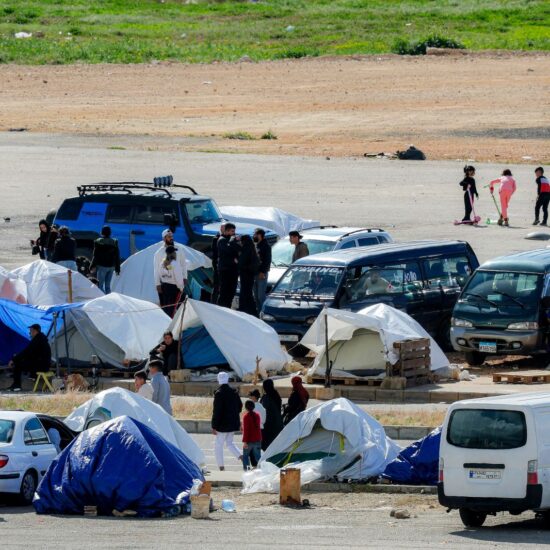
“Beirut’s fragile security: Civilian exposure, armed actors and sectarian fallout”. Now’s author Rodayna Raydan describes Beirut’s worsening security crisis caused by weak state control and the presence of armed groups operating in civil spaces. Residents are also thinking about possible dangers, as neighbors could become targets within the broader conflict with Israel. This dynamic is fostering sectarian tensions, with communities feeling unequally threatened and mistrust among citizens growing. Simultaneously, the debates over hosting displaced people are deepening divisions, reflecting a broader political and social crisis in Lebanon.