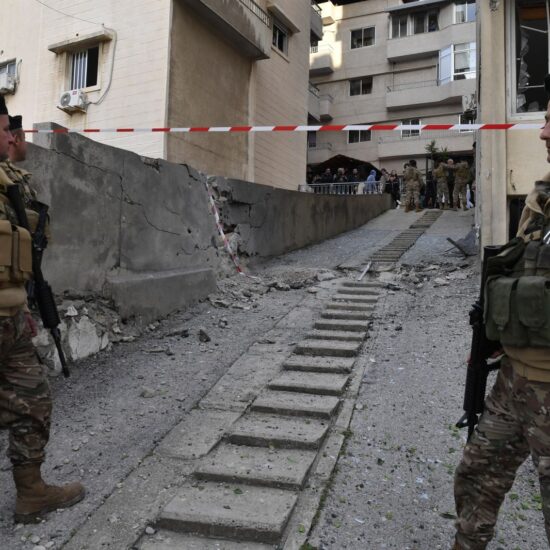
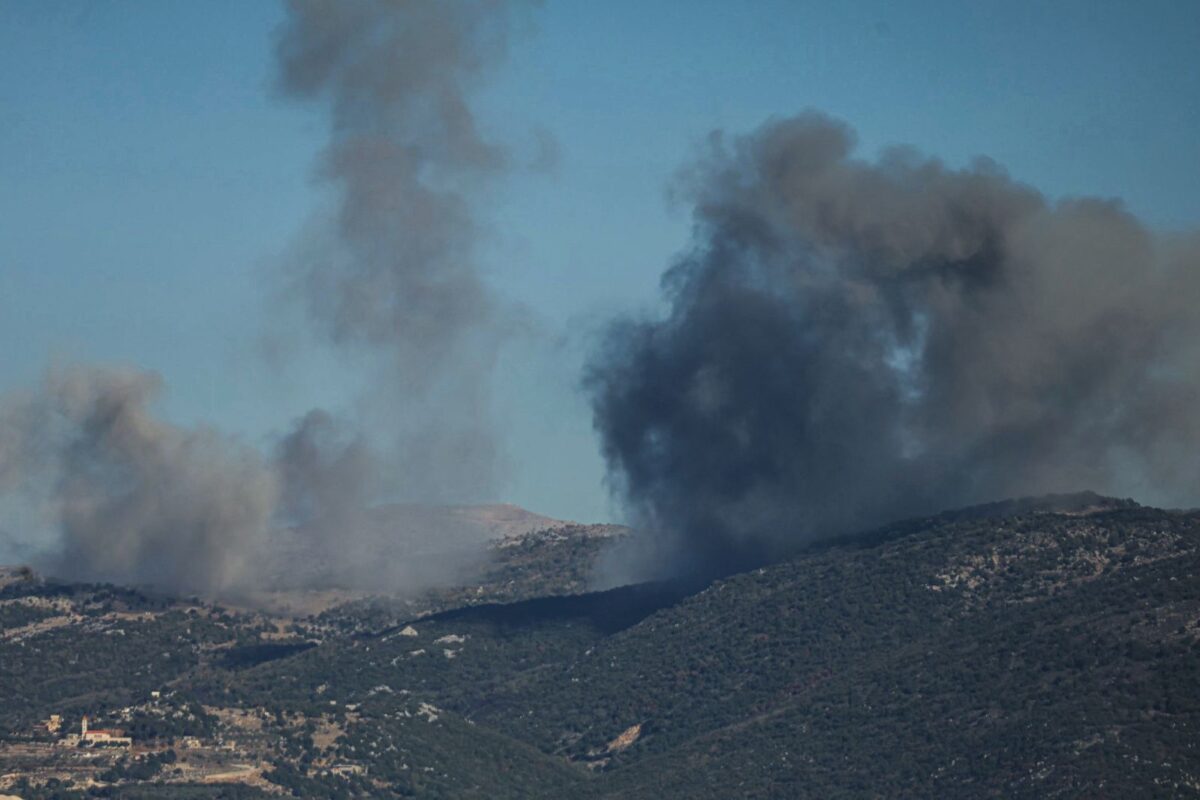
BEIRUT — Israel’s expanding air campaign in eastern Lebanon reflects a strategic recalibration rather than a short-term escalation tied to diplomacy. By striking the Bekaa and the eastern mountain chain, Israel appears focused on long-term force denial — preventing Hezbollah from rebuilding or safeguarding its military infrastructure — regardless of parallel political tracks.
Why it matters
The widening geography of Israeli strikes suggests the conflict is entering a new phase. Instead of concentrating solely on frontline areas near the southern border or Beirut’s southern suburbs, Israel is increasingly targeting the logistical depth that underpins Hezbollah’s military capacity. That shift raises the stakes for Lebanon at a moment when international actors are pushing for stabilization and institutional support.
What’s driving it
- Doctrine over signaling: Israel’s actions indicate a belief that deterrence requires continuous enforcement, not episodic warnings. The aim is to deny Hezbollah any space — geographic or political — to preserve advanced weapons systems.
- Eastern Lebanon as a hub: The Bekaa and Baalbek-Hermel region have long functioned as storage, transit, and reconstitution zones, particularly along the Lebanon–Syria corridor. That makes them central to Israel’s threat perception.
- Time pressure: Israel appears unwilling to allow extended grace periods in which Hezbollah can regroup under the cover of ceasefire mechanisms or diplomatic mediation.
Between the lines
- Diplomacy hasn’t displaced force. International conferences, mediation efforts, and monitoring mechanisms may shape the political environment, but they have not altered Israel’s operational calculus.
- The “gray zone” is shrinking. Areas once treated as peripheral to the battlefield — especially inland regions — are now treated as legitimate targets if linked to military logistics.
- State authority remains the missing variable. The absence of a unified Lebanese state position on monopoly of force continues to expose the country to external enforcement, rather than internal regulation.
The Lebanese army question
Support for the Lebanese Armed Forces (LAF) and Israeli strikes are not mutually exclusive in the current framework. International backing for the LAF is increasingly framed as a future solution, while Israeli military action addresses what external actors view as immediate risks. The unresolved tension lies in the lack of a political decision that would allow the LAF to act as the sole guarantor of border security.
What to watch
- Target patterns: Continued focus on eastern Lebanon would confirm a sustained campaign against Hezbollah’s depth, not just its frontline posture.
- Political messaging from Beirut: Any shift away from militia-based deterrence toward a state-centric security narrative would be significant.
- Border deployment benchmarks: Progress — or lack thereof — in extending effective state control across Lebanon’s borders will shape external intervention.
- UNIFIL’s future: With mandate debates approaching, pressure will grow for Lebanon to demonstrate credible alternatives to non-state armed control.
Bottom line
Israel’s strikes in the Bekaa are less about immediate retaliation and more about shaping the strategic environment ahead. As long as Lebanon lacks a clear, enforceable state security framework, military logic — rather than political negotiation — is likely to dominate the trajectory.