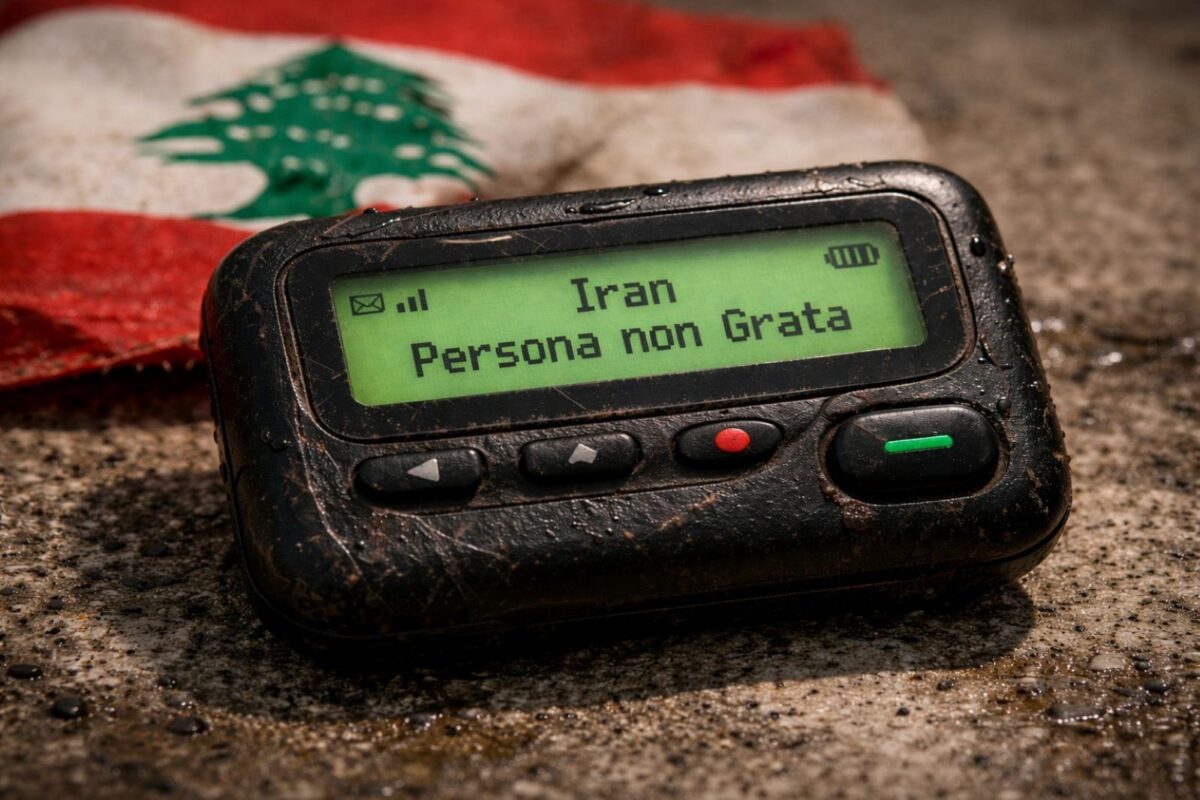
Lebanon has taken an unusually bold step against Iran, rejecting its incoming ambassador and recalling its own envoy from Tehran — a rare moment where the Lebanese state appears to be testing the limits of its sovereignty in the face of entrenched Iranian influence.
Why it matters
Lebanon’s decision to declare Iran’s designated ambassador persona non grata marks one of the clearest public confrontations with Tehran in years — signaling a shift from quiet tension to overt diplomatic escalation.
What happened
Lebanon’s Foreign Ministry summoned Iran’s chargé d’affaires in Beirut and formally withdrew approval for ambassador-designate Mohammad Reza Sheibani.
Sheibani was declared persona non grata and ordered to leave by March 29, 2026.
In parallel, Beirut recalled its ambassador to Iran, Ahmad Sweidan, for consultations.
Officials cited violations of diplomatic norms — but the move carries deeper political implications.
The big picture
For decades, Lebanon’s relationship with Iran has operated outside normal diplomatic channels, shaped instead by Tehran’s deep political and military footprint inside the country.
This move disrupts that pattern.
By rejecting Iran’s envoy outright, Lebanon is doing something it has historically avoided: drawing a visible, institutional red line. Whether symbolic or substantive, the message is clear — the state is attempting, at least momentarily, to reclaim diplomatic agency.
Between the lines
This is not just about diplomacy — it’s about authority.
The decision reflects a deeper internal struggle over who controls Lebanon’s foreign policy: the state, or the network of actors aligned with Iran. In that sense, the expulsion is as much a domestic signal as it is a message to Tehran.
Yes, but
Lebanon is not confronting Iran from a position of strength.
Tehran’s influence inside Lebanon — through political alliances and armed actors — means any external escalation carries internal consequences. What begins as a diplomatic dispute could quickly morph into political or security pressure at home
What to watch
Whether this step is followed by broader policy shifts on sovereignty and foreign influence
Reactions from Hezbollah and other Iran-aligned actors
Whether Iran responds symmetrically — or asymmetrically
If this marks a sustained repositioning or a one-off gesture under pressure
The bottom line
Lebanon has made a rare move that breaks with years of diplomatic ambiguity. The real test now isn’t the decision itself — it’s whether the state can sustain it.