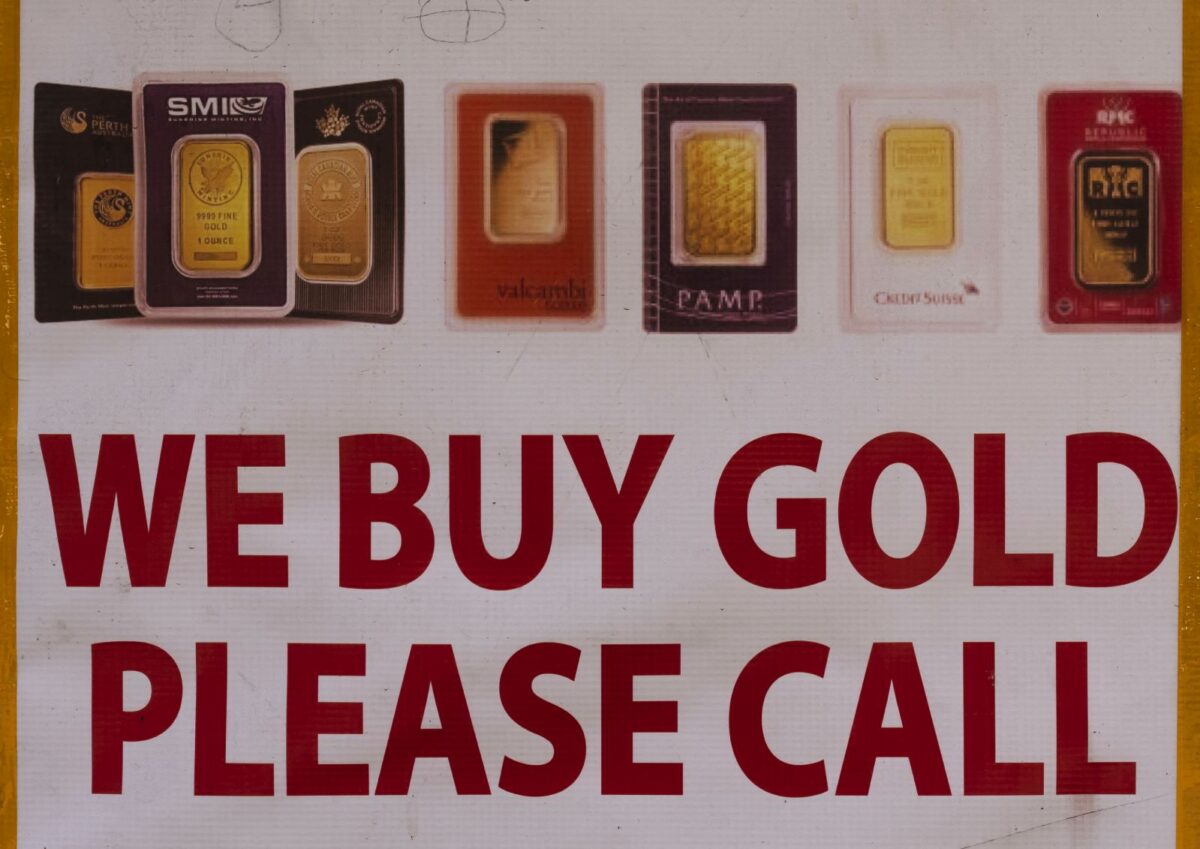
As global gold prices rise and fall, Lebanon’s gold reserve is back in the spotlight. With depositors still unable to access their savings and no clear recovery plan, a simple question remains: should the gold stay untouched, or be used directly or indirectly to help repay depositors?
As global gold prices fluctuate sharply, Lebanon’s gold reserve has once again returned to the center of public debate. With depositors still unable to access their savings and no credible financial recovery plan in sight, a question that has lingered for years is resurfacing with new urgency: should Lebanon’s gold remain untouchable, or should it be used directly or indirectly to help repay depositors?
The renewed attention comes amid sharp movements in international gold markets. In recent weeks, prices surged as geopolitical tensions intensified, particularly fears of a wider regional confrontation involving the United States and Iran. Investors rushed toward gold as a traditional safe haven, driving prices to record highs, before a swift correction followed as markets stabilized and profit-taking set in.
For Lebanon, however, the debate over gold is not about timing the market or short-term price volatility. It is about how a country in deep financial collapse manages one of its last remaining sovereign assets at a moment when trust in the state, the banking sector, and public institutions has largely evaporated.
What Lebanon owns
Lebanon holds approximately 286.5 tons of gold, according to economic and political columnist Sabine Oueiss. The reserve is divided between vaults at Banque du Liban (BdL) and holdings abroad, primarily at the US Federal Reserve. Based on an average gold price of around $4,800 per ounce, the total value of the reserve is estimated at roughly $45.5 billion.
In global terms, this places Lebanon 19th among countries with the largest gold reserves and second in the Middle East and North Africa after Saudi Arabia. But the more striking comparison is domestic. With Lebanon’s GDP currently estimated at around $35 billion, the gold reserve alone represents nearly 130 per cent of national output the highest such ratio in the world.
This disproportion highlights both the scale of the asset and the depth of the country’s economic collapse. What once functioned as a symbol of monetary stability now stands in stark contrast to an economy that has lost over 90 per cent of its currency value and wiped out household savings.
A legally protected asset
Despite its national symbolism, Lebanon’s gold does not legally belong to the state. It is an asset of Banque du Liban, held alongside foreign currency reserves. Its use is governed by Law No. 42 of 1986 a one-article law that strictly prohibits the sale, disposal, or use of the gold, whether directly or indirectly.
Speaking to NOW, Sabine Oueiss, political and economic columnist at An-Nahar newspaper said this legal framework is central to the debate. “Any proposal to use gold whether to compensate depositors, back financial instruments, or support a recovery plan would require a political decision followed by a legislative amendment.”
The law itself, she explains, reflects Lebanon’s political history. The gold was made untouchable precisely because of a system known for mismanaging public resources. Protecting the reserve was meant to shield it from political interference, corruption, and short-term deals.
Gold was framed as a reserve for “future generations,” a phrase that has been repeated for decades. Oueiss questions its meaning today, noting that the same justification has been used since the 1950s, while successive crises have steadily eroded the country’s economic foundations.
Why pressure is mounting
Calls to use the gold have intensified in recent years largely because its value has more than doubled. Before the financial collapse, Lebanon’s gold was valued at around $16–18 billion. Today, estimates range between $40 and $45 billion, depending on market prices.
At the same time, depositors remain locked out of their savings, with no comprehensive restructuring of the banking sector in place. Partial withdrawals and unequal treatment have fueled public anger and renewed demands to tap any remaining national asset.
Supporters of using the gold argue that they are not calling for its outright sale. Instead, they propose using a portion of the reserve as collateral to allow Lebanon to borrow at lower interest rates, with funds directed toward compensating depositors or supporting long-term recovery instruments.
But both economists interviewed by NOW warn that this framing understates the risks.
A conditional red line
For Walid Marrouch, Professor of Economics at the Lebanese American University, any discussion of mobilizing gold must begin with a clear precondition: comprehensive banking sector restructuring.
Speaking to NOW, Marrouch stresses that gold should not be used to absorb losses resulting from systemic mismanagement. “These strategic assets must be deployed only as the final component of a holistic recovery plan,” he says—one that includes fiscal reform, debt restructuring, and a transition toward a productive economy.
Using gold before closing the financial gap, he warns, amounts to “throwing good money after bad.”
Marrouch highlights the risk of moral hazard. If public assets are used to bail out private banks, it sends a message that bankers, politicians, and the central bank face no consequences for their actions. Losses are socialized, while profits accumulated during years of financial engineering and excessive interest rates remain private.
Beyond the ethical dimension, he argues, this approach is economically inefficient. It removes incentives for prudent risk management and increases the likelihood of future crises.
The last hard asset
There is also a symbolic and monetary dimension to the gold reserve. For Marrouch, liquidating it would deprive Lebanon of its last remaining “hard” asset, one that serves as a psychological floor for the currency’s value, or for any future monetary regime the country may adopt.
This concern echoes Oueiss’s warning that gold is not meant to finance short-term spending or plug temporary budget holes. Its primary function is to anchor confidence in the monetary system and preserve a minimum level of sovereign credibility during prolonged crises.
Any move to sell, pledge, or encumber the gold therefore raises a deeper question: does the Lebanese state currently have the institutional capacity and integrity to manage such an asset in the public interest?
Lebanon’s recent history offers little reassurance. Previous inflows, whether from borrowing, international aid, or financial engineering were largely dissipated within a system lacking accountability and oversight.
Alternatives and their limits
Proponents of using gold often point to alternatives short of outright sale, such as gold swaps, leasing arrangements, or collateralized loans. These mechanisms, used by other central banks, can generate temporary liquidity without transferring ownership of the underlying asset.
Marrouch acknowledges that such options exist. However, he notes that all of them would require amending Law No. 42 of 1986, which currently prohibits any form of disposal or encumbrance of the gold.
Even then, he cautions, these tools would only restore confidence if they were part of a credible and transparent recovery framework. Under current governance conditions, markets would likely interpret any gold-backed borrowing as an act of desperation rather than reform.
Failure to meet loan conditions could result in an indirect and gradual loss of the reserve, while burdening future generations with new obligations that deliver no real economic recovery.
Who should benefit?
Some proposals currently being discussed, especially those tied to draft financial gap laws, suggest using future revenues from gold-backed assets to support long-term bonds aimed at compensating large depositors, usually those with balances above $100,000. Smaller depositors would, in theory, be repaid using existing central bank reserves.
However, this approach raises serious questions about fairness and accountability. Gold is a national asset that belongs to all Lebanese, not only depositors. Any decision to use it must clearly separate legitimate savings from accounts that benefited from excessively high interest rates, financial engineering, or crisis-era loopholes.
Marrouch argues that any recovery plan must set clear priorities. Small depositors should be fully protected to guarantee a basic social safety net, while large depositors may have to accept significant losses or have part of their deposits converted into bank shares through bail-ins.
An institutional test
For both Oueiss and Marrouch, the conclusion is clear: gold alone cannot restore stability, repay depositors, or fix Lebanon’s public finances. Its real value lies in supporting trust—something that can only be rebuilt through political reform, accountable governance, and a transparent restructuring of the financial and banking sectors.
Looking ahead, Marrouch sees gold as the potential foundation of credibility for a reformed and genuinely independent central bank. This would require amending the Code of Money and Credit to close legal loopholes, such as those that allowed the government to treat BdL as a lender of last resort for chronic fiscal deficits.
Gold, he argues, can back a new monetary regime only if there is a strict separation between monetary policy and fiscal policy.
At its core, the gold debate is not simply about compensating depositors. It is about whether Lebanon is capable of managing what remains of its public wealth responsibly or whether gold, like so much else, will remain hostage to a political system that has already cost the country dearly.
The danger is not only losing the asset itself, but reinforcing a familiar pattern: consuming what remains instead of using it to rebuild the state. In this sense, Lebanon’s gold has become more than a financial reserve. It is an ethical and institutional test, one that will determine whether the country can finally break with its past, or repeat it once again.