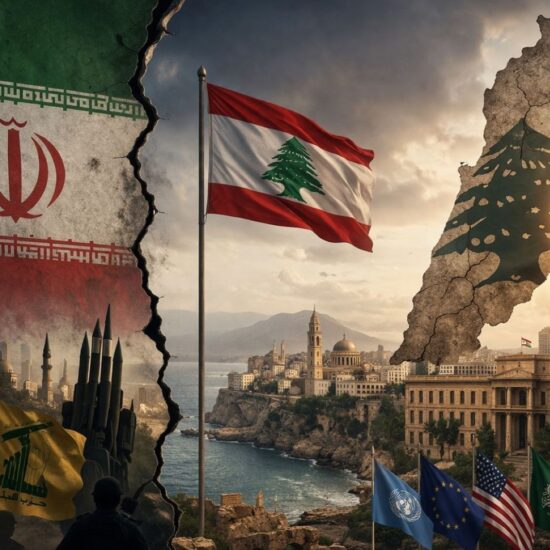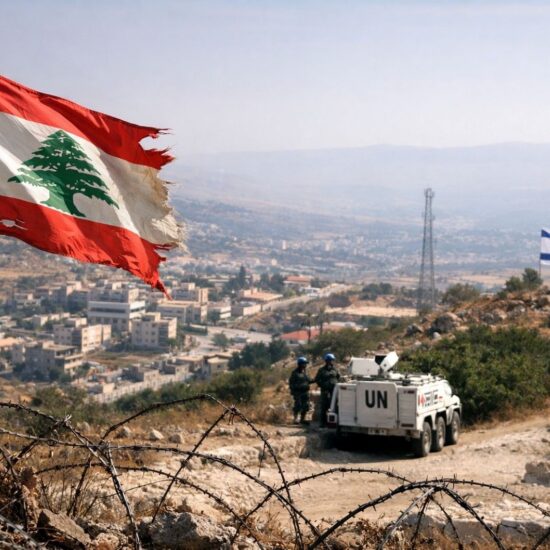
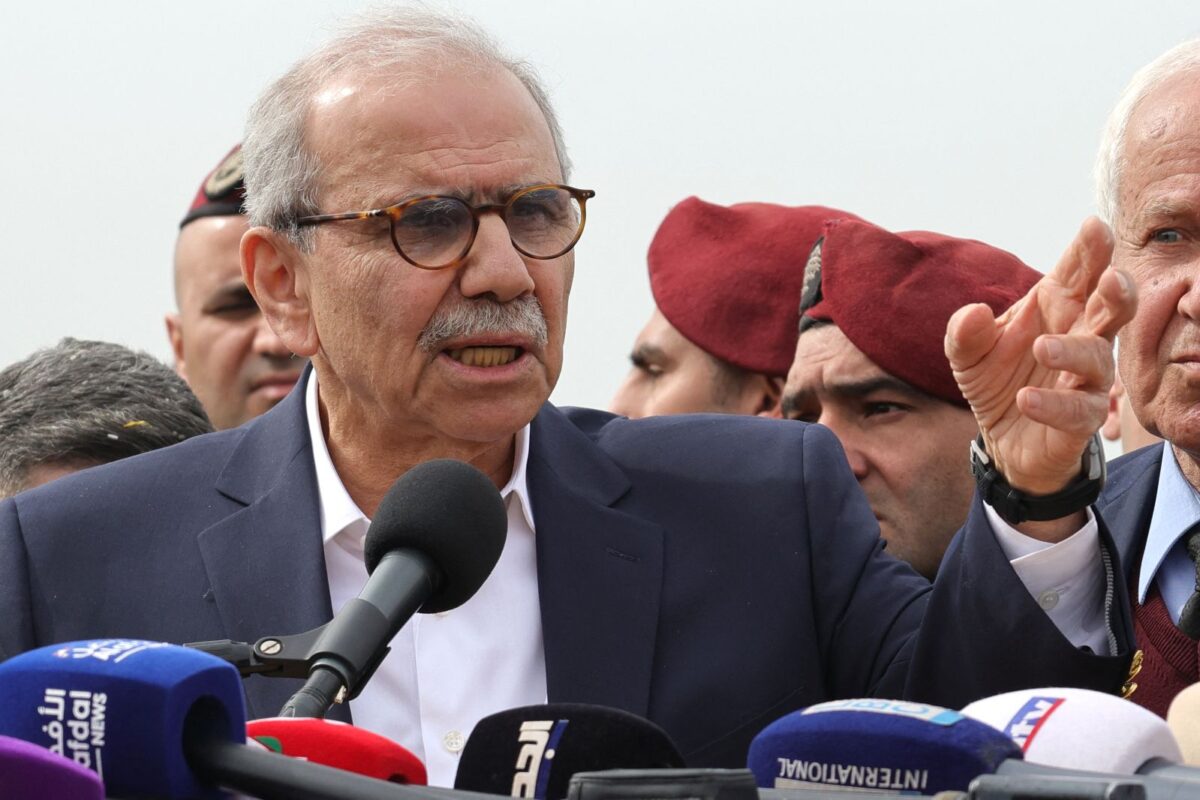
BEIRUT — After nearly three weeks of escalating conflict, Lebanese Prime Minister Nawaf Salam has delivered what may be the most direct and politically consequential assessment yet of the country’s descent into war: Lebanon did not choose this conflict — it was dragged into it.
In a wide-ranging interview, Salam laid bare a reality long whispered in political circles but rarely articulated so clearly from the seat of government. The war, he argued, was not waged in Lebanon’s national interest, but rather in service of external agendas — specifically, in alignment with Iran’s regional confrontation.
“Lebanon was forced into this war,” Salam said, emphasizing that the government had actively sought to avoid escalation. Yet despite those efforts, the country was pulled into what he described as a broader conflict between Iran, the United States, and Israel — one in which Lebanon has “no direct interest.”
A War of Others, Paid by Lebanon
Salam’s framing cuts to the heart of Lebanon’s structural crisis: the existence of an armed actor operating outside state authority, capable of making decisions of war and peace independently of the government.
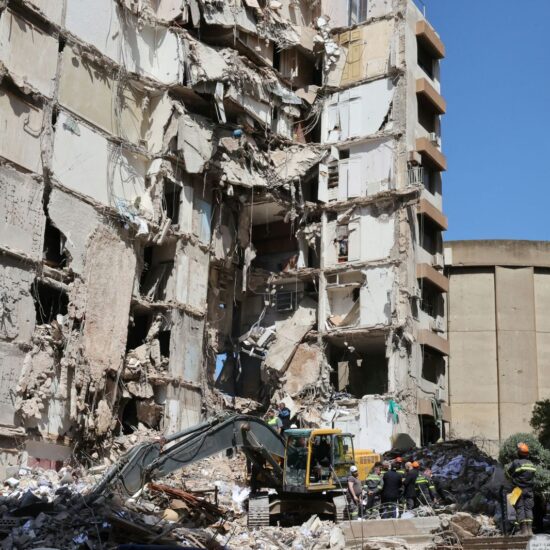
The immediate trigger — the firing of six rockets from southern Lebanon — illustrates the imbalance. According to Salam, the consequences were swift and devastating: tens of thousands displaced within days, entire communities uprooted, and critical infrastructure damaged.
Each rocket, he suggested, came at an enormous human cost. “Every missile had a price,” he noted, pointing to the mass displacement that followed as evidence of the asymmetry between action and consequence.
But beyond the humanitarian toll lies a deeper political rupture. By initiating hostilities, Hezbollah effectively undermined the government’s declared objective of reclaiming sovereign control over military decisions — a cornerstone of Lebanon’s post-civil war order under the Taif Agreement.
The State vs. the Parallel State
Salam repeatedly returned to a central principle: a state cannot function if it does not monopolize the use of force.
“There is no state with two armies,” he said bluntly.
His government has already taken steps in that direction, including formal decisions to restrict all military activity to official state institutions. These moves, he acknowledged, are long overdue — delayed by decades of political compromise and institutional paralysis.
Yet implementation remains the core challenge.
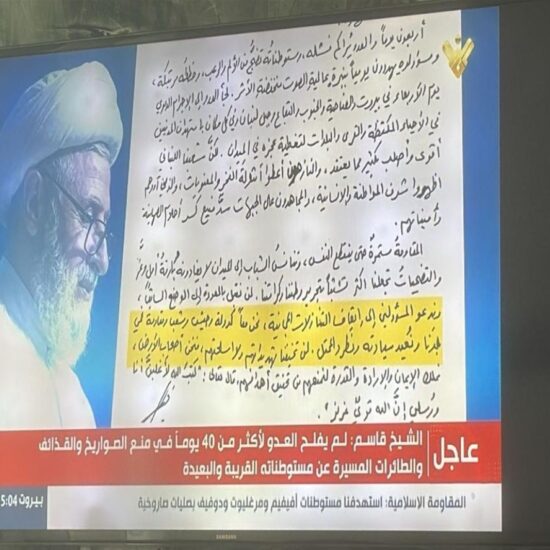
Hezbollah has made clear it does not consider itself bound by these decisions, continuing its military activities despite government decrees. For Salam, this is not merely a legal violation but an existential threat to the idea of the Lebanese state itself.
No More Proxy Battlefield
Perhaps the most striking element of Salam’s remarks was his explicit rejection of Lebanon as a platform for regional conflict.
He stressed that the government will not allow the country to be used to attack Arab states — a clear signal aimed at Gulf nations increasingly alarmed by Hezbollah-linked activities beyond Lebanon’s borders.
This position marks a significant shift in tone. Rather than navigating between competing regional axes, Salam is attempting to re-anchor Lebanon within an Arab framework — one defined by sovereignty, not proxy warfare.
Between War and Negotiation
Despite the ongoing violence, Salam confirmed that Lebanon remains open to negotiations aimed at ending hostilities. The government, he said, is prepared to engage under international auspices, with clear objectives: a ceasefire, Israeli withdrawal from Lebanese territory, and the restoration of stability.
Importantly, he dismissed the notion that negotiations equate to political normalization or recognition, pushing back against domestic narratives that frame diplomacy as capitulation.
A Moment of Clarity — or a Test of Authority?
Salam’s statements represent more than a policy position; they are a direct challenge to the prevailing status quo.
By publicly asserting that Lebanon was dragged into war “in support of Iran,” he is redefining the terms of political debate — shifting responsibility away from abstract geopolitics and toward concrete actors within Lebanon itself.
The question now is whether this clarity can translate into action.
Lebanon has, in the past, produced similar moments of rhetorical resolve, only to see them dissolve under pressure from entrenched interests. What makes this moment different is the scale of the crisis: over a million displaced, widespread destruction, and a growing recognition that the current model is unsustainable.
For Salam, the path forward is clear, even if the road is not.
The state must reclaim its authority. The monopoly over arms must be enforced. And Lebanon must no longer serve as a battlefield for wars it neither chose nor benefits from.
Whether that vision can be realized is another matter entirely.