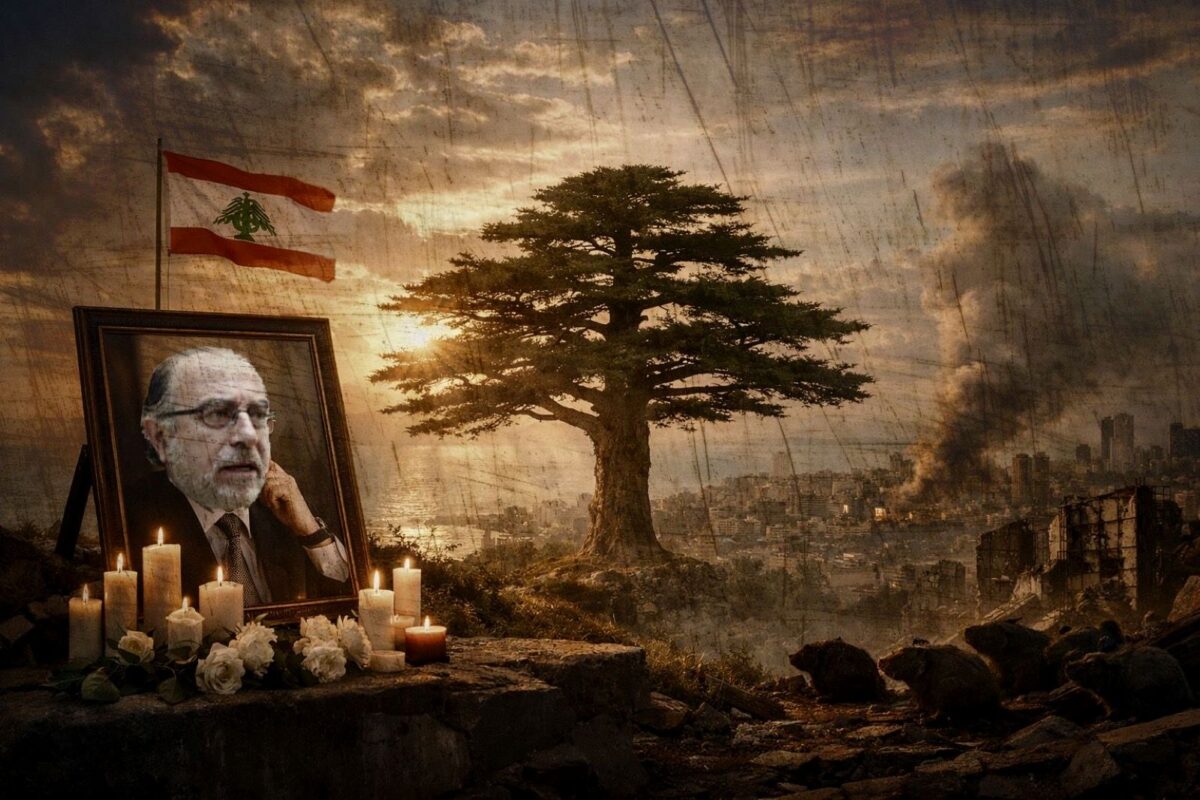
The assassination of Mohammad Chatah was not simply an act of political violence. It was an attempt to assassinate an idea: that Lebanon could be governed by reason rather than fear, by institutions rather than militias, and by sovereignty rather than submission. Chatah’s killing was meant to close the door on the possibility of a state-centered Lebanon—and to warn others against dreaming of one.
Chatah represented a political tradition that has been systematically targeted in Lebanon. He believed in diplomacy over intimidation, accountability over impunity, and the primacy of the state over all armed or ideological projects. His vision was neither abstract nor naïve. It was grounded in the basic premise that countries survive when decisions of war and peace belong to institutions, not factions; when citizens are protected by law, not exposed to it.
The message behind his assassination was clear: ambition would be punished, moderation silenced, and sovereignty redefined as betrayal. Lebanon, we were told, must accept a permanent condition of exception—where violence is normalized, responsibility diluted, and collapse treated as fate rather than choice. It was an effort to impose exhaustion as political realism.
Yet that effort failed.
Mohammad Chatah did not disappear with the explosion that killed him. He remains present as a political idea and a moral standard against which Lebanon’s current condition is measured—and found wanting. His legacy exposes the bankruptcy of those who replaced statehood with intimidation, governance with paralysis, and politics with coercion. They may still dominate the scene, but they do so without legitimacy, vision, or historical credibility.
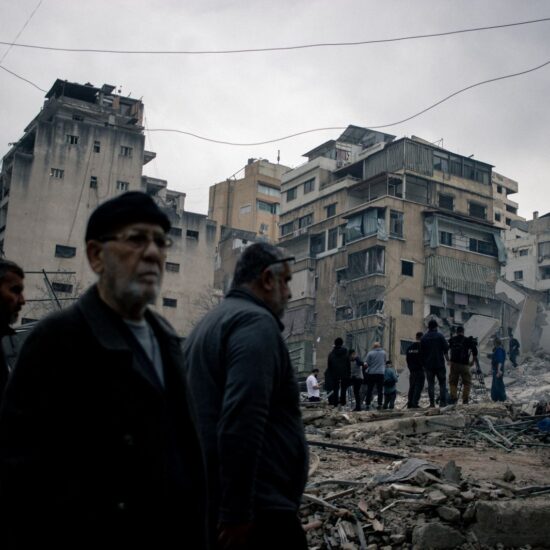
Lebanon today stands at the consequences of abandoning the path Chatah embodied. A hollowed-out state, a collapsed economy, a traumatized society, and a political system unable to protect its own people. These are not accidents of geography or history. They are the results of deliberate choices—made by those who rejected the very principles Chatah stood for.
Commemorating Mohammad Chatah is therefore not an act of nostalgia. It is an act of clarity. It forces a reckoning with what was lost—and why. More importantly, it reasserts that Lebanon’s crisis is not inevitable, and that alternatives have existed, and still do.
The struggle in Lebanon has never been between different opinions or sectarian preferences. It is a struggle between two projects: one that sees life, sovereignty, and institutions as values to be protected; and another that treats them as expendable tools in service of power. Chatah stood firmly on one side of that divide.
On the anniversary of his assassination, remembrance must be more than mourning. It must be a refusal—to normalize political murder, to accept permanent collapse, and to surrender the idea of Lebanon as a sovereign state. Mohammad Chatah lives on not because he was killed, but because the Lebanon he believed in remains unfinished—and still worth fighting for
Makram Rabah is the managing editor at Now Lebanon and an Assistant Professor at the American University of Beirut, Department of History. His book Conflict on Mount Lebanon: The Druze, the Maronites and Collective Memory (Edinburgh University Press) covers collective identities and the Lebanese Civil War. He tweets at @makramrabah