As Lebanon grappled with a week of border tensions, intensified Israeli strikes, political division, and ongoing economic strain, President Joseph Aoun used his Easter address to deliver a carefully framed message, as he defended direct negotiations with Israel while implicitly challenging the track of war without directly naming Hezbollah
Lebanon witnessed a week of ongoing Israeli attacks with Easter marked by uncertainty and prayers for better days.
President Joseph Aoun used his Easter Sunday address from Bkerke to push back against criticism of the government’s diplomatic track. Without naming Hezbollah directly, Aoun referred to actors who “take Lebanon to war against Lebanese interests,” in what was widely interpreted as a response to the group’s stance.
“Some have asked what we will get from negotiation,” Aoun said. “But I ask: what have we benefited from your war?”
He also addressed criticism of potential talks with Israel, stating: “Negotiation is not a concession. Diplomacy is not surrender,” adding that contacts are ongoing to halt “killing and destruction.”
Aoun further warned against the consequences of continued escalation, invoking the example of the Gaza Strip. “It is true that Israel might want to do in southern Lebanon what it did in Gaza,” he said, noting the scale of destruction there and arguing for negotiations to “save what has not yet been destroyed.”
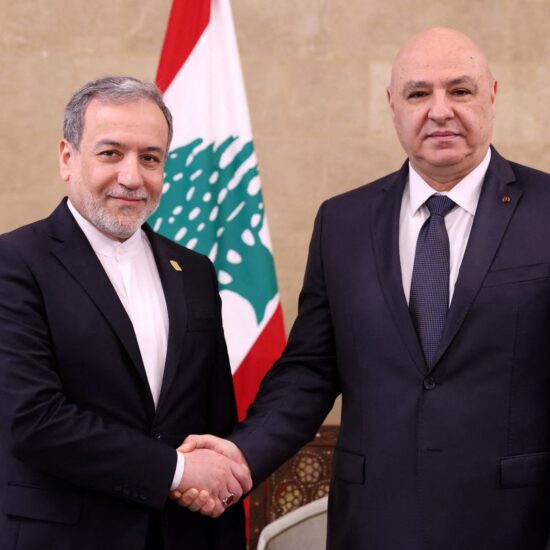
President Joseph Aoun also addressed the controversy surrounding Iran’s representative in Beirut, dismissing his diplomatic status. Aoun said the figure in question “is not an ambassador,” noting that he has not formally presented his credentials and holds no official title, despite remaining at the Iranian Embassy in Lebanon.
The president added that in his meetings with Iranian officials, including the president and foreign minister, discussions centered on the principle of non-interference in the affairs of other states, a position he implied should be reflected in practice.
In Lebanon
Aoun urges diplomacy and criticizes war strategy in Easter Speech: In one of his most pointed remarks to date, President Joseph Aoun warned against internal actors dragging Lebanon into war. The speech reinforced his broader position that diplomacy and negotiations are necessary to prevent further destruction whilst emphasizing that civil peace is a “red line” and stated that “whoever attempts to breach it serves Israel’s interests”
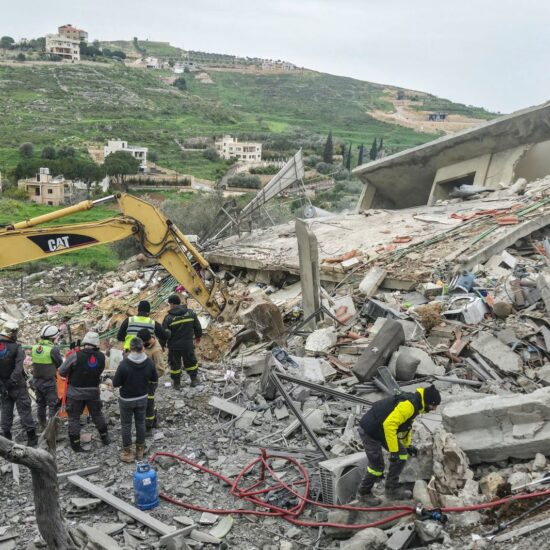
Israeli strikes reach Beirut’s outskirts: Israeli attacks expanded and intensified with a strike targeting a residential apartment in Ain Saadeh, in the Metn area. Pierre Moawad, a Christian political activist affiliated with the Lebanese Forces party, along with his wife were killed in the strike. According to local media sources, the intended target may have been someone living on the floor above the Moawad family. The identity of that individual remains unknown. No comments have been yet made by the Israeli military on the attack.
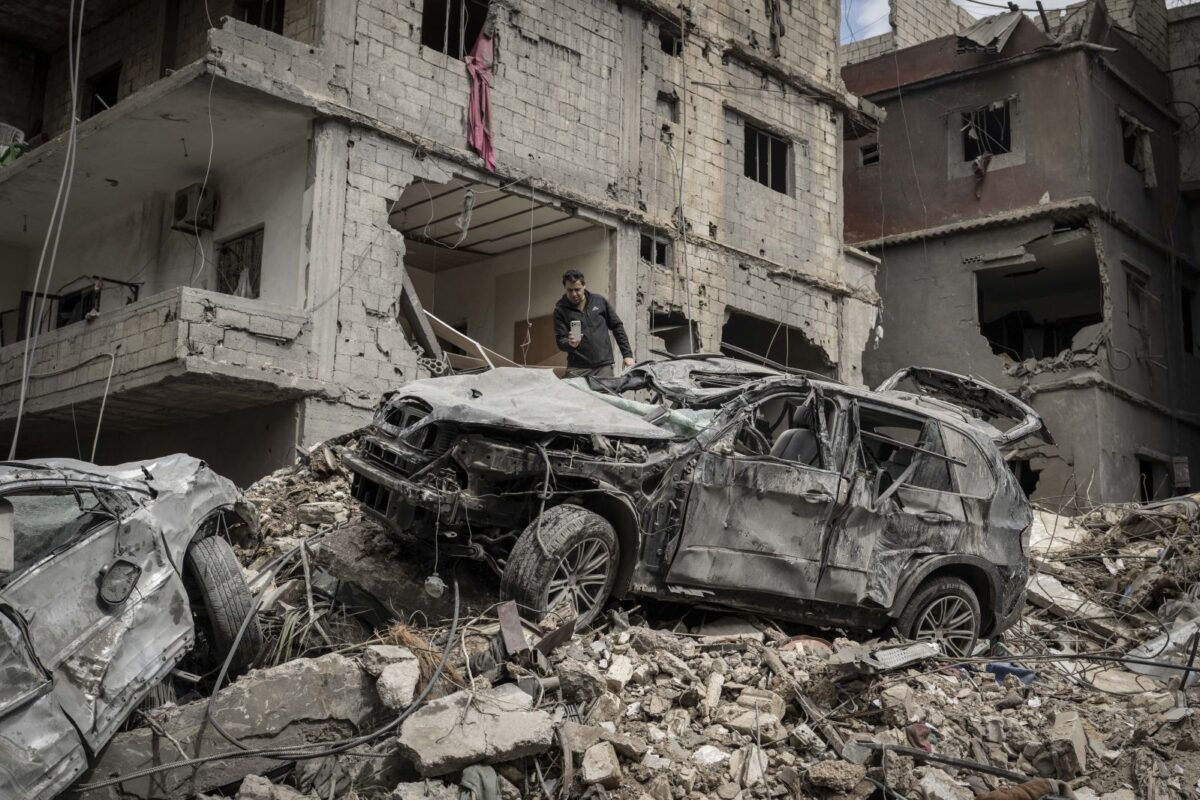
Additionally a strike in Jnah, just 100 meters from Rafik Hariri University Hospital, Lebanon’s largest public medical facility that caused major damage to a nearby residential area. It killed 5 people and injured 52. The hospital sustained no damage. A Hezbollah military official, Yahya Hussein Msheimesh, was killed in the strike on the building.
This marked a significant widening of the confrontation’s geographic scope, raising concerns that areas previously considered relatively excluded from direct targeting are no longer off-limits.
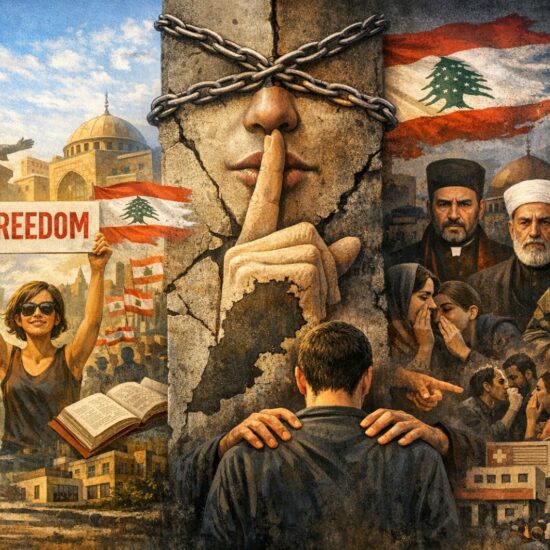
Lebanese Christians mark Easter amid war-driven displacement: Lebanese Christian communities marked Easter Sunday under the shadow of ongoing war and displacement, with many celebrating the holiday away from their ancestors homes and churches amid continued clashes.
Masnaa crossing under threat, trade disruption fears grow: The Israeli threats extended to Lebanon’s eastern Masnaa border crossing, the country’s main land trade gateway with Syria. Israel claims Hezbollah uses crossing for military purposes and smuggling of combat equipment. Syria border authorities say in light of warnings and out of concern for safety of travelers, traffic through the crossing will be temporarily suspended. The possibility of the crossing being targeted or restricted has raised concerns among traders and importers, as any disruption could significantly affect supply routes and further strain an already fragile economic environment.
Lebanese Army withdraws from frontline southern villages: The Lebanese Army withdrew from several southern villages, including Rmeish, Ain Ibl, and Baraashit, citing security risks amid ongoing strikes. The repositioning highlighted the Lebanese army’s capacity to maintain a presence under Israel attacks, while leaving residents facing increasing uncertainty.
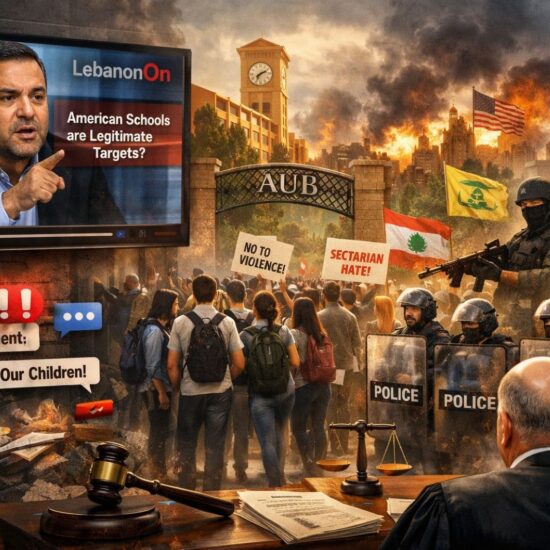
U.S. Embassy warns of potential attacks on universities: The U.S. Embassy in Lebanon issued a warning that Iran-aligned groups may be considering attacks on educational institutions in Lebanon.
Strategic infrastructure targeted: Israeli forces destroyed key bridges in the Bekaa, including in West Bekaa, following advance warnings.
In The Region
Zelensky visits Damascus for security talks with Syrian leadership: Ukrainian President Volodymyr Zelensky made an unexpected trip to Syria’s capital, meeting with President Ahmed al‑Sharaa in Damascus to discuss bolstering cooperation on security and defence. The talks, coming after a visit to Turkey, covered regional stability amid ongoing conflict involving the United States, Israel and Iran, with both sides expressing interest in closer military and strategic coordination.
Iran expands attacks on Gulf energy and water infrastructure: Iranian forces carried out a series of drone and missile strikes targeting critical energy and desalination facilities across the Gulf, including in Kuwait, United Arab Emirates and Bahrain. These strikes hit petrochemical plants, power generation sites and water desalination infrastructure, triggering fires and operational shutdowns. Gulf states reported material damage to key civilian infrastructure, raising concerns about broader disruptions to energy and water supplies in a region already under economic strain from ongoing conflicts.
New diplomatic mediators emerge amid stalemate: With the war entering its second month, countries such as Pakistan, Turkey, and Egypt have stepped forward as potential mediators, seeking to bridge gaps between Tehran, Washington, and other regional actors.
Tensions over the Strait of Hormuz escalate: The strategic Strait of Hormuz has become a flashpoint, with the United States issuing stark demanding its reopening or threatening strikes on Iranian infrastructure. These developments have contributed to volatility in global oil markets and highlighted the strait’s critical role in international energy flows.
What We’re Reading:
“Christ Has Risen. The Lebanese State Has Not” by NOW’s managing editor Makram Rabah uses the symbolism of Easter to contrast themes of renewal with Lebanon’s ongoing political paralysis. It criticizes the country’s leadership, particularly President Joseph Aoun, for relying on rhetoric rather than meaningful reform. Rabah argues that the Lebanese state remains weak and unable to assert authority or address key challenges. He highlights the gap between official discourse and the harsh reality on the ground.
The article “Phoenician, and a Half” by Eli Khoury, NOW’s publisher explores the ongoing debate over Lebanese identity, particularly the Phoenician narrative. It comments on exchanges between intellectuals and frames the issue as part of a broader ideological discussion. Khoury critiques rigid identity labels, arguing that they oversimplify Lebanon’s complex history. He suggests these debates are driven more by political and cultural concerns than factual history.
The article “Response to Charles Hayek’s: Between History and Hallucinations” is written by Franck Salameh, Terse Professor of Near Eastern Studies at Boston College and challenges Charles Hayek’s critique of identity narratives in Lebanon. It argues that Hayek does not objectively defend history but instead promotes his own vision of a unified Lebanese identity. Salameh criticizes what he sees as an attempt to delegitimize alternative identities, particularly among Lebanese Christians.
“Rebuilding Lebanon: Gulf Aid with Strings Attached?” NOW’s journalist Laura Hülsemann examines how Gulf countries are likely to condition any future reconstruction aid to Lebanon. It explains that, unlike after the 2006 Lebanon War, financial support will no longer be unconditional but tied to political and strategic demands. A central issue is Hezbollah’s role, with Gulf states reluctant to fund rebuilding if the group retains influence.
“Negotiating Without Power: Lebanon’s State of Substitution” In this piece, Ramzi Abou Ismail argues that while the Lebanese state appears to act like a sovereign actor, engaging in diplomacy and negotiations, it lacks real authority on the ground. The author also highlights that true negotiation requires control over territory and decision-making, which the state does not fully possess, particularly due to Hezbollah’s independent military role.