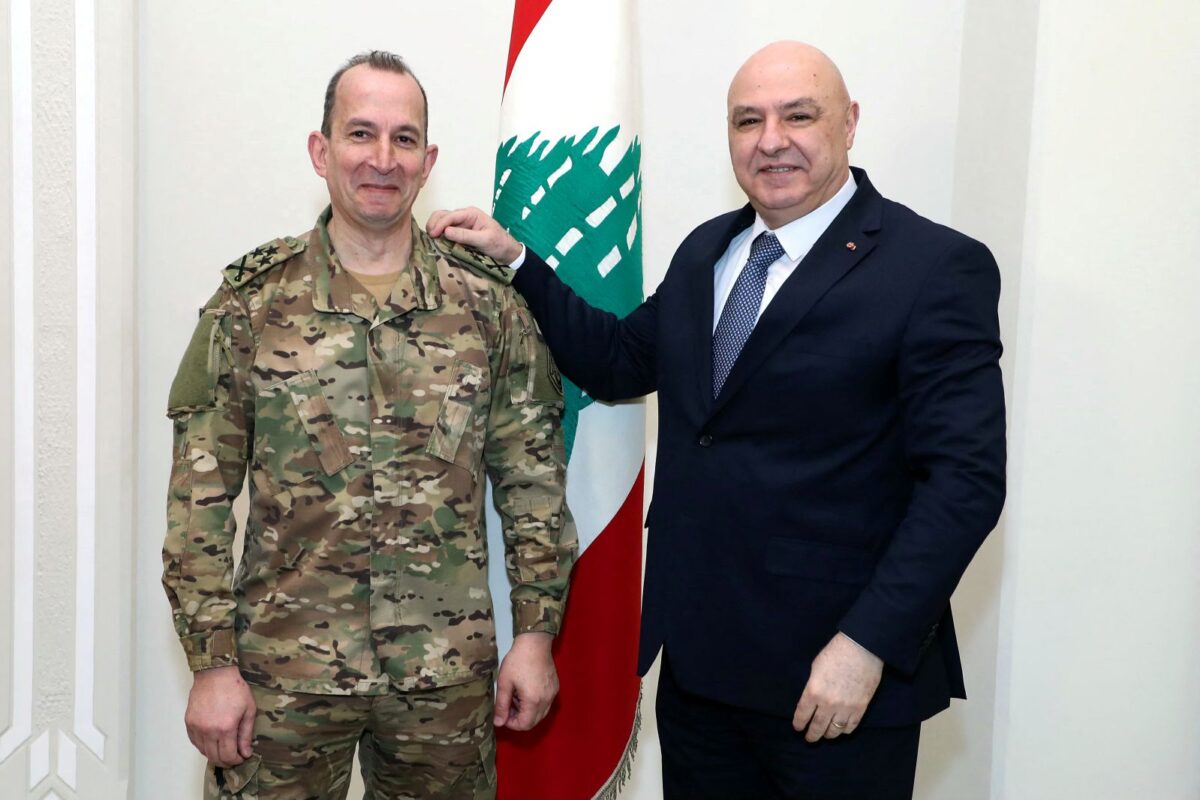
During his visit to the Ministry of Defense this week, President Joseph Aoun declared that the Lebanese Army is a “red line” and warned against turning the institution into a subject of political controversy. On this point, he is absolutely right.
In a country where nearly every institution has been weakened by years of political paralysis, the army remains one of the last structures that still commands national legitimacy. It is not simply a military institution; it is a national anchor that holds together a fragile state.
In a country where nearly every institution has been weakened by years of political paralysis, the army remains one of the last structures that still commands national legitimacy. It is not simply a military institution; it is a national anchor that holds together a fragile state.
But protecting the army requires more than defending it rhetorically. It requires protecting it from the consequences of a strategy that continues to expose the institution to risks it did not create.
The War Lebanon Did Not Avoid
For the past year, Lebanon’s leadership has justified its refusal to confront Hezbollah with a familiar argument: disarming the group by force could push the country into civil war. Given Lebanon’s history, this fear is understandable. No Lebanese leader can treat the prospect of internal conflict lightly. Yet the events of the recent weeks force a difficult question. What exactly did this strategy prevent?
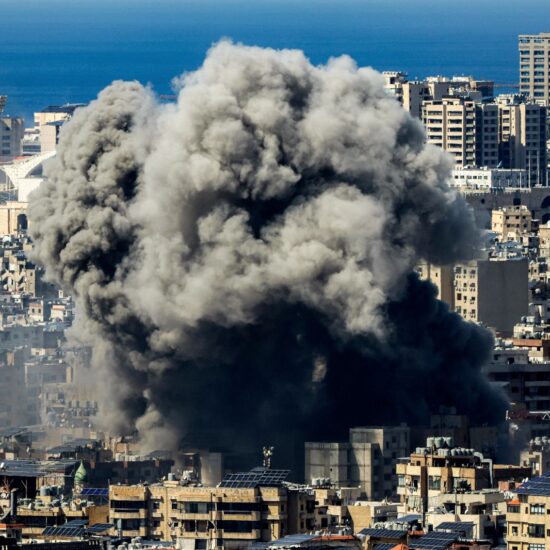
Lebanon did not avoid war. What it avoided was one specific form of war, internal confrontation. In its place, the state accepted another: repeated regional conflicts that devastate the country while remaining outside the control of its own institutions. The state avoided the risk of civil war but accepted the certainty of national destruction.
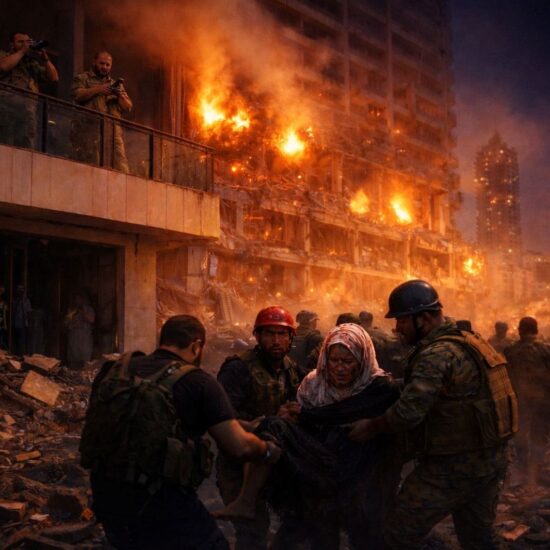
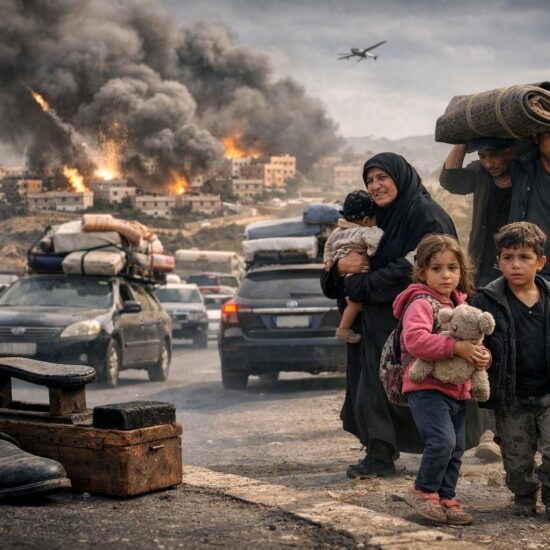
Entire communities have been displaced. Infrastructure has been destroyed again. Elections have been postponed. Lebanon’s fragile institutions have been pushed further toward paralysis. Meanwhile, the country’s sovereignty continues to erode as decisions of war and peace are taken beyond the authority of the state.
A Strategy of Avoidance
This outcome was not inevitable. It is the result of a political approach that has treated the country’s central contradiction as something that could be indefinitely managed rather than resolved.
President Joseph Aoun and Army Commander Rodolphe Haykal have both defended the same logic: avoid confrontation with Hezbollah in order to preserve internal stability while hoping that international pressure or regional developments will eventually solve the problem.
But hope is not a national security doctrine.
A sovereign state cannot coexist indefinitely with a powerful armed organization operating outside its authority while simultaneously expecting to remain insulated from regional war. At most, two of these conditions can exist at the same time: Hezbollah’s military autonomy, Lebanese sovereignty, and peace along the border.
Lebanon’s leadership has attempted to preserve all three. The result has been the gradual weakening of the state itself.
The Army’s Impossible Position
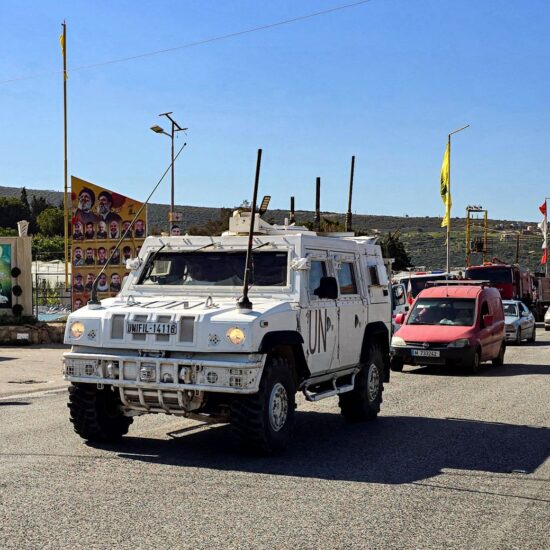
The Lebanese Army did not create this contradiction. It did not design the political system that allowed a powerful armed actor to operate outside the state’s authority. Yet it is the institution that must manage the consequences of that contradiction. As long as the state avoids the decisions required to restore its authority, the army is placed in an impossible position: expected to guarantee national stability while lacking the political strategy necessary to enforce it.
Over time, this situation carries its own dangers. When a state appears unable to control the use of force within its own borders, citizens begin to lose confidence in its institutions. Foreign actors, meanwhile, increasingly justify bypassing the Lebanese state altogether.
Protecting the army therefore means ensuring that it is not indefinitely trapped inside this political contradiction.
Leadership and Responsibility
Leadership exists precisely for moments like this. When a strategy repeatedly produces destruction without resolution, it must be reassessed. Continuing to manage the crisis without confronting its root is no longer prudence; it is avoidance.
If the current military leadership remains committed to a doctrine of indefinite containment, then Lebanon must seriously consider whether the army requires new leadership capable of guiding the institution through the historic transition now facing the country.
Such a change would not represent an attack on the army. On the contrary, it would be an attempt to protect its credibility and ensure that the institution remains capable of fulfilling its central mission: restoring the authority of the state over its territory.
Disarmament and National Integration
Yet restoring that authority cannot be approached as a purely military question.
Hezbollah is not simply an armed organization. It is embedded within a community that, for decades, has come to rely on it as a source of protection and political representation in a system that has often failed to treat all citizens equally.
Hezbollah is not simply an armed organization. It is embedded within a community that, for decades, has come to rely on it as a source of protection and political representation in a system that has often failed to treat all citizens equally.
Demanding disarmament without addressing this reality would only deepen Lebanon’s divisions.
What Lebanon requires is a national strategy that combines the restoration of state authority with the reintegration of the communities that have come to depend on alternative structures of power.
Security guarantees, reconstruction of devastated regions, political inclusion, and serious economic investment plans must be part of a new national contract that reassures citizens that the state is capable of protecting their rights and their futures.
This is not a battle against a community. It is an attempt to rebuild the idea of a state that belongs equally to all Lebanese.
Ending the Cycle
Avoiding difficult decisions does not eliminate danger. It transfers the cost of that danger onto society. For too long, Lebanon’s leadership has framed the country’s choices as a stark dilemma between civil war and stability. In reality, the refusal to confront the contradiction at the center of the political system has produced neither.
Lebanon today is not choosing between war and peace. It is choosing between continuing the cycle of destruction or finally restoring the authority of a state capable of protecting its citizens. If the army is truly a red line, then protecting it must begin by ending the strategy that continues to place the institution in an impossible position.
Ramzi Abou Ismail is a Political Psychologist and Senior Research Fellow at the Institute for Social Justice and Conflict Resolution at the Lebanese American University.
The views in this story reflect those of the author alone and do not necessarily reflect the beliefs of NOW.