THE FORMER PRIME MINISTER HAS NOT CLARIFIED WHETHER HE WOULD RUN IN THE PARLIAMENTARY ELECTIONS.
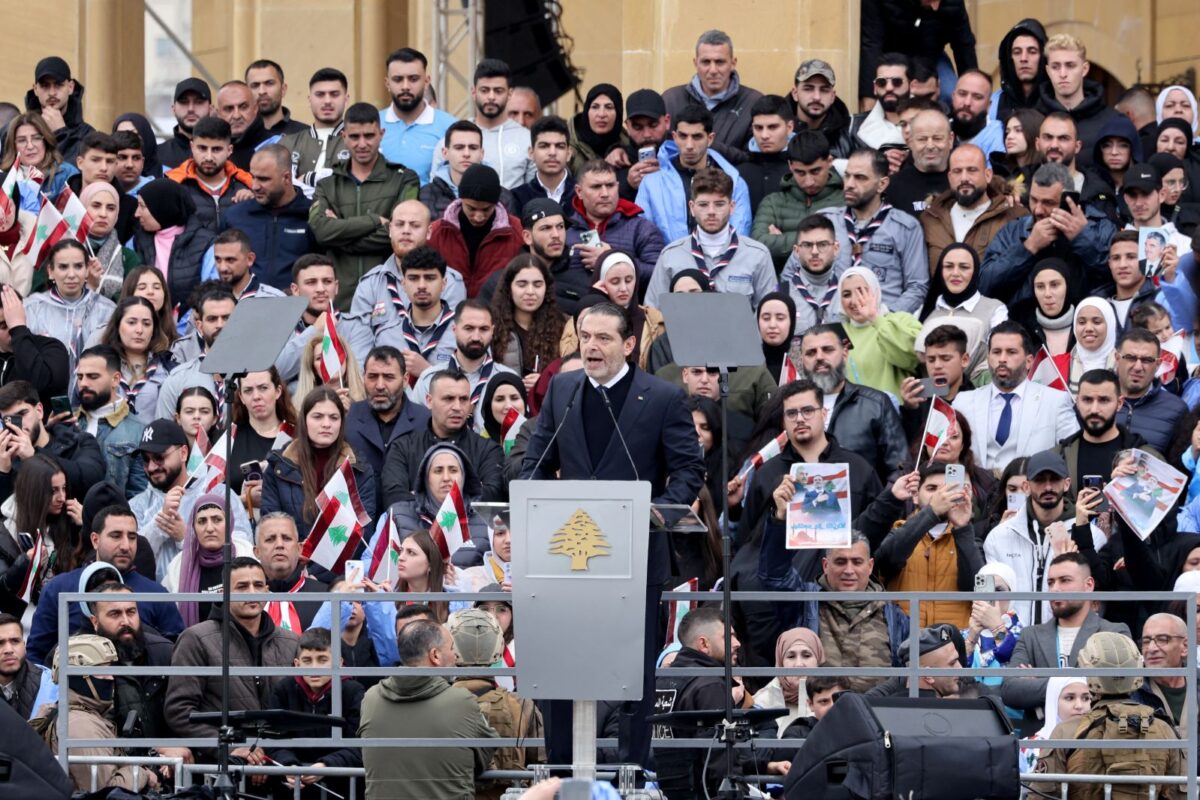
On the 21st anniversary of the assassination of Rafik Hariri, his son and former Lebanese Prime Minister, Saad al-Hariri, indicated a possible return to politics. At Martyrs’ Square on Saturday, he said his party, the Future Movement, is likely to participate in the upcoming parliamentary elections.
Hariri wants to wait to reveal further details until the official election announcement, which could be delayed due to disputes over diaspora voting. Some Lebanese politicians have doubted whether this year’s elections, scheduled in May, will be held on time. However, last Friday, Parliament Speaker Nabih Berri stressed the importance of holding the elections as planned.
Since Hariri’s retirement from politics in 2022, Lebanon’s Sunni political scene has remained fragmented. Hariri did not confirm whether he will run in the upcoming parliamentary elections, but observers believe he is unlikely to run himself due to opposition from Saudi Arabia.
Hariri also emphasized the need for a monopoly on arms under state authority — a stance that could be interpreted as softening his tone to appease Saudi Arabia. Riyadh withdrew its support in 2017 over Hariri’s stance on Hezbollah.
In Lebanon
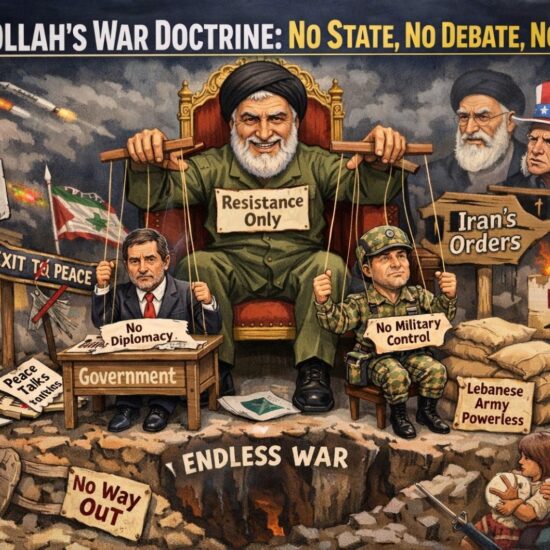
Second phase of Hezbollah disarmament: Lebanon’s cabinet is scheduled to discuss the next steps to disarm the militia. The new phase will focus on the region between the Litani and the Awali Rivers, whereas last December, the goal was to disarm Hezbollah south of the Litani River.
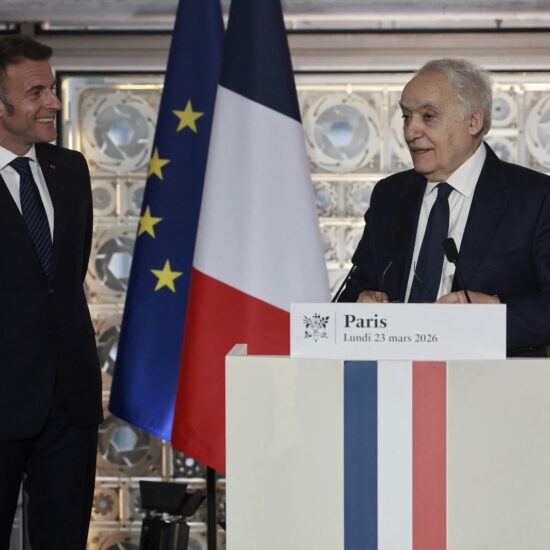
Army Commander Rodolphe Haykal attended the Munich Security Conference, where he met with representatives of different countries. Upon his return, he is expected to share details regarding the disarmament plans during Monday’s meeting. The cabinet session will also serve as preparation for the international conference to be held early March in Paris, which is aimed at strengthening the Lebanese Army.
German President visiting Lebanon: Frank-Walter Steinmeier arrived in Beirut on Monday and met with Lebanese President Joseph Aoun. Steinmeier reiterated that both Israel and Lebanon should adhere to the 2024 ceasefire, saying that the political development could be an opportunity for the two countries. He will also meet with Speaker of Parliament Nabih Berri and Prime Minister Nawaf Salam. The talks will most likely include details regarding the disarmament of Hezbollah before Steinmeier leaves for Jordan on Wednesday.
Attack near the Masnaa border on Sunday night: Israel carried out a strike on a car close to the border between Syria and Lebanon, killing four people. According to Israel, they targeted members of Islamic Jihad.
The government plans to lower prices in preparation for fasting. Lebanon’s Economy Minister, Amer Bisat, plans to cut prices on about 20 staple products by 15 per cent in several supermarkets ahead of Ramadan and Lent. The measure aims to prevent price increases during the fasting period, which stores justify by citing higher demand.
Tripoli buildings to be destroyed: The Northern Lebanese city decided on Sunday to bulldoze the buildings around Al-Kobbe. In early February, more than a dozen people were killed during such incidents, as some of the unstable residential apartments have collapsed.
In The Region
U.S. and Iran brace for negotiations on possible nuclear deal: The Iranian Foreign Minister, Abbas Araghtschi, announced on Monday that he is set to meet the head of the International Atomic Energy Agency, Rafael Grossi. Araghtschi arrived in Geneva yesterday, accompanied by Iranian nuclear experts.
Tomorrow, the U.S. and Iran will begin the second round of nuclear talks in Geneva, to discuss a possible agreement between the two countries. The Trump administration wants Tehran to halt its nuclear programme, threatening strikes if the country does not comply. Iran, in turn, hopes that the U.S. sanctions will be lifted as part of an agreement, potentially in exchange for a temporary halt to further nuclear enrichment. A key point of contention has been the degree to which Tehran should limit its nuclear programme.
Another point of contention concerns Iran’s regional proxies. The U.S. administration also wants to address Iran-backed armed groups such as Hezbollah in Lebanon — a topic Tehran is not willing to discuss.
The U.S. brings Starlink to Iranian opposition figures. The American administration brought 6,000 Starlink terminals to Iran, The Wall Street Journal reported. The initiative aimed to help Iranians stay connected internationally amid ongoing protests while the Iranian regime enforced an internet blackout and cracked down on protesters.
Israel eases West Bank land grab. On Sunday, Israel approved plans to allow its settlers to purchase land in the occupied West Bank, bypassing Palestinian authorities and paving the way for further annexation.
Board of Peace meeting upcoming: According to American President Donald Trump, the member countries of his Board of Peace pledged $5 billion to rebuild Gaza. They are scheduled to meet on Thursday in Washington, D.C., where they are expected to officially commit to these payments. At last week’s Munich Security Conference, the EU’s foreign policy chief, Kaja Kallas, criticized Trump’s Board of Peace, arguing that he uses it as a personal platform while sidelining the UN and the Palestinians.
What We’re Reading
Tripoli’s collapsing buildings: Neglect written into the walls. Now’s journalist Rodayna Raydan analyzes the recent building collapse in Tripoli, arguing that the deaths of 15 people were not an unavoidable tragedy, but the result of years of political neglect. The dangers posed by hundreds of structurally unsafe buildings in the city were well documented and known to authorities, yet ignored, she argues. Decades of inaction, underfunding, and failure to enforce safety measures directly contributed to the disaster, she concludes.
Twenty-One Years After Rafik Hariri: The Age of Political Maturity That Became an Age of Collapse. Now’s managing editor Makram Rabah argues that since the 2005 assassination of former Lebanese Prime Minister Rafik Hariri, the country has experienced political and institutional decline. Hariri’s killing extinguished not only a political leader but the vision of a sovereign Lebanese state, he analyzes. In the years that followed, Hezbollah consolidated its power within the state, while accountability for the assassination largely failed.
Hypocrisy – How Moral Posturing Replaced Political Clarity. In this opinion piece, Now’s Eli Khoury argues that Western diplomacy in Lebanon failed to provide political clarity. According to him, it has been marked by moral posturing amounting to hypocrisy. Western diplomats repeatedly pledged support for democracy and sovereignty but did not meaningfully defend those principles when they were challenged, he says.
Laura is a German journalist. She has previously worked in Brussels and Berlin for POLITICO Europe.
The views in this story reflect those of the author alone and do not necessarily reflect the beliefs of NOW