Tell the Truth Before the Country Is Buried
Every time we try to describe reality as it is, someone emerges to lecture us about “civility.” We are told to soften our tone, to preserve “national unity,” to be mindful of “people’s feelings.” As if the problem lies in the words, not in the innocent blood spilled by tyrants. As if the crisis is one of expression, not of those dragging the country toward ruin.
Let’s be clear: Lebanon’s problem is not sectarianism. It never was -except insofar as sectarianism has been cynically deployed as cover for a very real political and military project. The crisis is far simpler and far more dangerous: there exists an armed organization, organically tied to a regional agenda, that has usurped the state’s authority over war and peace and uses the Lebanese people -yes, uses them- as human shields.
Everything else is ruckus.
When we say that operatives linked to the Iranian Revolutionary Guard are active in Lebanon, the immediate response is predictable: “This is anti-Shiite rhetoric.” This is perhaps the most dishonest political claim in Lebanon today. Because those who hide behind sect to shield a transnational military project are the first to betray the very community they claim to represent.
This is not a Shiite issue. Nor is it Sunni, Christian, or Druze. The question is much simpler: does the state exist, or does it not?
Are we expected to remain silent simply because naming things as they are might expose an armed actor, one that has fought in Syria, contributed to the destruction of its cities, extended its reach into Yemen, and embedded itself within civilian spaces across Lebanon? Are we to pretend that those who operate from within residential neighborhoods, who transform homes into military platforms, are somehow engaged in “resistance”?
Resistance does not hide behind children. It does not drag its own people into catastrophe and then retreat into tunnels. It does not impose death as the price of ideological fidelity. What we are witnessing is not resistance. It is the behavior of a militia -cowardly in both method and consequence.
Yes, cowardly.
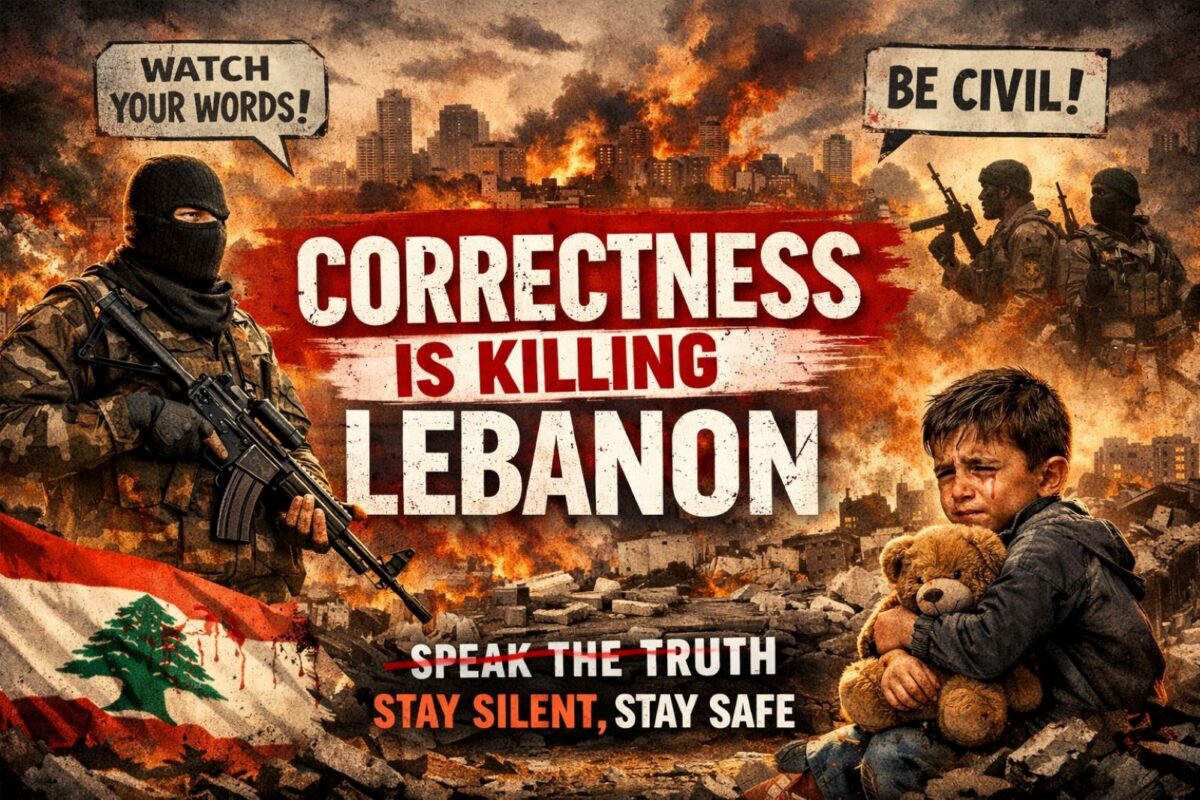
And this is where the deeper problem begins: not only with the weapons themselves, but with the attempt to impose a new political vocabulary on the Lebanese. A vocabulary in which words like “smuggling,” “hegemony,” “internal occupation,” or even “killing” are to be avoided. A language that forces the victim to choose their words carefully so as not to offend the executioner.
This is not political debate. It is coercion.
When we say that the system is financed, armed, and directed by Iran’s Islamic Revolutionary Guard Corps, we are not provoking anyone. We are describing a reality. When we say that civilians are being placed in harm’s way by those who embed themselves among them, we are not insulting anyone. We are identifying a crime.
The crime is not in the words. The crime is in the actions.
And amid all the noise, we must restore a basic moral compass: no project, no axis, no leadership has value if it is built on the blood of Lebanese children. A single child buried under rubble outweighs every speech of defiance, every declaration of “victory,” every commander elevated into myth. States are measured by their ability to protect the most vulnerable -not by their ability to justify their deaths. Those who accept the substitution of a child’s life for the image of a “leader” are not defending a cause. They are rationalizing a crime.
This is not sentimentalism. It is a political principle: no weapon is legitimate, no leadership sacred, when human life becomes expendable.
The irony is that those calling for calm today are the same voices that excused, justified, or ignored years of assassinations and intimidation. From Lokman Slim to countless others, Lebanese lives have consistently ranked below “the narrative.”
The irony is that those calling for calm today are the same voices that excused, justified, or ignored years of assassinations and intimidation. From Lokman Slim to countless others, Lebanese lives have consistently ranked below “the narrative.”
And now we are asked to play the same game: do not name, do not describe, do not raise your voice.
But reality is no longer obscured.
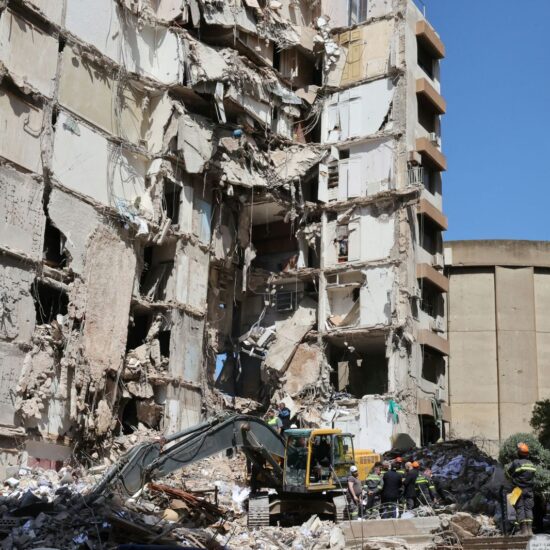
Lebanon is being destroyed because it has been turned into a battlefield. Because there are those whose ideological loyalties outweigh the lives of a child in the south, a family in the southern suburbs of Beirut, or a young man in the mountains. Because for some, the external project matters more than the country itself.
These actors cannot be confronted with politeness.
You cannot face those who hold weapons and decide your fate with diplomatic smiles. You cannot ask people to die quietly simply because the truth is “too harsh.”
You cannot face those who hold weapons and decide your fate with diplomatic smiles. You cannot ask people to die quietly simply because the truth is “too harsh.”
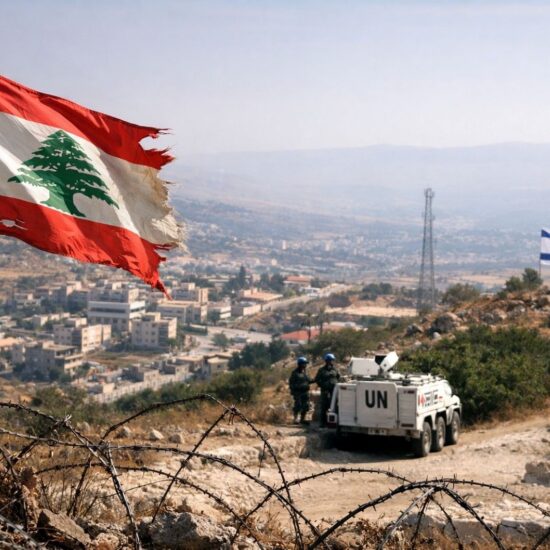
Nowhere is this more evident than in the south. There, entire communities -Druze, Sunni, and Christian- are being asked, quite bluntly, to bear the cost of an ideological narrative that is not theirs. They are expected to abandon their homes, their villages, their churches, their mosques, their sanctuaries, so that these spaces can be repurposed into military platforms and targets.
This is not resistance. It is the systematic exploitation of human life.
And yet, what is being deliberately obscured is that many of these communities whether in Aitaroun, Rmeish, Debel, Chebaa, or beyond—are refusing. They are rejecting the infiltration of armed actors into their daily lives. They are resisting the transformation of their homes into frontlines.
They are, in every meaningful sense, the real resistance: the resistance against the militarization of their existence, against the hijacking of their agency, against being turned into expendable assets in someone else’s war.
They are defending Lebanon not those who hide behind them.
National unity does not mean silence. It means standing together to confront reality. And unity cannot be built on denial; it must be built on the recognition that the state has been hijacked, and that the Lebanese are being forced into a false choice: submit, or be labeled traitors.
National unity does not mean silence. It means standing together to confront reality. And unity cannot be built on denial; it must be built on the recognition that the state has been hijacked, and that the Lebanese are being forced into a false choice: submit, or be labeled traitors.
This must be rejected completely. Not because this is about sect. But because this is about a country called Lebanon.
Lebanon does not need more masks. It needs clarity. It needs the courage to speak plainly, without fear of intimidation or accusations. And if the truth makes some uncomfortable, that is their problem.
As for the rest of us, we will not apologize for calling those who hide among civilians and leave them to die what they are: cowards. Nor will we hesitate to describe a project imposed from beyond Lebanon’s borders for what it is: a form of occupation, no matter how it is dressed up.
Because this is no longer a political disagreement.
It is, quite simply, a matter of life and death between those who want to live, and those who insist on dragging everyone else into war, a war which serves no one but Iran and its IRGC thugs.
This piece was originally published in Elaph
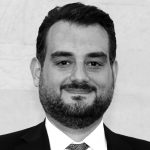
Makram Rabah is the managing editor at Now Lebanon and an Assistant Professor at the American University of Beirut, Department of History. His book Conflict on Mount Lebanon: The Druze, the Maronites and Collective Memory (Edinburgh University Press) covers collective identities and the Lebanese Civil War. He tweets at @makramrabah