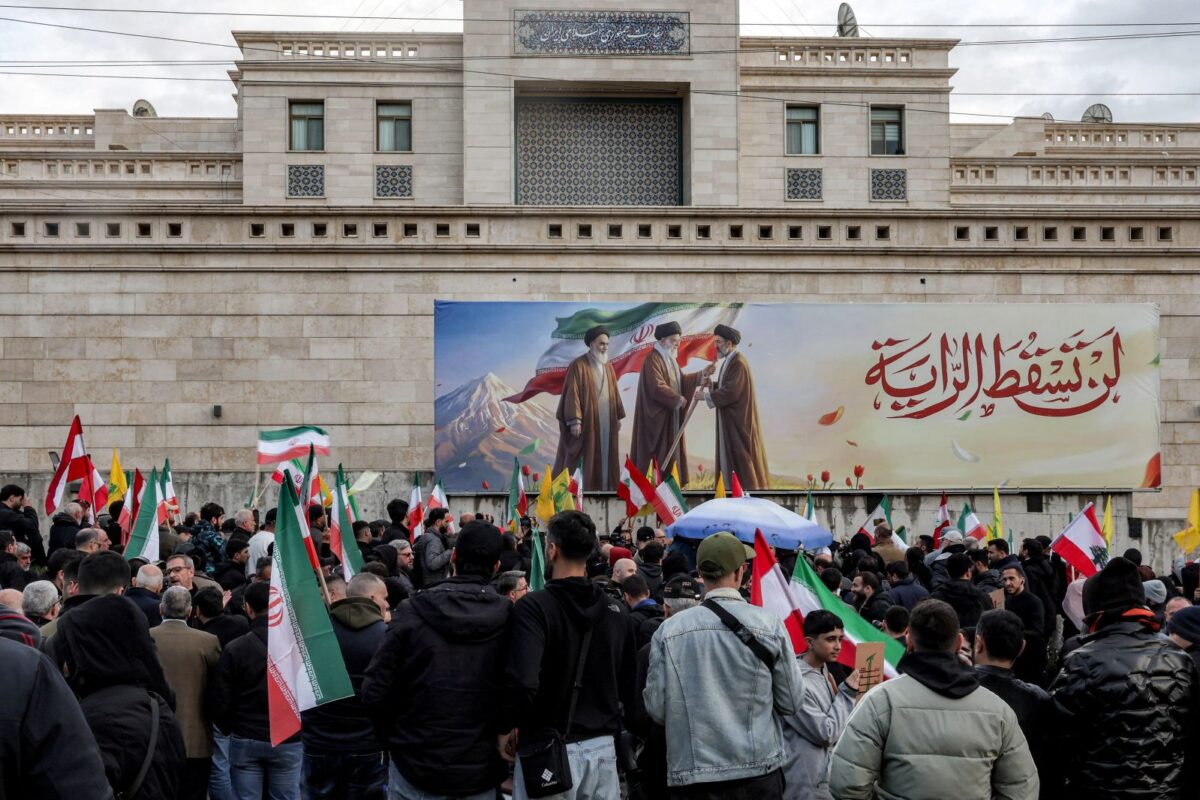
Lebanon’s latest diplomatic rupture is the product of a sustained erosion of state authority, one driven as much from within as from without. In parts of the country, the influence of Iran, exercised through Hezbollah and reinforced by allies such as Nabih Berri, has effectively constrained the reach of formal institutions. What emerges is not merely a weak state, but a compromised one, where those formally entrusted with safeguarding sovereignty are, at times, instrumental in obstructing it.
This environment has enabled a rare display of Iran’s insolence and defiance: the Iranian ambassador, Mohammad Reza Sheibani, has openly refused to comply with Lebanon’s legal order declaring him persona non grata and requiring him to leave by a set deadline. Tehran has publicly stated that the envoy will remain in Beirut and that the embassy will continue operating normally, signaling a deliberate challenge not only to Lebanon’s sovereign decision-making but also to the norms governing international diplomacy. Domestic actors, including Hezbollah and Berri, are acutely aware of this, creating a situation where Lebanon’s own directives are effectively vetoed from within.
Enforcement of state decisions has become contingent rather than absolute.
Enforcement of state decisions has become contingent rather than absolute. Directives that would, in any functioning system, be routine, such as the expulsion of a foreign diplomat, are instead treated as existential threats.
History shows what happens when diplomatic norms are ignored. Even limited precedents have required coordinated international pressure to enforce compliance, reinforcing that reciprocity underpins the diplomatic system. Lebanon’s crisis differs because the challenge is both external, with Iran refusing to recall its envoy, and internal, with domestic political forces actively shielding that envoy from enforcement.
Under the Vienna Convention on Diplomatic Relations, Lebanon has exercised its sovereign right to declare a diplomat persona non grata. The sending state is legally obligated to recall the diplomat. Failure to comply constitutes a breach of international law. In practice, however, enforcement relies on the host state’s capacity and willingness to act. When internal political structures prevent such enforcement, the legal right becomes hollow, a fact Lebanon’s political architecture is now making painfully clear.
Lebanon retains a spectrum of potential responses, albeit all constrained by domestic and regional realities. It could take the maximalist approach of cutting diplomatic ties, fully closing the Iranian embassy or expelling the ambassador by force. Alternatively, it could restrict diplomatic operations, limit movement, or suspend certain privileges while maintaining formal recognition, asserting authority incrementally.
Each option carries trade-offs: immediate force risks domestic backlash, while inaction signals weakness and encourages further violations.
The Lebanese state is uniquely constrained. Hezbollah operates with autonomy that rivals state authority, backed by partial parliamentary and cabinet support for Iran’s envoy, through Berri and the Amal Movement, institutionalizes veto power over enforcement decisions.
These factors produce a paradox: the state possesses the legal authority to act but is constrained by the very actors sworn to uphold sovereignty.
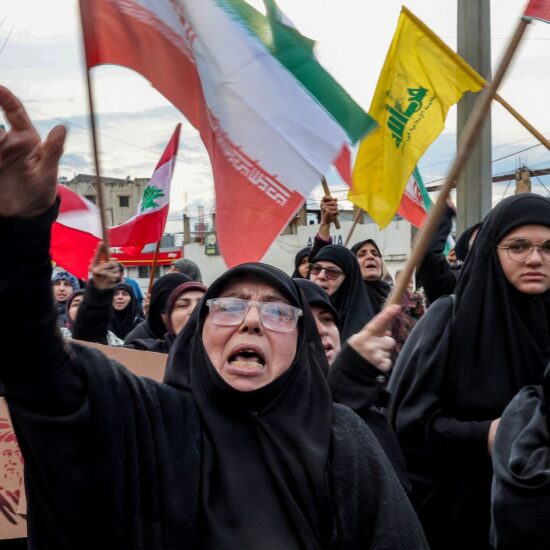
To fully grasp the extent of the defiance, one need only look at the rhetoric of Hezbollah itself. As Nawaf al-Moussawi stated in response to the decision to expel the Iranian ambassador:
“We told them clearly: this land is not yours, this is our land which we protect, and on it we host His Excellency, the Ambassador of the Islamic Republic. Any of these foolish decisions must meet their usual fate: to be thrown into the trash.”
This is not merely political posturing; it is a direct assertion of territorial authority over the Lebanese state. While Hezbollah publicly declares that it controls the land, hosts foreign diplomats at will, and discards state decisions, the presidency continues to hide behind the risks of civil war. The reality is already being stated openly: authority has been seized, sovereignty is being defied, and the state is being challenged from within. The President must open his eyes and ears and face reality.
Amid this, President Joseph Aoun has consistently emphasized avoiding civil war, signaling that confronting Hezbollah or Iran directly carries existential risks. Yet this is no longer a question of paralysis, but of decision or denial. Persistent deferral comes at a steep price: the fast erosion of state authority and sovereignty. Lebanon faces a stark choice: risk escalation to assert control or continue yielding ground, preserving fragile stability while ceding the state’s ability to govern independently. Avoiding immediate conflict is vital, but if this posture becomes permanent, Lebanon risks a quiet dismemberment, where external powers dictate policy and domestic actors operate with impunity, a civil war of authority and influence, quieter yet no less devastating.
The standoff is not a minor diplomatic inconvenience; it is a test of Lebanese statehood. Each instance in which the state declines to act erodes its credibility externally and legitimacy internally. External actors will increasingly bypass formal institutions, interacting instead with factions aligned with Iran. Moreover, the breach of the Vienna Convention undermines norms that smaller or fragile states rely on for protection. If selective noncompliance becomes tolerated, the entire framework of reciprocal diplomacy weakens.
Lebanon’s crisis is a cautionary tale: sovereignty is not guaranteed; it must be defended, sometimes against those entrusted to safeguard it.
Lebanon’s crisis is a cautionary tale: sovereignty is not guaranteed; it must be defended, sometimes against those entrusted to safeguard it.
The refusal of one ambassador to leave is not an anomaly; it is a symptom of a deeper malaise. Domestic political obstruction, regional power dynamics, and economic fragility converge to produce a state that can assert authority only partially, if at all.
In Lebanon, sovereignty is not assumed; it is negotiated. And increasingly, it is lost.
Elissa E Hachem is a journalist and political writer specializing in regional affairs and governance. Former Regional Media Advisor at the U.S. State Department’s Arabic Regional Media Hub, with broad experience in strategic communication across government and private sectors.
The views in this story reflect those of the author alone and do not necessarily reflect the beliefs of NOW.