As Washington and Tehran pause, Lebanon is left to absorb a war that no one is admitting still continues
Lebanon woke up to a question that should have had a clear answer, but does not.
Is Lebanon included in the ceasefire?
On paper, the announcement of a conditional two-week ceasefire between the United States and Iran appears sweeping. It speaks of de-escalation, of reopening the Strait of Hormuz, of suspending strikes, and even of a broader regional calm stretching across multiple fronts. It is the kind of diplomatic language that invites relief, or at least the illusion of it.
But in Lebanon, reality has a way of intruding quickly.
Because while statements are being drafted in Washington, Tehran, and Islamabad, the skies over Lebanon are telling a very different story.
Israel has made one thing unmistakably clear: Lebanon is not part of this ceasefire. Not formally, not operationally, and certainly not militarily. Within hours of the announcement, Israeli officials reiterated that their campaign would continue until what they define as the “threat” of Hezbollah is removed. And on the ground,or rather, from the air,this policy is already being implemented with intensity.
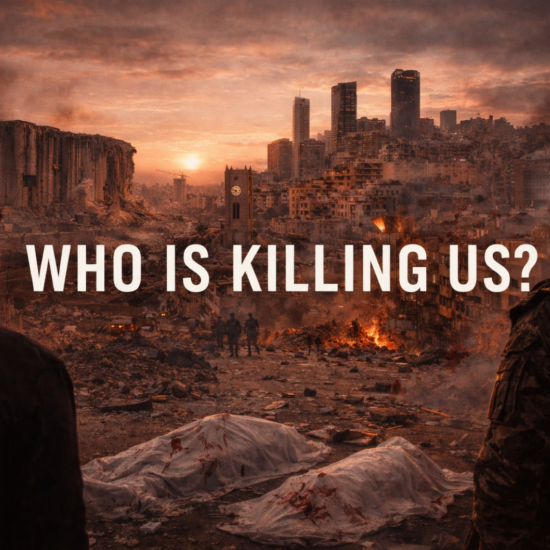
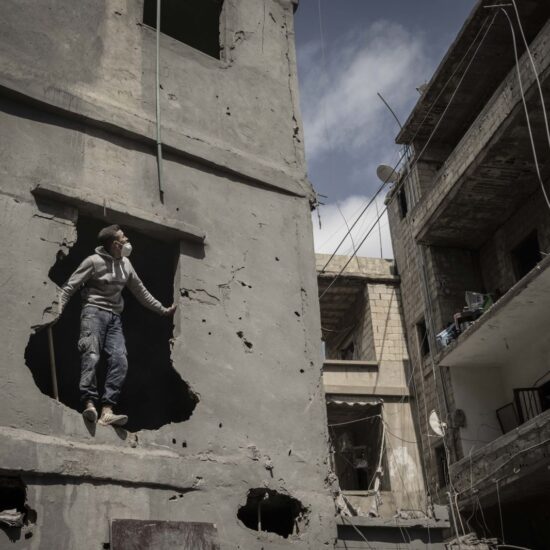
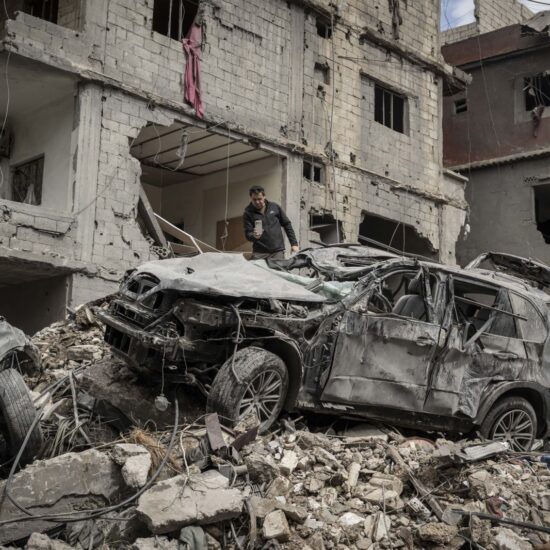
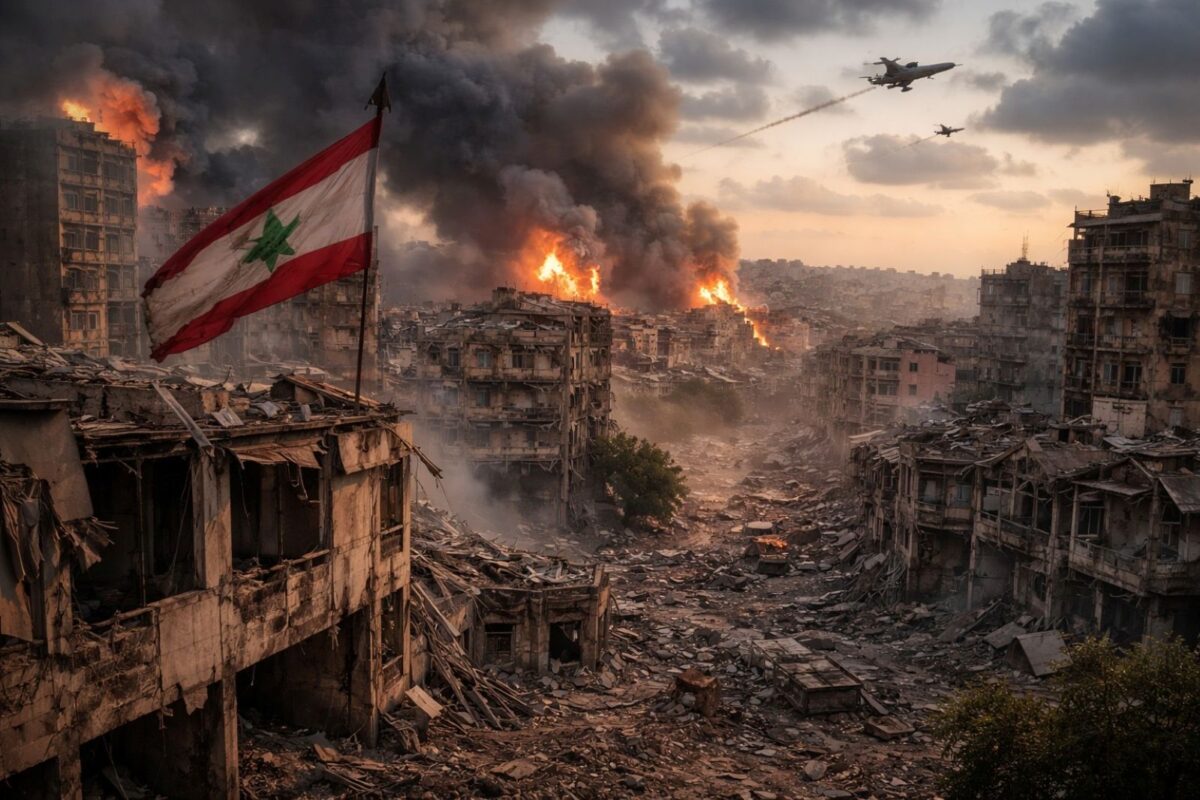
Strikes continue. Targets are expanding. The destruction is no longer selective.
This is not a symbolic continuation of pressure. It is a sustained military campaign aimed at dismantling what Israel sees as an extension of the Iranian Revolutionary Guard Corps embedded within Lebanon. Whether one agrees with that framing or not is beside the point. What matters is that Israel is acting on it, decisively and without hesitation.
And Lebanon, once again, is caught in a war it neither declared nor controls.
There is a tendency in Lebanese political culture to cling to ambiguity. To assume that what is not explicitly excluded must somehow be included. That if a ceasefire is declared broadly enough, Lebanon might quietly benefit from it. That the country can slip through the cracks of regional conflict, spared by omission.
But this time, the indicators point in the opposite direction.
The scale and pattern of Israeli strikes suggest not a pause, but an escalation calibrated to exploit precisely this diplomatic window. As Washington pauses its direct engagement with Iran, Israel appears to be accelerating its efforts on what it considers the most immediate and actionable front: Lebanon.
In other words, the ceasefire may have created not a shield for Lebanon, but an opening.
This is the uncomfortable truth that few are willing to articulate openly. While regional actors negotiate over shipping lanes and sanctions relief, Lebanon is being treated as a separate theater,one where the rules of engagement remain unchanged.
And for the people of southern Lebanon and the southern suburbs of Beirut, the consequences are already becoming clear.
There is, as of now, no credible pathway for return.
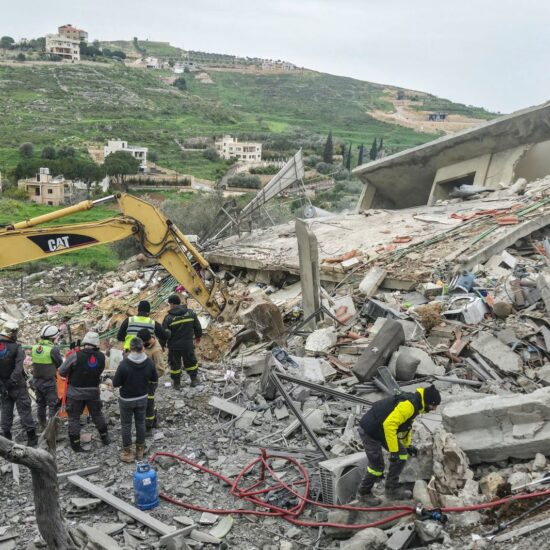
The level of destruction inflicted over recent weeks has gone far beyond the kind of damage that can be quickly repaired or politically managed. Entire neighborhoods have been rendered uninhabitable. Infrastructure has been systematically degraded. The idea that displacement is temporary is becoming increasingly difficult to sustain.
Yet the Lebanese state remains largely absent from this reality.
There has been no clear position, no coherent strategy, and no serious attempt to define Lebanon’s place within this supposed ceasefire. Instead, there is silence,punctuated occasionally by vague statements that avoid the central question altogether.
Is Lebanon at war, or is it not?
Because if the answer is yes, then the country must act accordingly, politically and diplomatically. And if the answer is no, then someone must explain why the war continues on its territory.
What makes this moment particularly dangerous is precisely this ambiguity. It allows external actors to operate with maximum flexibility, while leaving Lebanon with none. It creates a situation in which decisions are made elsewhere, but their consequences are borne locally.
And it reinforces the very dynamic that has defined Lebanon’s modern history: a state that is present in name, but absent in function.
The ceasefire between the United States and Iran may yet hold, or it may collapse like previous attempts before it. Negotiations may continue, or they may unravel under the weight of competing demands.
But for Lebanon, the more immediate reality is already set.
There is a ceasefire.
It simply does not apply here.