After decades marked by wars, revolutions, and state collapses across the Middle East, many regional analysts now believe that a potential transformation in Iran could represent a decisive turning point in the political order of West Asia. Should such a shift occur, it would not only reshape Iran’s internal power structure but could also alter the complex web of security balances stretching from the Mediterranean to the Persian Gulf.
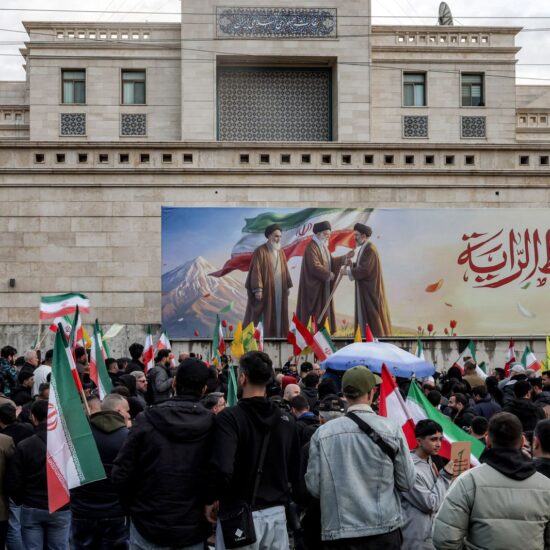
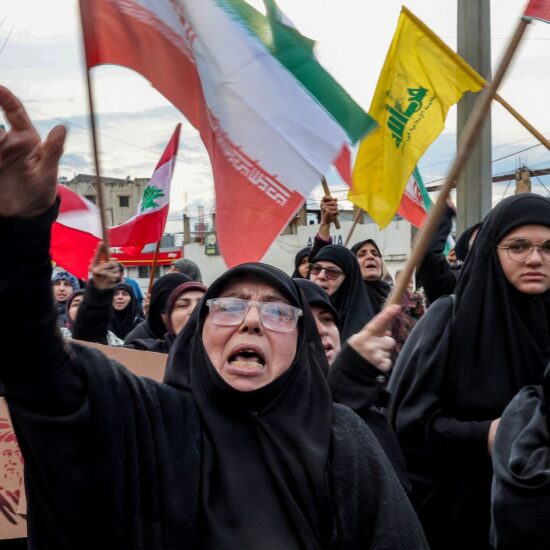
At present, the Islamic Republic of Iran is facing a broad wave of domestic protests. Despite severe and violent repression, these demonstrations continue to be interpreted by observers as evidence of a deepening divide between the ruling establishment and large segments of Iranian society. At the same time, growing external pressure and the expanding military presence of the United States around Iran—particularly in the Oman sea and the Persian Gulf—have increased the likelihood that the crisis may enter a decisive phase.
For many analysts, the most significant threat to the Islamic Republic is not external pressure but the rapid erosion of its domestic legitimacy. Prolonged protests, structural economic challenges, chronic inflation, the sharp depreciation of the national currency, and the large-scale emigration of skilled professionals—combined with punitive international sanctions—have created overlapping pressures that may substantially weaken the governing capacity of Iran’s clerical establishment.
Under these conditions, three main scenarios are frequently discussed: transformation from within the ruling structure as a result of internal divisions among state institutions; collapse driven by sustained popular protests; or Changing the government through external military confrontation. None of these scenarios is inevitable on its own, yet their convergence has increased, in the view of some observers, the probability of a political transition.
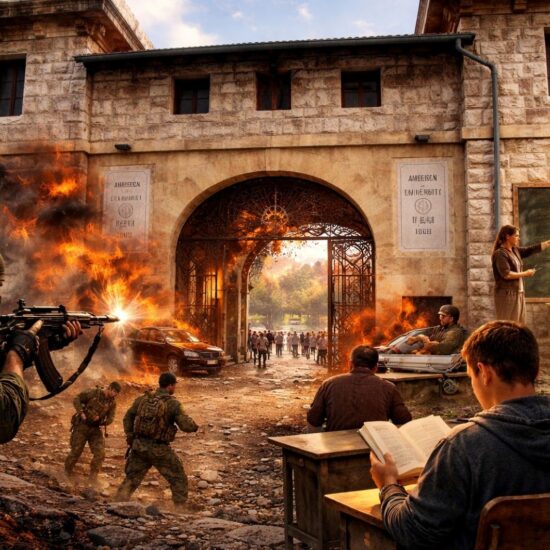
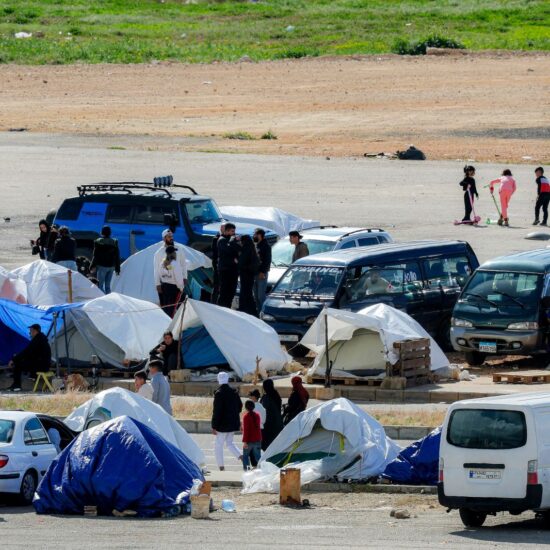
Over the past four decades, Iran’s ideological government has built a network of aligned actors and proxy groups across the region—from Iraq and Syria to Lebanon and Yemen—while also recruiting fighters from Afghanistan, Pakistan, and parts of Africa. These networks function not only as instruments of political influence but also as a central component of Iran’s deterrence architecture.
Accordingly, if the central government in Tehran were to weaken or collapse, a key question for regional states would be whether these groups would gain greater autonomy or, faced with reduced financial and military support, be forced to redefine their roles—or even dissolve?
Abu Ali, a former commander who defected from Iraq’s “Hashd al-Shaabi” affiliated with the Iranian government Forces, told NOW that any change in Iran’s political system would directly affect internal balances in countries closely tied to Tehran. He said: “Many political equations in these states, have become intertwined with regional rivalries and Iranian involvement over the past decades.”
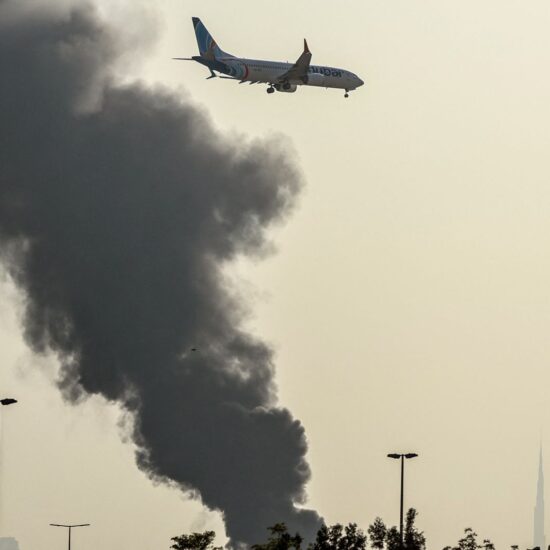
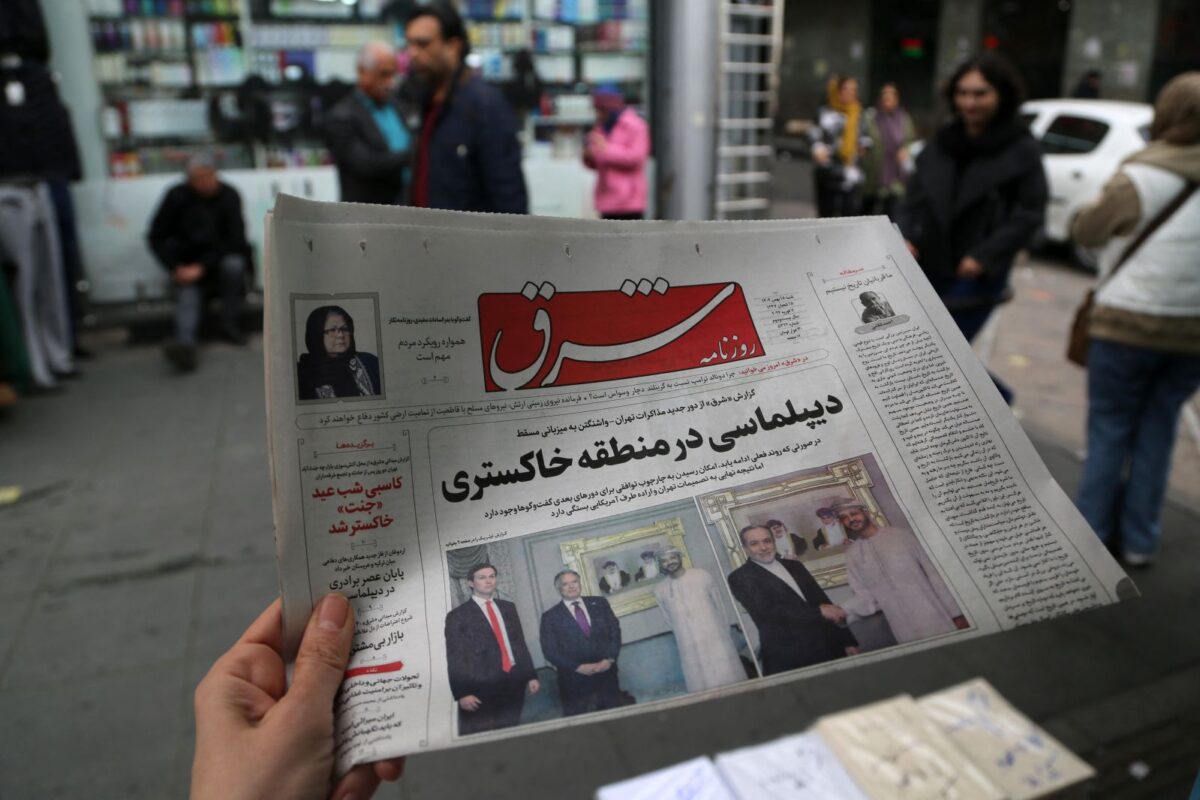
Meanwhile, the increased deployment of U.S. naval, air, and Marine forces around Iran is widely interpreted as part of Washington’s effort to maintain maximum pressure. Regional diplomatic sources describe these movements as a form of deterrence-based diplomacy—the creation of credible military pressure aimed at compelling Tehran toward negotiations. Nevertheless, the risk of miscalculation remains significant. A direct confrontation could potentially lead to the collapse of Iran’s ruling system and the severing of support channels to various armed groups, Some political factions, and economic networks across the region. Such a development could trigger a new wave of political and economic transformation in multiple countries.
Israel would also be among the actors most directly affected by a fundamental change in Iran’s governing structure. A long-standing adversary that has shaped much of Tel Aviv’s security doctrine could undergo a profound transformation. A consolidated regional opponent—one that has openly supported militant groups and has itself launched multiple large-scale missile attacks—might cease to exist in its current form.
Mohammad, a retired military officer who fought during the eight-year Iran–Iraq war and who now criticizes the clerical leadership’s governance, told NOW a “post–Islamic Republic” scenario could produce several major shifts: a reduction in state-level Sunni–Shiite ideological rivalry, a reconfiguration of regional alliances, an expanded role for Gulf states in shaping regional security arrangements, and the possibility of Iran returning to a less ideological and more economically driven foreign policy—should a new political system emerge. However, he also warns that structural collapse or a period of internal instability in Iran could push the region into a new phase , even only temporarily.
The Middle East now appears to be approaching a moment whose outcome remains uncertain. If a political transition in Iran were to materialize—whether through internal pressure, negotiated settlement, or military confrontation—the region could enter what may be the most significant geopolitical realignment since the U.S.-led invasion of Iraq and the fall of Saddam Hussein’s regime in 2003.
Mina, a doctoral student in political science in Tehran, argues that potential developments in Iran carry both opportunity and risk. “On one hand, reduced regional tensions could create economic and political breathing space,” she told NOW. “On the other, any power vacuum or shift in regional balances could intensify internal fractures within neighboring countries.” For this reason, she believes regional states must prepare for what she describes as a “period of regional transition”—one that could fundamentally rewrite the Middle East’s political order.
Given the accelerating pace of developments related to Iran, the central question may no longer be whether change will occur, but rather how it will unfold—and what consequences it will carry for the region as a whole.
Armin Soleimani is a Middle East reporter
The views in this story reflect those of the author alone and do not necessarily reflect the beliefs of NOW.