“My brother Makram…”
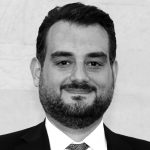
With this simple phrase, Jirji Bachir would begin every message or phone call. On the surface, it was an ordinary greeting. But for me, it was never just that. It was an entry point into a genuine brotherhood—one built over the years on affection, shared memory, and a deep love of place.
I first met Jirji in 2005. At the time, I was serving as president of the student council (USFC) at the American University of Beirut while working on my dissertation on the student movement and the impact of the Palestinian resistance on campus political life. That research required testimonies from those who had lived through that period—not merely as witnesses, but as active participants in the debates, protests, and writings that defined those years.
It was then that my late mentors, Kamal Salibi and Abdul Rahim Abu Husayn, urged me to meet Jirji Bachir. They told me his testimony was indispensable to understanding that era. Jirji had been a prominent figure in student leadership at AUB and a contributor to the student newspaper Outlook, which, at the time, served as a vital space for free debate and intellectual and political engagement. He later continued his journalistic career at An-Nahar, carrying with him the spirit of a student who had never lost his curiosity or critical edge.
But what began as a research interview quickly became something else. It was not simply an academic exchange—it was the beginning of a long friendship, perhaps more than a friendship: a true bond of brotherhood.
At the time, Jirji was fighting his first battle with cancer. Yet illness was not what defined him. What struck you instead was that rare combination of gentleness and resilience, of quiet humor, and an ability to speak about Lebanon and its history as though they were deeply personal matters.
From that first meeting, I found myself returning to Jirji again and again—sometimes to ask about historical details, and sometimes simply to talk. Over time, our relationship was no longer defined by research or academia. It became something far more human and far more profound.
For more than twenty years, I was among those fortunate enough to receive Jirji’s warmth and generosity. He was one of those rare individuals who never withheld advice, who never treated knowledge as private property, but rather as something to be shared. He was generous with his time and attentive to others, as though supporting those around him was simply part of his nature.
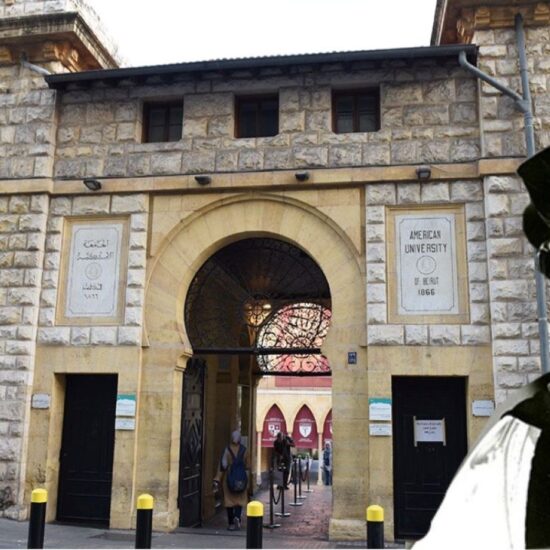
We shared many things: a love for Ras Beirut—that small stretch of the city that encapsulates an entire intellectual, political, and cultural history of Lebanon. And a love for the American University of Beirut—not just as an educational institution, but as a space that shaped generations and opened doors to free thinking.
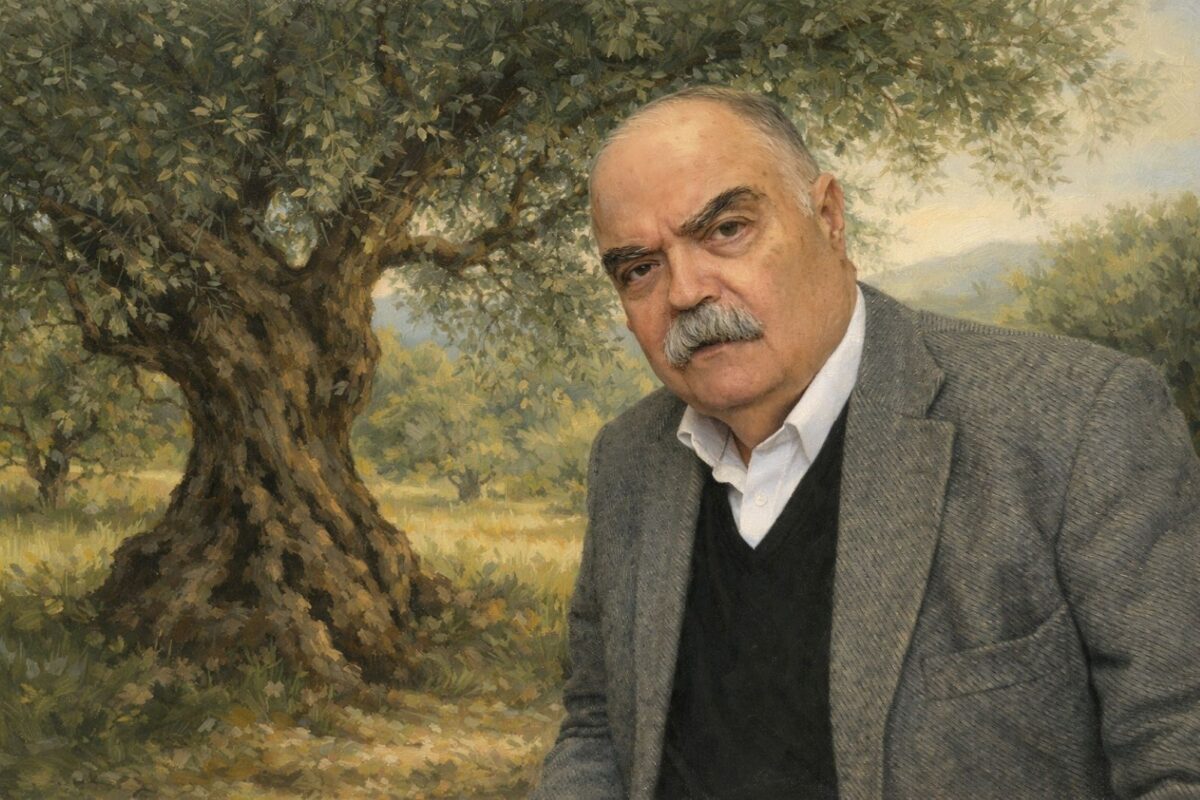
But we also shared another love—one that may seem simple on the surface, yet for Jirji was part of a deeper philosophy of life: the olive tree.
Jirji tended to his olive trees as a devoted father tends to his children. It was never merely cultivation or hobby; it was a relationship with the land itself. He spoke of those trees with unmistakable tenderness, as though they were part of his own personal history. And every autumn, he made it a point to distribute his olive oil to friends and loved ones. Like many others, I was fortunate each year to receive both his affection and the fruit of his trees.
The olive oil was never just a gift. It was a message—an extension of the belief that the land, like friendship, must be shared.
Jirji Bachir was a son of Koura and the North, but he was also a son of Ras Beirut. Like many of his generation, he carried within him both the memory of his village and the life of the city. He spoke of the North with deep nostalgia, and of Beirut with something akin to loyalty.
After decades of expatriation in the United Arab Emirates—more than fifty years—Jirji chose to return to Lebanon. For many of his generation, exile became permanent. He could have done the same. But for Jirji, return was not merely a practical decision; it was an emotional one. Lebanon was not simply a place to live—it was part of who he was.
Yet the return was not easy. The country he came back to was not the one he had left decades earlier. The Lebanon Jirji loved was afflicted by a long illness—political, economic, and moral all at once. And yet, he never lost the ability to see it through the eyes of someone who loved it, even while fully aware of its accumulated disappointments.
In his final years, Jirji was fighting two battles at once: one against the illness that afflicted his body, and another against the illness that had taken hold of the country he loved.
Still, he never lost his sense of humor or his quiet realism. He knew Lebanon could be harsh to its people, yet he also knew it was a country one does not easily abandon.
Jirji’s passing is not only a personal loss for me; it is also the loss of a piece of a place’s memory. Ras Beirut itself loses something with his departure. Makdessi Street loses one of its quiet figures. Those streets that witnessed long conversations about the university, history, and politics lose a voice that was part of their very fabric.
There are people who resemble trees. Their presence may not always draw attention, but their absence leaves a profound void.
There are people who resemble trees. Their presence may not always draw attention, but their absence leaves a profound void.
Jirji was one of them.
Those who knew him as a brother lose much with his passing—not only because we have lost a friend, but because we have lost part of a spirit that saw knowledge as something to be shared, friendship as a commitment, and land as an extension of life itself.
And those who do not know what it means to lose Ras Beirut—to lose a man like Jirji on Makdessi Street—may not fully grasp the magnitude of that absence.
But some things do not leave.
The stories he told remain.
The advice he gave endures.
And that phrase with which he began every message still echoes:
“My brother Makram…”
And the olive tree remains as well—that enduring tree Jirji loved, which, like him, continues to live on even after the one who planted it is gone.
My brother Jirji… farewell.
This article originally in Annahar
Makram Rabah is the managing editor at Now Lebanon and an Assistant Professor at the American University of Beirut, Department of History. His book Conflict on Mount Lebanon: The Druze, the Maronites and Collective Memory (Edinburgh University Press) covers collective identities and the Lebanese Civil War. He tweets at @makramrabah