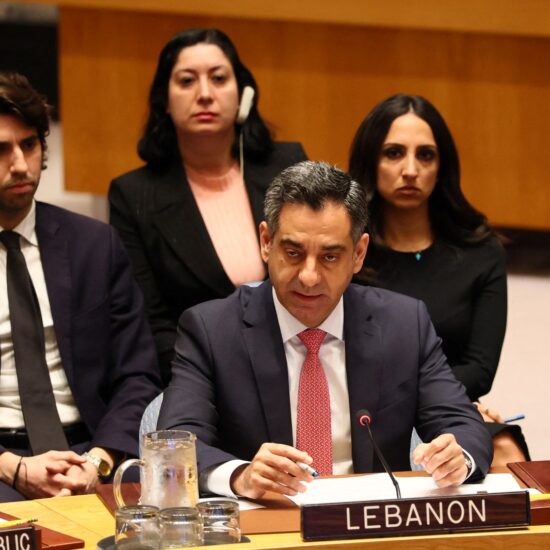
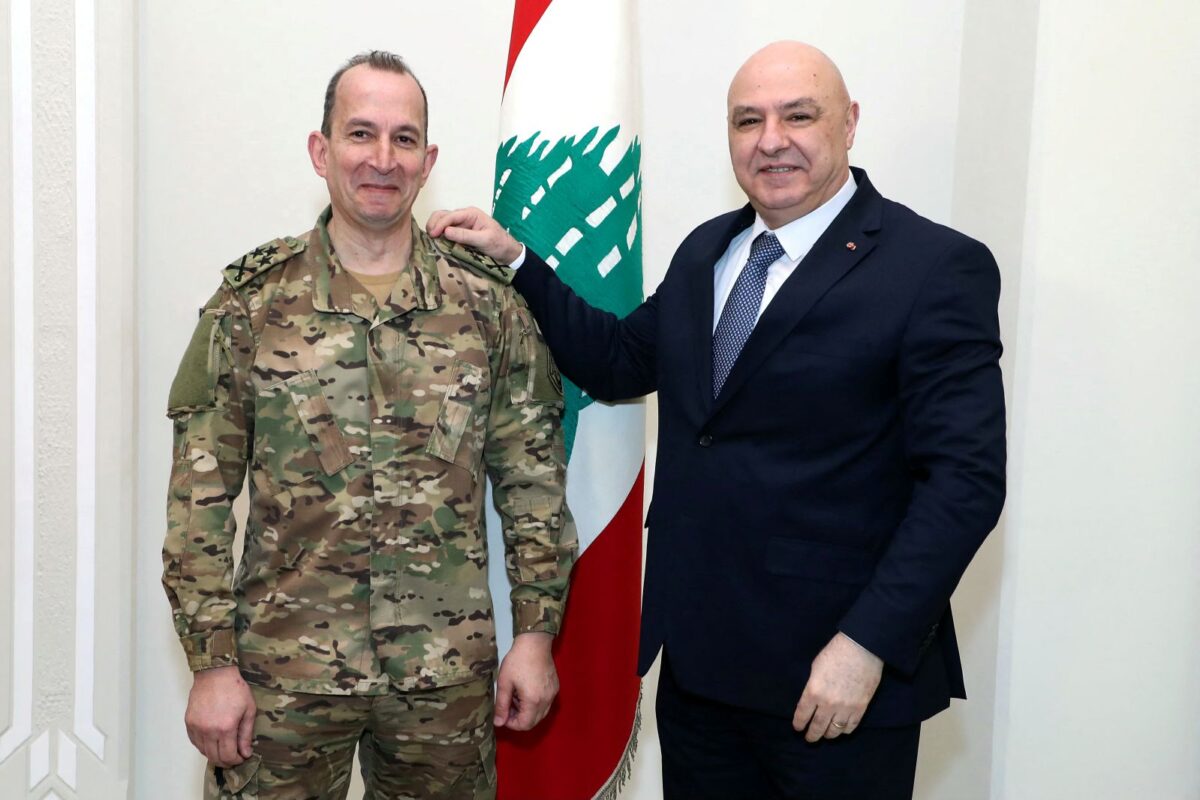
WASHINGTON — The U.S. canceled all scheduled meetings for Lebanese Army Commander Gen. Rodolphe Haykal on Tuesday — including a planned reception hosted by the Lebanese Embassy — after the Army issued a statement blaming Israel alone for recent border escalation without mentioning Hezbollah.
Why it matters:
The incident has triggered rare, open frustration in Washington toward the Lebanese Armed Forces (LAF), long considered one of the last functional institutions in Lebanon and a major recipient of U.S. military aid. The episode now threatens to place future support under direct political scrutiny.
Members of Congress — including Sen. Lindsey Graham and Sen. Joni Ernst — blasted the LAF statement as evidence of “political weakness” and “appeasement of Hezbollah.” Graham went further, calling the LAF “a bad investment for the United States.”
Driving the news:
The U.S. Embassy informed the Lebanese delegation late Monday that all meetings were canceled, citing congressional anger toward the Army’s unwillingness to acknowledge Hezbollah’s role in the border clashes.
A diplomatic reception in honor of Gen. Haykal at the Lebanese Embassy in Washington was also abruptly called off.
The file has now moved to the desk of Secretary of State Marco Rubio, who is tying the continuation of U.S. military assistance to the Army’s future public positions — especially regarding border security and the disarmament of Hezbollah.
Behind the scenes:
U.S. officials have grown increasingly exasperated with what they see as Lebanon’s “strategic ambiguity” — a polite formula for avoiding any confrontation with Hezbollah.
The latest Army statement, they say, “crossed a line” because it echoed Hezbollah’s narrative almost verbatim.
Congressional Republicans — already skeptical about aid to Lebanon — saw the statement as proof that the LAF is constrained, politically neutered, or unwilling to challenge the group that dominates Lebanon’s security landscape.
Big picture:
Lebanon’s political class and state institutions continue to perform a delicate — and often self-defeating — balancing act, trying to maintain international support while refusing to confront or even name Hezbollah in public policies.
This approach, U.S. officials argue, has become untenable:
The Lebanese state routinely asks for Western support while outsourcing war and peace decisions to an armed non-state actor.
Successive governments talk reform, sovereignty, and border control, yet none are willing to challenge Hezbollah’s monopoly over conflict and escalation.
The LAF leadership has adopted the same hedging posture — avoiding explicit references to Hezbollah in official documents to “preserve internal stability,” a tactic Washington increasingly sees as cowardice disguised as caution.
Between the lines:
This moment crystallizes a long-brewing question in Washington:
Why should the U.S. continue funding a state that refuses to act like one?
The message from the Hill and the State Department is blunt:
Aid will not continue if Lebanon chooses ambiguity over sovereignty.
What’s next:
Rubio’s office is preparing a review of all Lebanon-related assistance programs. Officials say the LAF will be expected to:
Maintain strict neutrality in border incidents,
Issue balanced statements that reflect on-the-ground realities, and
Demonstrate at least minimal institutional independence from Hezbollah.
If not, congressional leaders may move to freeze or significantly reduce military assistance, a step they have long considered but never fully executed.
The bottom line:
Lebanon’s leadership has perfected the art of ambiguity — but this time, Washington is calling its bluff. The United States is signaling that Lebanon cannot expect international support while subcontracting national defense to Hezbollah and hiding behind euphemisms.
The era of strategic vagueness may be coming to an end — and Beirut has only itself to blame.