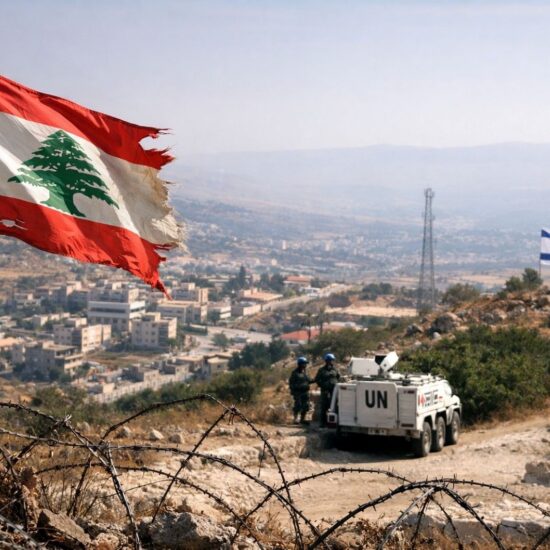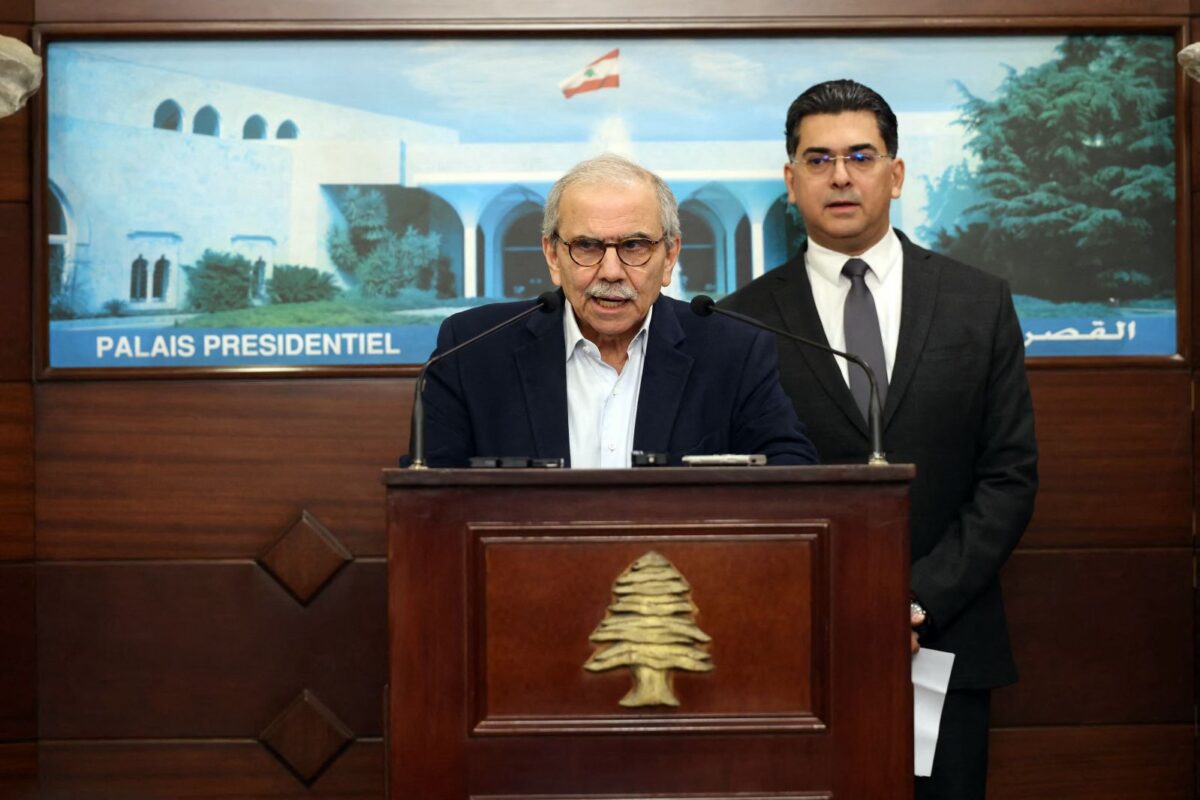
On Tuesday, Lebanese and Israeli ambassadors are set to meet in Washington.
On Tuesday, the Lebanese-Israeli delegations will meet in Washington D.C. to discuss peaceful relations between Israel and Lebanon. Given that the two countries have technically been at war for decades, the planned meeting represents a potentially historic development.
On Friday, Lebanese Ambassador Nada Hamadeh Moawad and her Israeli counterpart, Yechiel Leiter, discussed the final details. The U.S. Ambassador to Lebanon, Michael Issa, is also scheduled to attend Tuesday’s talks.
Israel has made clear that it wants a commitment from the Lebanese side to disarm Hezbollah. Israel also underlined that it does not intend to negotiate directly with Hezbollah.
However, Israeli Prime Minister Benjamin Netanyahu said the war might go on. Hezbollah and the Israeli military continue to fight each other directly in the South of Lebanon — including in and around Bint Jbeil. According to the IDF, they encircled the town and killed more than 100 alleged militia members in the process. The IDF continues to airstrike across Lebanon, Hezbollah in turn is shooting rockets at Israel.
Lebanese Prime Minister Nawaf Salam postponed his trip to the U.S. which was set to depart last weekend, stating that he wished to remain in Lebanon amid the critical time. According to experts and news reports, he was set to meet U.S. Foreign Minister Marco Rubio.
Within Lebanon, there has been a backlash from pro-Hezbollah supporters against the talks. On Saturday, demonstrators gathered in Martyrs’ Square, waving Hezbollah and Iranian flags to protest the negotiations.
Political figures from the Free Patriotic Movement, including Gebran Bassil, have expressed support for the initiative while insisting that Israel should fully withdraw from Lebanese territory and cease its attacks.
Hezbollah drew Lebanon into war more than a month ago. The militia shot rockets at Israel after Iranian leader Ali Khamenei was killed at the beginning of the U.S.-Israeli attacks on Iran.
In Lebanon
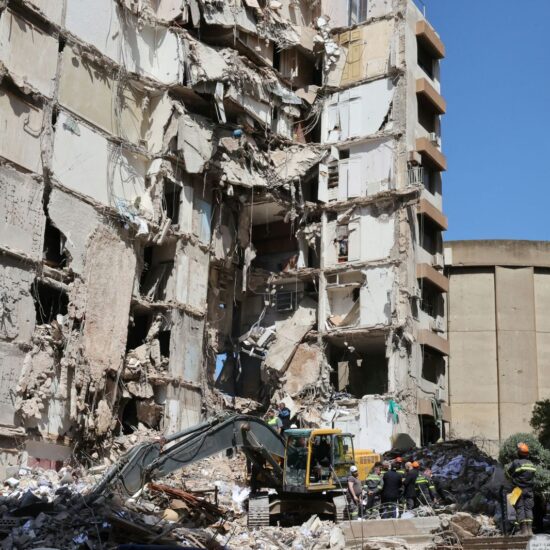
The death toll: 2055 people in Lebanon have died since the war, while 6588 have been injured. During last week’s major Israeli attack, 357 people were killed and 1223 were injured, according to the Lebanese ministry of health.
Lebanon’s South under fire: Israel’s military continues to strike in Bint Jbeil, Mansouri, Nabatieh and the Sour district among others. Hezbollah launched around 20 missiles towards Israel on Sunday, Israeli media reported.
Iran does not want to stop funding Hezbollah: After the negotiations between the U.S. and Iran, Tehran does not seek to stop its financial support for its proxy in Lebanon, according to a U.S. official cited by media reports.
Memory of the start of the civil war: Monday marks the 51th anniversary of the outbreak of the Lebanese civil war. Nawaf Salam said that the South of the country would not be “abandoned once again”.
In The Region
Negotiations between Iran and the U.S. did not reach agreement: The talks between Tehran and Washington in Islamabad ended on Sunday after around 21 hours without a resolution to the war between the two countries. American Vice President JD Vance — who led the negotiations from the U.S. side — said his administration made the “final and best offer”, before departing. According to Vance, not reaching a deal would be much worse for Iran than for the U.S.
Focus on the nuclear program: Vance did not reveal what the main points of contention between the two countries were. But he said that the U.S. wants to „see an affirmative commitment that [Iran] will not seek a nuclear weapon“. While Iran offered to dilute its existing stockpile of uranium in the last talks in February, the country does not want to drop the uranium entirely.
Iran’s standpoint: Ismail Baghai, the spokesperson for Iran’s foreign ministry said that there were two main points which led to the failure of the negotiations — but did not clarify which those points were. According to Iranian news outlets, the biggest problem from Tehran’s side was the Strait of Hormuz, where Iran is seeking to establish a toll system.
Strait of Hormuz blocked from both sides: After the talks failed, U.S. President Donald Trump said that the American military would block all ships, including Iranian ones. The U.S., the U.K. and other countries are also sending ships to clear mines. The area is essential for the world’s oil trade — and has become a central leveraging point for Iran. Tehran has mined it and blocked ships from passing through amid the war — impacting the global economy severely. Initially, Tehran was meant to open the strait before the talks, but used it instead to pressure for a ceasefire also involving Lebanon.
What happens next? Trump warned Iran that not reaching a deal would lead to the re-escalation of the war — including attacks on Iran’s energy infrastructure. Netanyahu likewise said he could imagine entering the war alongside the U.S. again — announcing that the goals were not finished yet.
It is not clear how Iran and the U.S. will now react — and if they focus on diplomacy or warfare as their strategic next steps. Security experts hint that reaching a deal during the first rounds of talks was unlikely. The last negotiations between the two countries, which focused on Iran’s nuclear program, only reached a conclusion after 18 months.
Ceasefire in place: The two-week ceasefire between both countries began last Wednesday — and Pakistan, the country which has brokered the negotiations, said after the talks, the ceasefire is still in place.
What We’re Reading
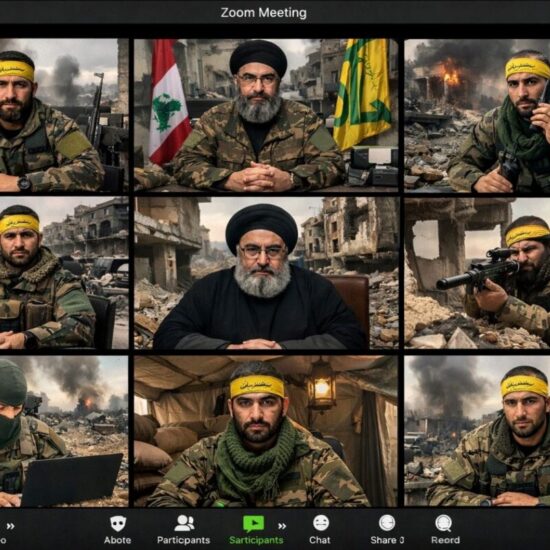
Hezbollah’s Zoom Coup That Israel Crashed. Now’s managing editor Makram Rabah examines Israel’s major strike on more than 100 alleged Hezbollah targets last Wednesday. Due to Hezbollah weaknesses in cybersecurity, Israel was allegedly able to detect a call between militia functionaries, where they planned to regain power inside the Lebanese government by sidelining Nawaf Salam and replacing him with Najib Mikati.
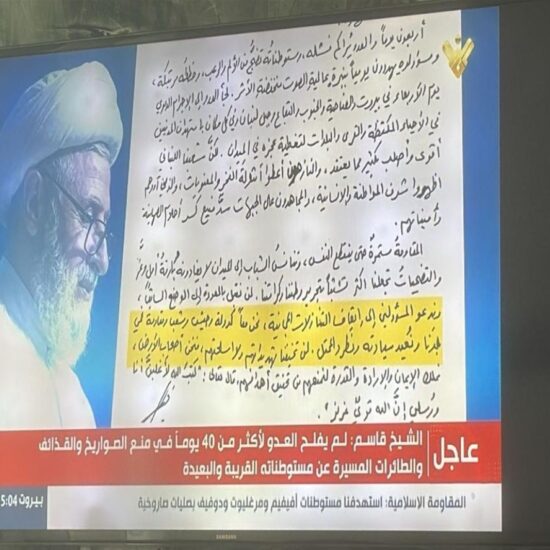
Hezbollah’s fantasy of victory is dragging Lebanon deeper into ruin. Now criticized Hezbollah and its leader Naim Qassem for using the narrative of victory while they have brought widespread destruction to Lebanon — especially in the South of the country, leading many people to suffer. The author argues that the group’s operating practices have undermined Lebanon’s sovereignty and at the same time they have not taken responsibility for their actions and the consequences of pushing the country into war. The article argues that the militia has largely failed to be accountable for their failures.
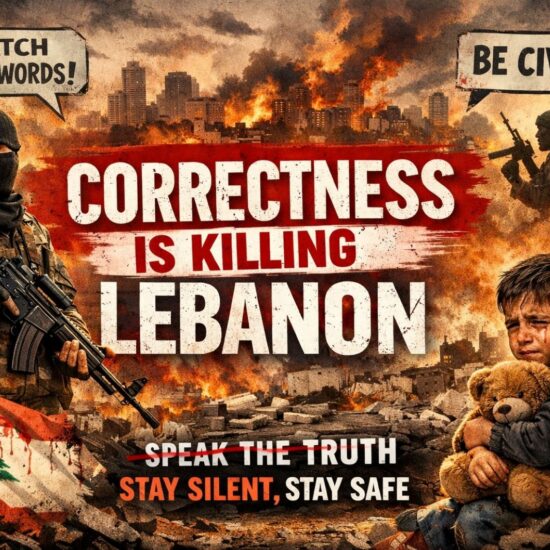
Say It or Bury It: Lebanon at the Edge of Truth. In this article Now’s managing editor Makram Rabah argues that Lebanon’s problem is not sectarianism, but Hezbollah’s ties to Iran. The militia has attempted to frame themselves as a representative for Lebanon’s Shia group, mixing sectarianism with armed combat. According to Rabah, this has led to a situation, where criticizing this group has been perceived as sectarianism, while instead this is a topic of sovereignty and accountability. He argues that Lebanon needs to face its truths and confront reality.
Targeted strikes, widening divides: Fear and sectarian tension spread across Lebanon. Now’s author Rodayna Raydan analyses how the Israeli military continues to strike civilian areas inside Lebanon. As the attacks have expanded into areas that were previously considered safe, this war is triggering sectarian tensions and divisions. Communities increasingly fear being potentially hit by Israeli airstrikes. Residents are often critical of both the Israeli military as well as the Lebanese state, for failing to ensure security. Amid increasing mistrust, some are calling for local self-protection measures, which could further increase internal Lebanese fractures.
The Art of Saying Nothing in Power. Ramzi Abou Ismail analyses the Easter speech of Lebanese president Joseph Aoun, arguing that Aoun heavily avoided confronting key issues. While there are certain limitations to Aoun’s mandate, the president reinforced old patterns of silence and ambiguity, the author argues. Instead of breaking with traditional sectarian ties as was expected from Aoun prior to his elections, he failed to directly speak up.
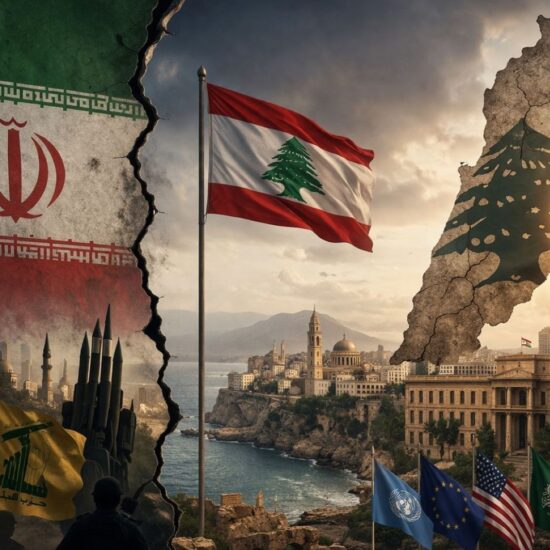
Iran–Lebanon Relations Deteriorate: Regional Implications and Emerging Opportunities in a Complex Transition. Armin Soleimani analyzes how the relations between Lebanon and Iran are weakening as the Lebanese government is increasingly trying to limit Tehran’s power inside the country. Tightening visa rules for Iranians, expelling Tehran’s ambassador to Lebanon and increasingly putting pressure on Hezbollah are only some examples. Some analysts are seeing both opportunities and risk amid Lebanon’s new strategy, with the country having to deal delicately with its transition.
The Bird That Did Not Know Its Size: History, Self-Deception, and the Lebanese Crisis. Charles H. Al-Hayek uses a historical parable told by Emir Bashir II about the “Abu Far” bird to illustrate a recurring pattern of self-deception in Lebanese political life. The bird mistakes its shadow for its true size, similarly to groups within Lebanon that overestimate their power and capacity. According to Al-Hayek, this mindset is especially visible in Hezbollah, but it ultimately affects the entire country, as Lebanon continues to misjudge both its internal challenges and its real position.