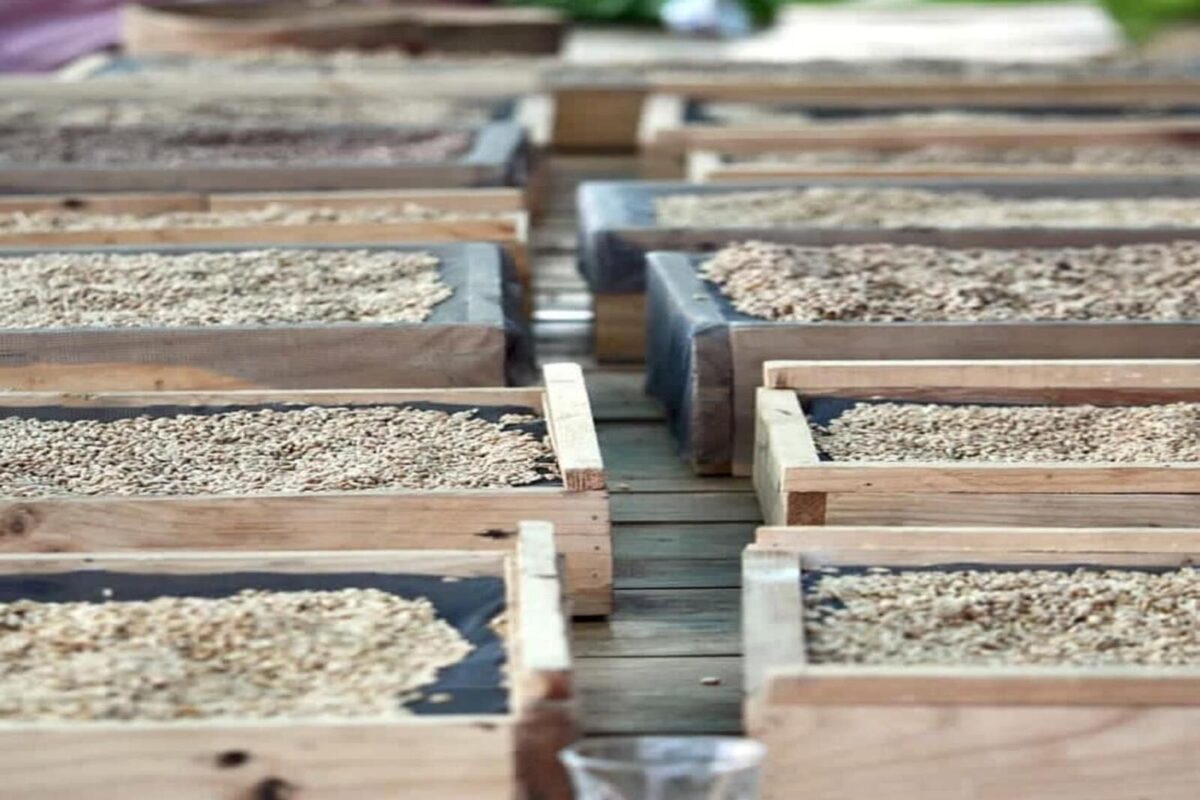
For generations, local baladi seeds have been at the heart of agriculture in Lebanon. They are deeply tied to rural life, food traditions, and communities’ relationship with the land. Today, however, these seeds face a serious threat as the government considers a draft law regulating the trade of seeds, seedlings, and other plant reproduction materials.
The proposed law has raised alarm among farmers, environmental activists, and food sovereignty advocates, who fear it would favor commercial interests at the expense of small-scale farmers.
Critics warn that it risks accelerating the disappearance of local seeds while promoting hybrid varieties that depend heavily on chemical inputs and corporate control.
One of the most controversial aspects of the proposal is the introduction of intellectual property rights over seeds. Serge Harfouche, co-founder of Buzuruna Juzuruna, an agroecology association dedicated to conserving and reproducing heirloom seeds, told NOW the law threatens the foundations of Lebanon’s traditional seed systems.
Buzuruna Juzuruna focuses on keeping these systems alive at a time when Lebanon’s agriculture is becoming increasingly vulnerable due to economic collapse and climate stress. According to Harfouche, heirloom seeds are not only part of the country’s agricultural heritage, but also key to its future.
“These seeds carry generations of adaptation to local climates and conditions,” he explains. “They are the foundation of food production that does not depend on imports and volatile global prices.” He added.
If passed in its current form, Harfouche believes the law would accelerate the loss of agricultural diversity. With increasingly extreme weather already affecting farming across Lebanon, narrowing the range of seeds in use reduces agriculture’s ability to adapt. “Diversity is our only real defense against climate change,” he says.
Extra burden on farmers
The draft law would require farmers and seed users to register seed varieties, pay licensing fees, and comply with strict packaging and distribution rules. For many farmers already struggling to survive, these added costs could make farming unsustainable.
Environmental concerns are equally pressing. Local seeds are adapted to Lebanon’s climate and soil and generally require fewer pesticides. Hybrid seeds, by contrast, often rely on chemical fertilizers and pesticides that degrade soil life and contaminate water sources.
Environmental activist and biology student Rand Khoury told NOW that one of the main problems with hybrid seeds is that they cannot be reliably reused. “Unlike local baladi seeds, hybrids do not produce the same plant when farmers save and replant them,” he said. “The next generation is usually weaker and less productive, which forces farmers to buy new seeds every year, often from the same few companies.” He added.
Over time, Khoury explained, this deepens farmers’ dependence on the commercial seed market while increasing costs.
A shift in farming practices
While the proposed law is presented as a technical step to organize the seed sector, critics argue it could undermine the livelihoods of small farmers and weaken the traditional agricultural knowledge passed down for generations.
Harfouche warns that the widespread adoption of hybrid seeds reshapes farming into a large-scale, uniform system dependent on chemical inputs. “As fields become more alike, crops grow more vulnerable to disease,” he says.
This vulnerability pushes farmers to use even more pesticides and fertilizers, weakening soil life, reducing fertility, and accelerating erosion.
“What emerges is a model of farming that sacrifices long-term resilience for short-term productivity,” Harfouche explains, “slowly eroding the very land and soil it depends on.”
Khoury echoes this concern, noting that hybrid seeds are often designed to perform best alongside chemical inputs. These chemicals damage the microorganisms around plant roots, organisms that help defend crops against disease, retain water, and make nutrients available.
As this soil life is lost, the land becomes less productive which leaves farmers increasingly dependent on chemicals simply to keep their crops growing.
There are also growing concerns about food quality and public health, as research shows that many hybrid crops contain lower levels of essential nutrients such as vitamin C, iron, and fiber.
The scientific explanation
By prioritizing company-developed seeds, the draft law risks accelerating the loss of genetic diversity in local varieties and weakening sustainable farming systems.
Experts warn it could erode local seed diversity, contaminate traditional crops through cross-pollination, and restrict farmers’ ability to save seeds.
Traditional seed systems thrive on diversity. Different varieties respond differently to stress: some resist drought, others pests, while others perform better under specific conditions. This genetic variety acts as a buffer against failure.
Industrial agriculture, by contrast, relies heavily on uniform seed varieties, including hybrid F1 seeds. Because these seeds are genetically similar, they are more vulnerable to disease and pests. A single outbreak can wipe out entire crops. Local seeds contain wider genetic diversity, allowing them to adapt over time to local diseases and changing climate conditions.
Why hybrid seeds raise deeper concerns
Beyond legal and economic debates, scientists and farmers warn of the long-term biological impact of expanding hybrid seeds in Lebanon.
Local baladi seeds are the result of decades, sometimes centuries of farmers saving, replanting, and selecting seeds that survive Lebanon’s heat, drought, pests, and poor soils.
Each variety carries what some experts describe as a “biological memory” shaped by its environment. When these seeds disappear, that memory disappears with them.
There is also the risk of unintended cross-pollination. “When hybrid crops mix with nearby local varieties, the resulting seeds can lose key traits such as flavor, nutritional value, and disease resistance. For farmers who rely on saving their own seeds, this contamination can be devastating,” Khoury told NOW.
Hybrid seeds’ limited genetic diversity also makes them more fragile in the face of climate change. With rising temperatures, reduced rainfall, and new pests already affecting Lebanon, uniform crops are more likely to fail. Local seeds, by contrast, continue to adapt as farmers select and replant the strongest plants each year.
Taken together, these risks highlight a broader concern: policies that prioritize commercial hybrid seeds without strong safeguards for local varieties may weaken Lebanon’s agriculture instead of strengthening it.
What is at stake is not only biodiversity, but a farming system rooted in resilience, knowledge, and farmers’ right to remain stewards of their land and seeds.
Rodayna Raydan is a Lebanese-British journalist. You can follow her on Twitter @Rodayna_462