There is a point at which analysis stops feeling useful and starts feeling dishonest. Not because the facts are wrong, but because they no longer change anything. Lebanon has reached that point.
Every week brings a new “development”: a statement, a warning, a diplomatic visit, a security incident framed as contained, a reform framed as imminent. The vocabulary is familiar and endlessly recycled. And yet, nothing meaningfully shifts. The country does not collapse, but it does not recover. It does not reform, but it does not fully disintegrate. It simply continues: managed, monitored, and carefully prevented from breaking.
This is not stagnation by accident. It is a system that has learned how to decay without triggering collapse.
We often describe Lebanon as paralyzed, dysfunctional, or failing. But these terms suggest a system that is unable to act. The more uncomfortable truth is that the system does act, just not toward resolution. It acts to absorb pressure, deflect accountability, and lower expectations. Crises are not solved; they are processed. Anger is not confronted; it is exhausted. Demands are not met; they are delayed until they lose urgency.
This is why so much political writing today feels repetitive. Not because journalists lack imagination, but because the structure itself produces sameness. When outcomes are foreclosed, analysis circles the same points. When power does not respond to language, language loses its edge.
Take security, economics, or governance. Pick any file. Something is always “happening,” but nothing is ever decided. Ambiguity replaces responsibility. Vague progress replaces clear benchmarks. Silence replaces ownership. And the public, sensing this pattern, disengages not out of ignorance, but out of recognition.
This is the politics of managed decay: a condition in which instability is controlled just enough to avoid rupture, while reform is postponed just enough to avoid confrontation.
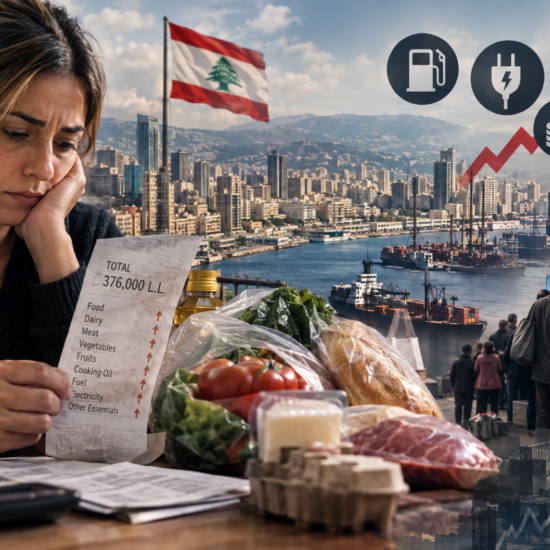
What makes this moment particularly dangerous is not despair, but adjustment. People no longer expect institutions to function, deposits to return, sovereignty to be clarified, or accountability to materialize. Instead, they recalibrate their lives around absence. They find work elsewhere, rely on family networks, lower ambitions, and shrink their expectations of the state. Survival becomes private; politics becomes background noise.
In such a context, calls for hope feel tone-deaf, and calls for outrage feel performative. Neither matches lived reality. What dominates instead is a quieter emotion: resignation masked as realism.
This resignation is often mistaken for resilience. We celebrate endurance, adaptability, and “getting by.” But resilience without direction is not strength; it is accommodation. It allows systems to persist precisely because people learn how to live around them rather than change them.
The most striking feature of Lebanon today is not polarization or conflict. It is the absence of thresholds. There is no clear moment at which failure becomes unacceptable, no point at which crisis demands rupture. Everything is bad, but never bad enough. Everything is urgent, but never decisive.
This is why the country feels politically numb. Not because people don’t care, but because caring has become costly and unrewarded.
Until this cycle is broken, until consequences return, language regains meaning, and power is forced to respond rather than manage; Lebanon will remain trapped in this grey zone: not collapsing, not recovering, and not moving.
And perhaps the most honest thing to say right now is this: nothing dramatic needs to happen for things to keep getting worse. They already are, quietly, efficiently, and without resistance
Ramzi Abou Ismail is a Political Psychologist and Senior Research Fellow at the Institute for Social Justice and Conflict Resolution at the Lebanese American University.
The views in this story reflect those of the author alone and do not necessarily reflect the beliefs of NOW