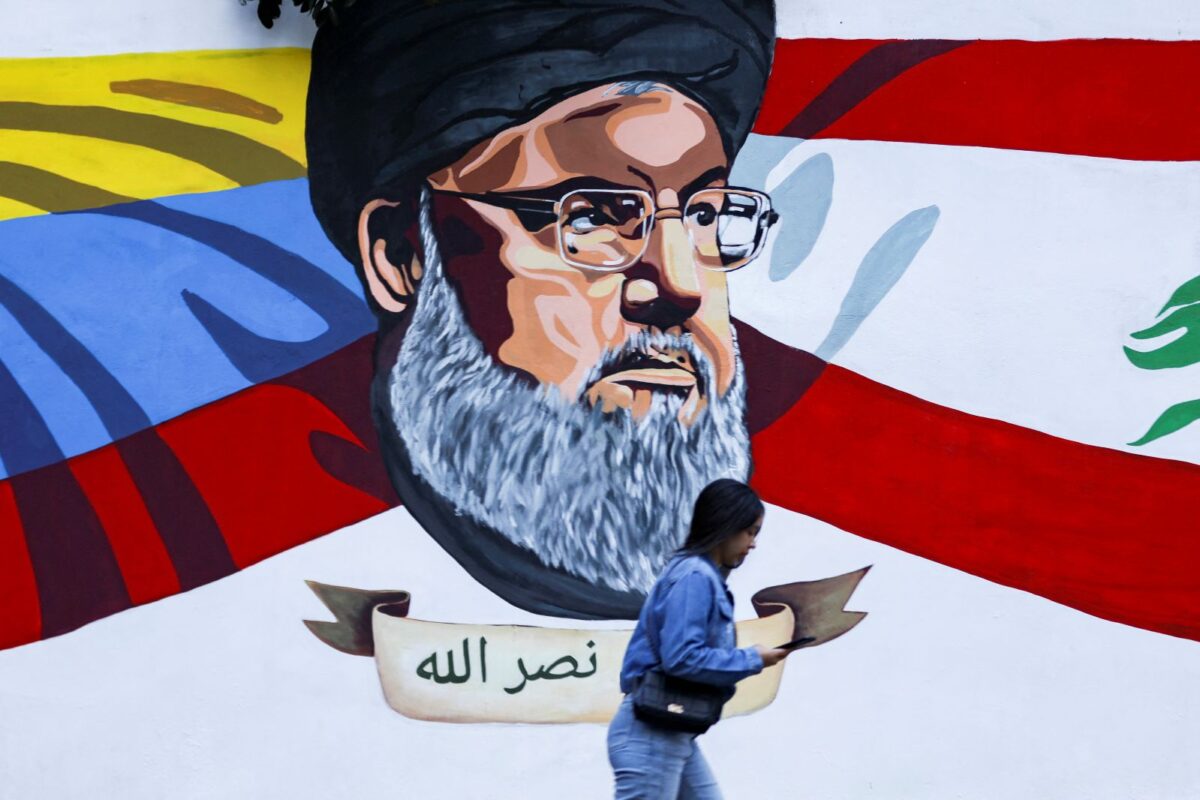
The military operation that led to the removal of Maduro has dealt a significant blow to Iran, one of Caracas’ long-standing allies. Analysts say the development undermines Tehran’s influence in Latin America, a region it has relied on to bypass sanctions and project power beyond the Middle East. The timing is particularly sensitive, coming as Iran faces growing domestic protests and mounting international pressure.
Hezbollah’s footprint in Latin America
Reports over the years have pointed to links between Hezbollah and the Maduro regime, with Venezuela allegedly serving as a base for fundraising, financial operations, and logistical coordination. Some accounts suggest the group benefited from safe transit routes and a permissive environment shaped by corruption and weak oversight.
Iran’s support for Maduro continued even as the Trump administration escalated pressure in the Caribbean, expanding its campaign against criminal and financial networks tied to the Venezuelan state.
The latest US action signals a readiness to directly challenge regimes aligned with Tehran beyond the Middle East.
To assess the implications for Hezbollah, NOW Lebanon spoke with Hussein Abdul Hussein, a research fellow at the Foundation for Defense of Democracies, (FDD) who analyzed how developments in Latin America intersect with mounting pressure on the group and the wider Iran-led network.
Abdul Hussein argues that the US action in Venezuela reflects a shift in how Washington applies force against adversarial regimes. Rather than prolonged wars or international interventions aimed at collapsing states, the United States is demonstrating a model of targeted decapitation, capable of removing leadership figures without triggering full-scale conflict.
“The assumption that sovereignty alone offers protection is no longer guaranteed,” Abdul Hussein said. “The image of a sitting president being taken without a conventional war sends a powerful deterrent message, not only to Caracas, but to Tehran and its allies.”
Hezbollah condemns US action
Hezbollah issued a statement condemning what it described as a US-led military attack on Venezuela, accusing Washington of violating the sovereignty of an independent state and breaching international law.
The group said the operation marked an unprecedented assault on Venezuelan sovereignty and linked it to a broader critique of US foreign policy.
The statement accused Washington, particularly under President Donald Trump, of pursuing aggressive strategies aimed at reshaping states and exploiting their resources, while presenting itself as a promoter of peace, democracy, and self-determination.
Commenting on Hezbollah’s reaction, Abdul Hussein argues that Venezuela is not an isolated case but part of a broader pattern of Hezbollah activity across Latin America. He notes that the group has operated for years in South and Central America through illicit networks involving drug trafficking, arms smuggling, and money laundering.
US authorities had previously tracked these activities through Operation Cassandra, which targeted Hezbollah’s criminal and financial infrastructure. However, Abdul Hussein explains that the effort lost momentum after Washington entered nuclear negotiations with Iran, allowing many of these networks to continue operating with less scrutiny. Venezuela, he adds, was particularly accommodating due to its close alignment with Tehran.
Beyond the message
For Hezbollah, Venezuela has taken on added importance as traditional supply routes have narrowed. Lebanese authorities, under intensified Western, especially US scrutiny, have tightened control over Beirut’s airport and port, restricting key channels for weapons and funding. Meanwhile, the land corridor through Syria that once linked Tehran to Beirut has collapsed following the fall of Bashar al-Assad’s regime.
Weakened militarily and under financial strain after the war launched in support of Gaza, Hezbollah has increasingly looked toward Latin America, and Venezuela in particular, as an alternative source of revenue.
Abdul Hussein emphasized that Venezuela’s importance lies less in its standalone value to Hezbollah and more in its role within Iran’s wider global axis. Caracas served as a friendly outpost for Tehran, facilitating unconventional exchanges such as oil-for-gold deals and cooperation on sanctions evasion.
Growing concern
Within Venezuela’s Lebanese community, the latest developments have caused unease. The situation has raised everyday worries about safety, work, and increased scrutiny of communities linked rightly or wrongly to wider regional conflicts.
Maya H., a Lebanese national who has lived in Venezuela for more than a decade, described how the situation has affected people on both a personal and community level.
“The initial reaction within Venezuela’s Lebanese community after Maduro was captured by the US was anxiety rather than shock, as we have been living through years of political and economic instability already,” she said.
For many Lebanese expatriates like Maya, repeated references to Hezbollah in discussions about Venezuela have created a sense of dissatisfaction and of being judged through political associations rather than as individuals simply trying to live and work normally abroad.
“After the move against Maduro, news began spreading more widely within the Lebanese community about Hezbollah networks linked to funding from Venezuela,” she added. “That’s when you realize their troubles are always like a shadow to very Lebanese.” Maya said.
According to US authorities, networks operating in Venezuela are involved in drug trafficking, money laundering, and currency counterfeiting, generating revenue that ultimately benefits Hezbollah. A large Lebanese diaspora in Latin America has also played a role. US officials allege that the IRGC has built interconnected business networks across the region, some of which funnel proceeds back to Hezbollah.
Beyond illicit trade, Tehran and Caracas are linked through opaque energy arrangements. A so-called “black channel” allows Iranian oil to be sold through intermediary companies, helping Iran bypass Western sanctions with Venezuelan cooperation.