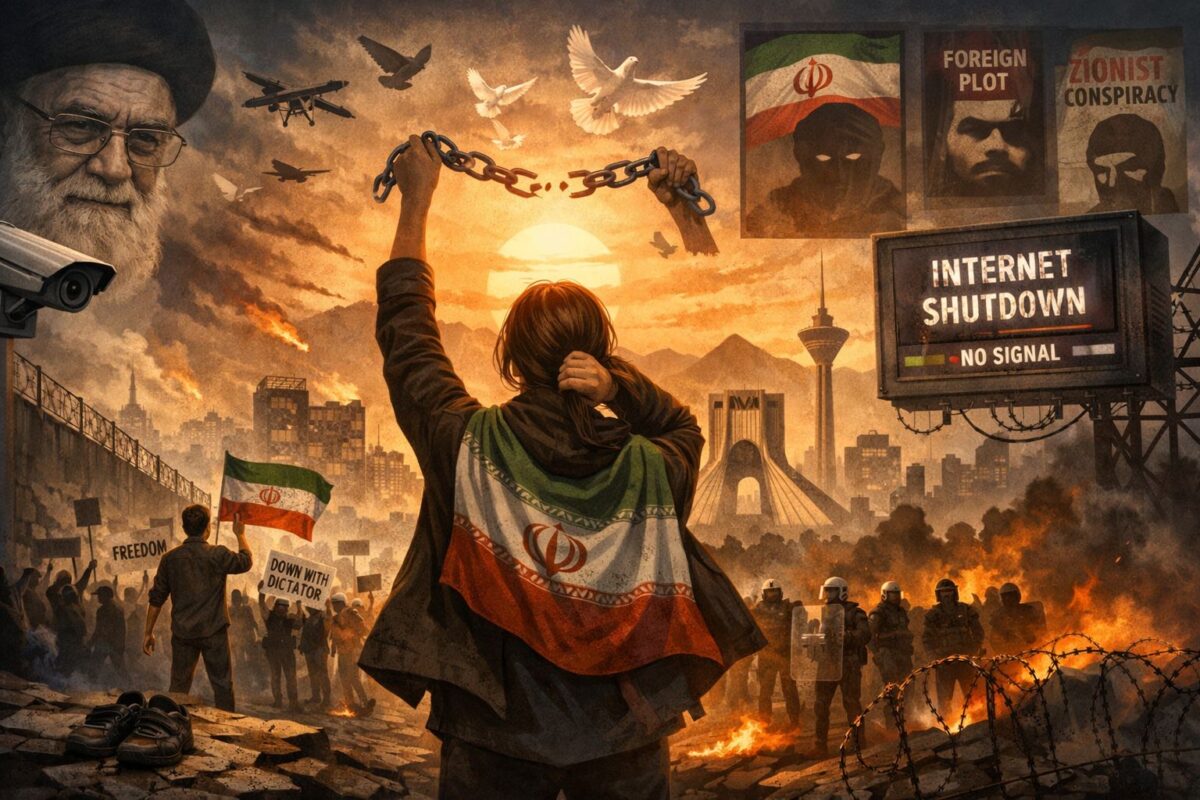
As a new wave of nationwide protests sweeps Iran, the authorities are running two operations in parallel: lethal repression at home and systematic deception abroad. Internet access has been shut down almost entirely, mobile networks are crippled, and independent reporting from inside the country has been rendered nearly impossible. In this enforced silence, the state advances a familiar lie, that protesters are “terrorists,” that the unrest is “directed by Israel,” and that what is unfolding in Iran’s streets is not a popular uprising but a foreign conspiracy.
This narrative is neither new nor accidental. For years, the Islamic Republic has tried to discredit every expression of dissent by attributing it to external enemies. The scant evidence that escaped before the blackout tells a very different story. Across cities and provinces, central and peripheral, affluent and impoverished, unarmed civilians took to the streets. There was no looting, no indiscriminate destruction. Where damage occurred, it was targeted: surveillance cameras, symbols of repression, and businesses linked to the Islamic Revolutionary Guard Corps and power networks around it.
In some of the poorest areas, the message was unmistakable. In Abdanan, in Ilam Province, protesters threw rice into the air, a deliberate, symbolic act rejecting the regime’s attempt to reduce the uprising to “economic grievances.” The point was explicit: this is not about bread; it is about freedom and dignity.
The state’s response has been predictable and brutal. Reports that managed to surface via limited satellite connections indicate a high death toll, including a disturbing number of children. The memory of the “Woman, Life, Freedom” uprising remains raw. During that movement, more than seventy children were documented killed, alongside widespread reports of sexual assault and torture in detention. Today, with communications almost completely severed, even the basic task of counting the dead has been denied.
The internet blackout is not a technical security measure; it is a tool of erasure. With no independent journalists able to operate inside the country, families cut off from one another, and only state-aligned outlets publishing information, the authorities can obscure casualties and fabricate narratives with impunity. Information silence is integral to the machinery of repression.
Beyond Iran’s borders, the propaganda continues. Officials and their affiliates invoke Israel incessantly, attempting to delegitimize the protests and to make international inaction appear reasonable. Yet there is no independent access to verify the state’s claims, and the Iranian public has been stripped of its ability to speak for itself.
One reality, however, is impossible to suppress: Iranian society has not surrendered. Despite exhaustion from repeated crackdowns and the psychological toll of previous defeats, each resurgence of protest affirms a persistent demand for freedom. Contrary to warnings of “fragmentation” or “civil war,” what emerges from the streets is nationwide solidarity, a shared understanding of a common adversary: a corrupt, violent system that relies on fear and bloodshed to survive.
The authorities know time is not on their side. That is why violence grows more overt and communication more restricted. But Iran’s recent history is unambiguous. No regime can indefinitely govern a living society through bullets and lies. Freedom may arrive late, but what is unfolding across Iran today makes clear that it is not optional. It is inevitable.
Elham Adimi is an Iranian freelancer journalist based in Beirut
The views in this story reflect those of the author alone and do not necessarily reflect the beliefs of NOW