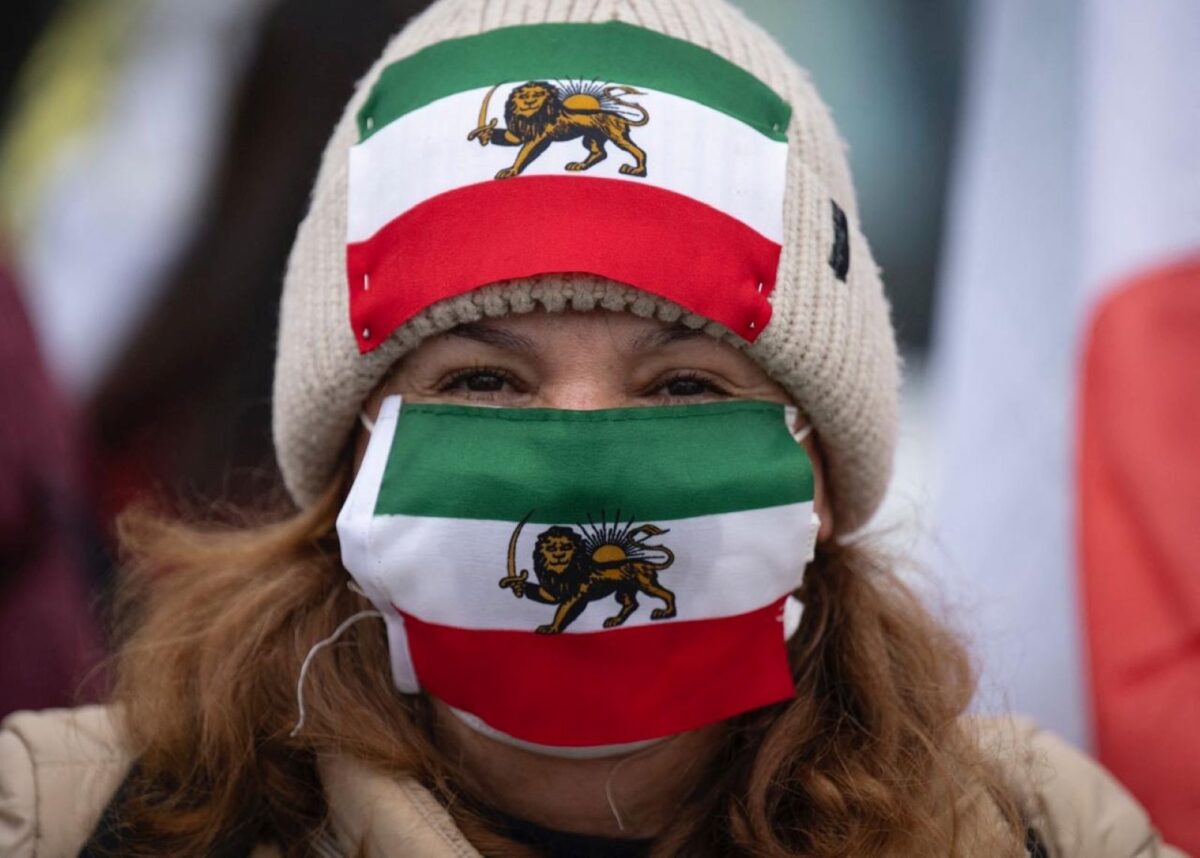
Every time the possibility of change in Iran is raised, the same warning is recycled: collapse will mean chaos, civil war, refugees, extremism, and regional meltdown. This narrative is often presented as sober realism. In reality, it is fear disguised as analysis—and it is the most successful propaganda tool of the Islamic Republic.
It tells the world that tyranny is safer than freedom, that repression is preferable to uncertainty, and that the Middle East is uniquely incapable of political renewal.
This is not realism. It is moral laziness.
The Islamic Republic has not been a pillar of stability in the Middle East. It has been its most consistent saboteur. Its regional doctrine is not based on building states but hollowing them out; not on sovereignty but on parallel power; not on institutions but on militias. Where Iran expands, the state contracts. Where it intervenes, legitimacy collapses.
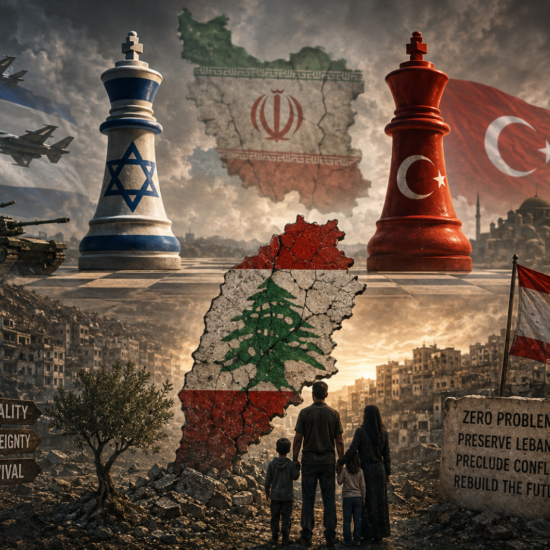
Lebanon is the clearest example.
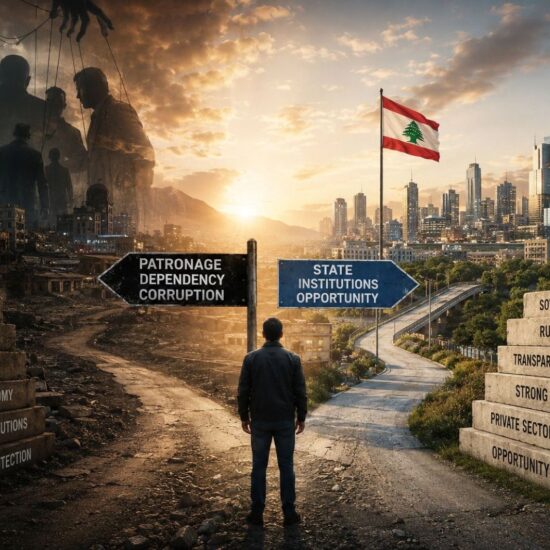
For four decades, Hezbollah has presented itself as a force of “resistance.” The result is not resistance—it is rot. A country without a functioning economy, without accountability, without monopoly over force, and without a future for its youth. Lebanon’s collapse is not accidental. It is structural. A militia economy replaced a national one. A war logic replaced political life. A foreign strategic agenda replaced domestic priorities.
This is what Iranian “stability” looks like.
Iraq offers the same lesson. Militias loyal to Tehran did not protect Iraqi sovereignty; they auctioned it. They did not strengthen the state; they fragmented it. They did not defeat extremism; they normalized it by turning politics into armed coercion.
Yemen is not in ruins because of democratic aspirations. It is in ruins because the Houthis were transformed into a permanent war machine, sustained by Iranian weapons, training, and ideology.
And yet we are told that the real danger is not this present reality—but a hypothetical future where Iran might finally become free.
Yes, Iran lacks a single, unified opposition leadership. So did almost every society emerging from long authoritarian rule. Political pluralism is not a pathology. It is the point.
Yes, the IRGC is powerful. But power without legitimacy is brittle. It fractures. It corrodes. It defects. No security apparatus survives indefinitely when it must rule against its own society.
The idea that Iran would automatically descend into civil war assumes that Iranians themselves are passive spectators in their own future. This is false. They have been organizing, resisting, articulating, and imagining alternatives for decades. What they lack is not political consciousness—it is space.
And space is exactly what authoritarian regimes cannot tolerate.
The real question is not whether change is risky. All change is. The real question is whether the current order produces less suffering. It does not.
A regime that cuts the internet to silence its people, that fires on unarmed men and women demanding nothing more radical than dignity, bread, and a future, forfeits any claim to legitimacy. Governments that survive by erasing witnesses, criminalizing hope, and treating protest as treason are not “stable.” They are hostile occupiers of their own societies. No political order that must blind its citizens to survive deserves to endure—let alone to be defended as a lesser evil.
In Lebanon, we are not living under stability. We are living under suspended collapse. Every day, Hezbollah’s weapons “protect” us from war by keeping us permanently at the edge of one. Every day, its narrative of deterrence justifies paralysis. Every day, its claim of resistance prevents reform.
A free Iran would not instantly solve Lebanon’s problems—but it would remove the architecture that sustains them.
Without Tehran’s funding, logistics, ideological cover, and strategic coordination, Hezbollah would not vanish—but it would shrink. It would lose its regional depth. It would lose its divine mandate. It would be forced to negotiate with Lebanese society rather than dominate it.
That is what liberation looks like in practice: not miracles, but margins. Not utopias, but openings.
The same is true for Iraq and Yemen.
The argument that Israel would be the only winner in a post-Islamic Republic Middle East is analytically lazy. Iran’s regional threat is not merely military—it is structural. It is a threat to statehood itself. The Islamic Republic does not just confront Israel; it undermines the very idea that politics should be civilian, accountable, and institutional.
That is why its real adversary is not a country, but a concept: sovereignty.
A free Iran would weaken the ideological mythology that sustains armed “resistance” movements across the region. It would expose the lie that dignity requires militarization, that liberation must come through permanent war, and that civil life is a Western fantasy.
And yes, there would be turbulence. But turbulence is not collapse.
What produces refugees, terrorism, and extremism is not freedom—it is systems that cannot reform, only repress. It is regimes that externalize their crises by exporting militias, weapons, and sectarian narratives.
Lebanon did not become a refugee-exporting, brain-draining, youth-emptying country because Iranians protested. It became one because Hezbollah was allowed to replace the state.
The Middle East does not suffer from too much change. It suffers from too little.
We are told that regional actors prefer “continuity over chaos.” But continuity for whom? For the militias? For the war economies? For the political classes that thrive on paralysis?
For ordinary people, continuity is already catastrophe. The real choice is not between stability and chaos. It is between managed decay and difficult renewal.
A free Iran would not be a threat to the region. It would be its first real rupture with the logic of permanent proxy war.
For Lebanon, that rupture would be nothing short of revolutionary.
Makram Rabah is the managing editor at Now Lebanon and an Assistant Professor at the American University of Beirut, Department of History. His book Conflict on Mount Lebanon: The Druze, the Maronites and Collective Memory (Edinburgh University Press) covers collective identities and the Lebanese Civil War. He tweets at @makramrabah