On February 3, 2021, my friend Lokman Slim was assassinated.
This was not a murder shrouded in mystery. It was not an unsolved crime, a security enigma, or a tragic accident buried under procedural fog. Lokman Slim was gunned -down deep in southern Lebanon—an area under Hezbollah’s full control, under the mandate of UN Security Council Resolution 1701, and within the zone of UNIFIL deployment. Five years later, the Lebanese state has done precisely nothing of consequence.
No arrests. No indictments. No serious judicial process. Not even the pretense of accountability.
This is not institutional paralysis. It is institutional submission.
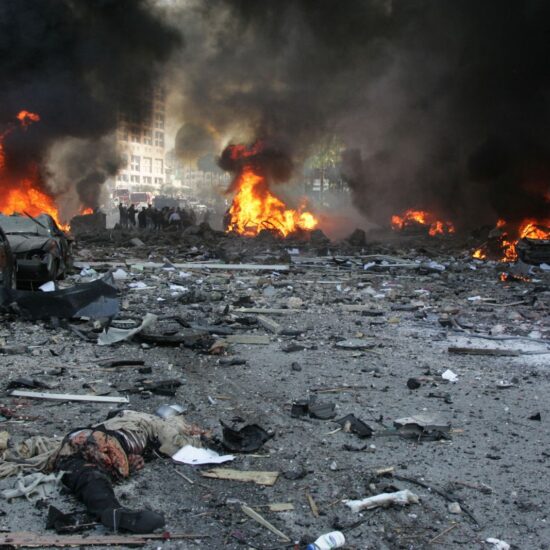
The same state that claims impotence in the face of Lokman’s murder had no difficulty identifying protesters, arresting dissidents, or policing speech. Its silence here is not accidental. It is selective. And it mirrors, almost perfectly, the state’s behavior after the Beirut port explosion: overwhelming evidence, absolute knowledge—and a total refusal to act.
I write this not as a distant observer, but as someone who knew Lokman Slim intimately. He was a friend, a relentless interlocutor, and one of the few Lebanese intellectuals who refused to lie—either to himself or to others. Lokman did not bargain with fear. He did not dilute his language for safety. He insisted on naming reality as it was, not as power demanded it be described.
He was not “inflammatory,” despite the lazy accusations of his detractors. He was courageous. And in Lebanon, courage—especially when it confronts weapons outside the state—is treated as an offense punishable by death.
Lokman was not killed because he bore arms. He was killed because he bore ideas. He was not assassinated for conspiring, but for speaking clearly and publicly. He dismantled the mythology that Hezbollah had carefully cultivated: that it was a resistance rather than a regime; that it protected its community rather than holding it hostage; that it strengthened the state rather than hollowing it out.
Lokman said what many whispered but feared to declare—that weapons had ceased to be a tool of resistance and had become the backbone of a parallel order, ruling through intimidation and sustained by impunity. He said this openly, under his own name, without anonymity or camouflage. And he knew, fully, that such honesty carried a price.
Five years later, the killers roam freely. Worse still, it is an open secret that the Lebanese state possesses recordings, surveillance, and data identifying the perpetrators and tracking their movements. The refusal to act on this information is not a failure of capacity—it is a political decision. A decision to protect the armed order. A decision to normalize assassination. A decision that declares, unmistakably, that some Lebanese lives are expendable.
We are not merely demanding the prosecution of the men who pulled the trigger. We are demanding accountability for those who ordered the killing, those who provided cover, and those who institutionalized murder as a governing practice. This is not a narrow criminal case. It is a systemic indictment.
And let us dispense with the charade of ignorance. We know who killed Lokman Slim—just as we know who killed Rafik Hariri, Samir Kassir, Gebran Tueni, Pierre Gemayel, Mohammad Chatah, Elias al-Hasrouni, and dozens of others since 2005. The problem in Lebanon has never been the lack of knowledge. It has always been the deliberate suspension of justice.
The cruel irony is that Lokman is no longer here to witness how thoroughly his warnings have been vindicated. The so-called “Axis of Resistance,” once sold as an eternal destiny, is unraveling in real time.
The Iranian regime—its ideological anchor—kills its own citizens in the streets, crushes dissent to preserve itself, and simultaneously begs for deals to escape collapse. What once claimed moral superiority now survives through repression, fear, and transactional politics.
Lokman understood early on that a project built on coercion cannot produce legitimacy, and that a system sustained by weapons cannot generate a future. He saw that fear is not governance—and violence is not politics.
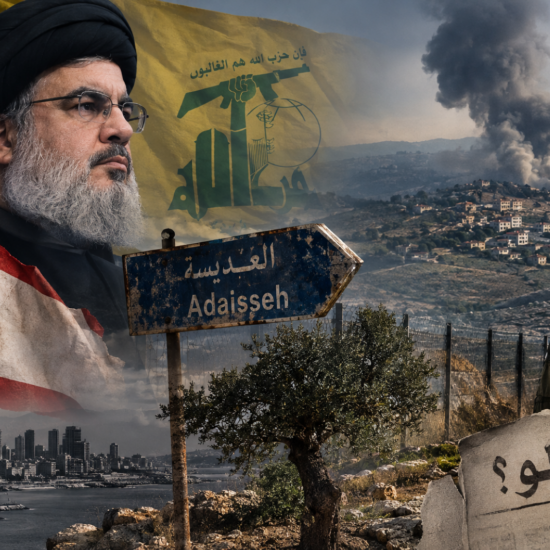
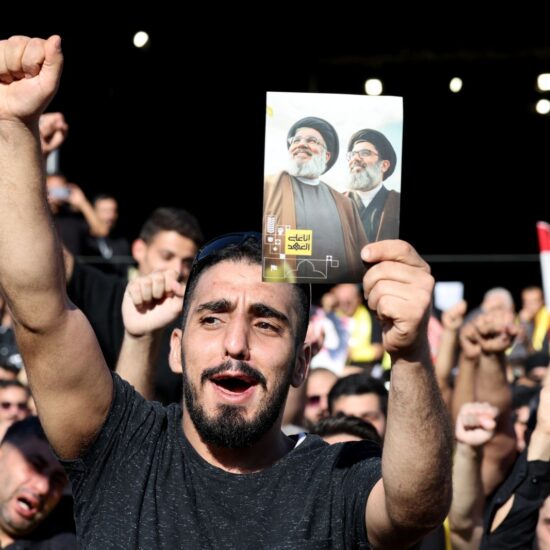
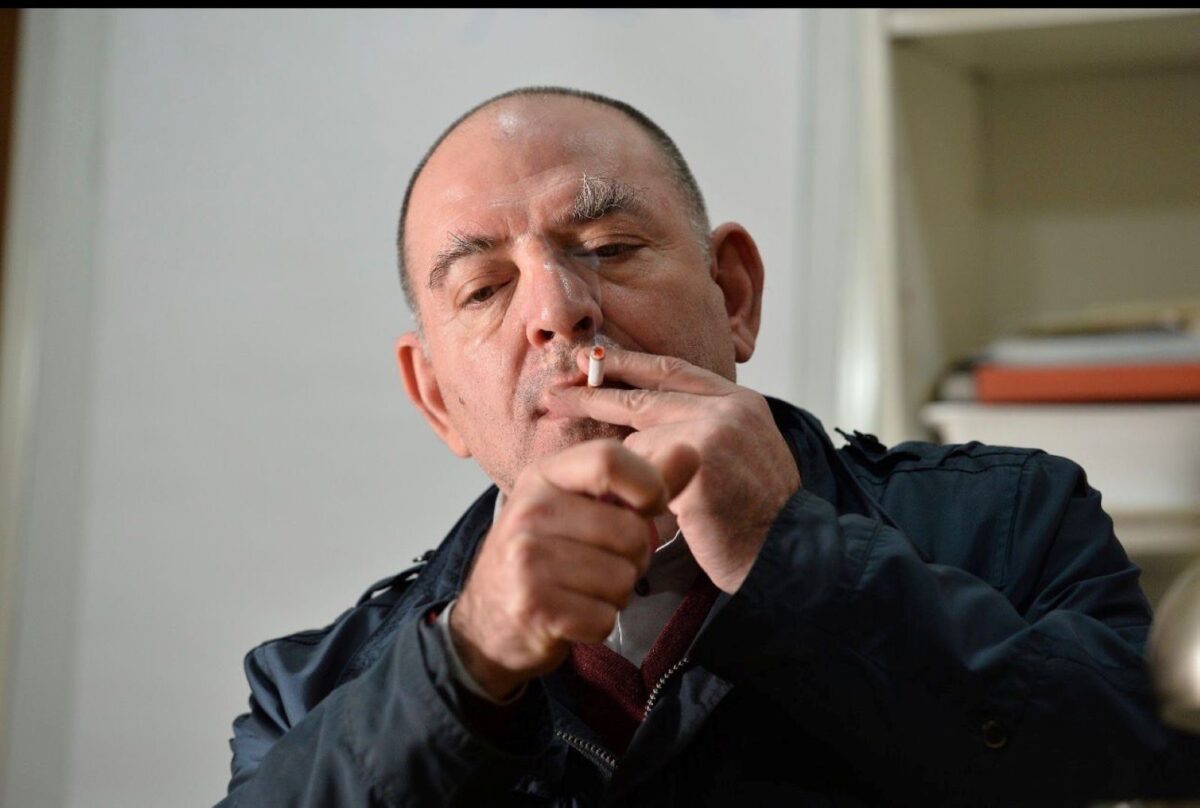
I remember vividly how Hezbollah’s late secretary-general Hassan Nasrallah would appear on television, wagging his finger, threatening opponents with death as if Lebanon were his private theater of intimidation. I would glance at Lokman. He would calmly take a drag from his cigarette and smile.
That smile was not bravado. It was contempt.
Lokman did not deny the danger. He refused to revere it. He understood that those who rely on public threats betray their own fragility. That smile—quiet, unflinching—was a declaration of independence. And regimes that rule through fear cannot tolerate such defiance.
Some will argue that history has since delivered its own verdict, that certain figures associated with this order have been eliminated, and that this amount to “divine justice.” But justice in functioning societies is not metaphysical. It is legal, political, and human. It does not descend from the heavens. It is enforced on earth.
Without accountability, murder becomes a language. Silence becomes policy. Fear becomes structure.
Lokman Slim did not seek vengeance. He did not incite sectarian hatred. He did not traffic in demagoguery. He wanted a state—one that protects its citizens instead of rationalizing their execution; one that does not cower before a militia; one that refuses to equate the assassin with the victim.
There is no peace in Lebanon without justice. And there is no justice without confrontation—with facts, with power, and with the machinery of impunity. Justice for Lokman Slim is not a personal grievance. It is a political necessity.
If Lebanon is ever to escape its cycle of violence, it will not be through cowardly compromises or sanctified silence. It will be through breaking the rule that says those who kill for power will never be held to account.
Justice for Lokman Slim is not revenge.
It is the minimum condition for peace.
And peace in Lebanon will begin only when it becomes impossible to kill someone for saying “no.”
This article originally appeared in Elaf
Makram Rabah is the managing editor at Now Lebanon and an Assistant Professor at the American University of Beirut, Department of History. His book Conflict on Mount Lebanon: The Druze, the Maronites and Collective Memory (Edinburgh University Press) covers collective identities and the Lebanese Civil War. He tweets at @makramrabah