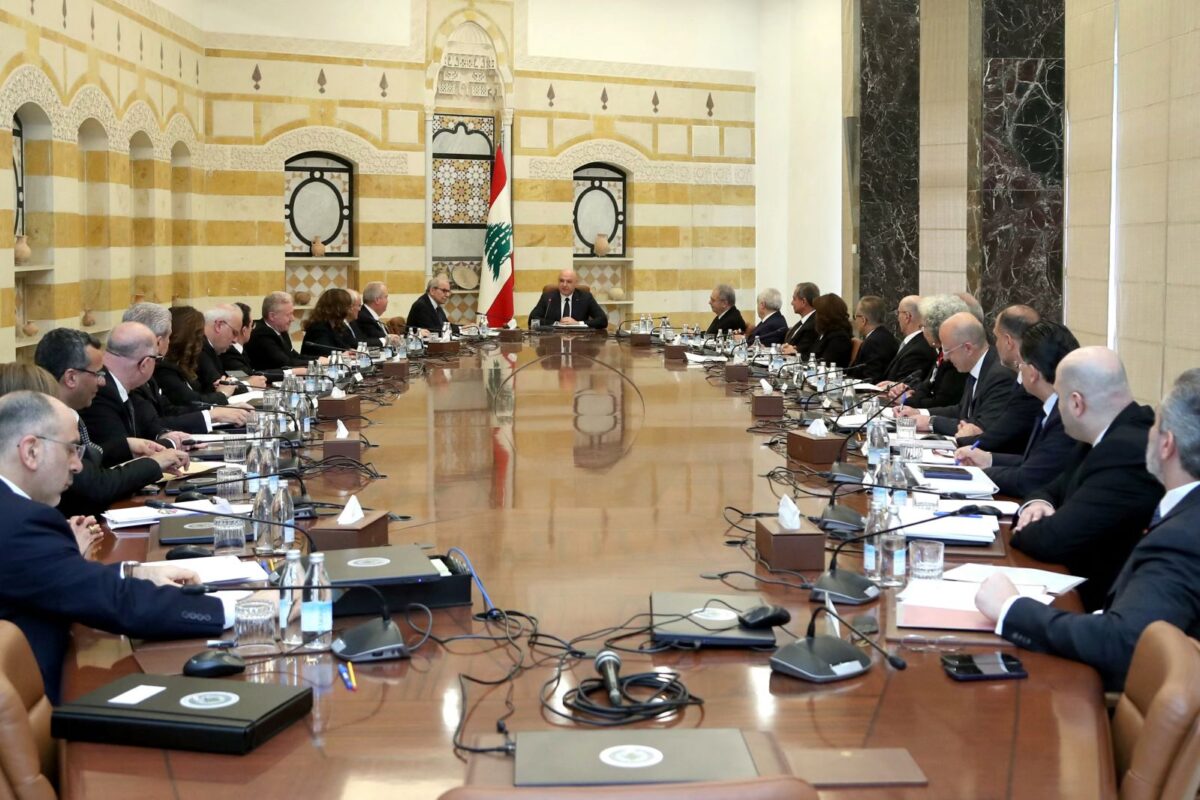
Cabinet approves new fuel tax
The Lebanese Cabinet this week approved a new tax on gasoline, adding LL300,000 per 20-litre tank, a move expected to significantly raise prices of all goods across the country. The increase comes alongside a broader fiscal package that includes raising VAT from 11 per cent to 12 per cent, although the VAT amendment still requires parliamentary approval.
Officials justified the measures as necessary to finance salary and pension adjustments for public sector workers, whose wages have lost much of their value since the financial collapse of 2019. According to government estimates cited in local reports, the public wage bill consumes more than half of state expenditures, and authorities argue that new revenue streams are essential to sustain it.
But economists caution that introducing new fuel taxes without a broader fiscal reform framework risks deepening structural imbalances.
Alia Moubayed, Chief Economist for the MENA region and Pakistan at Jefferies, warned that the measure may undermine stabilization efforts if not embedded within a credible reform strategy.
“I believe that the decision to increase fuel-related taxes outside the scope of an overall credible fiscal consolidation plan will undermine efforts at improving Lebanon’s socio-economic outlook,” she told NOW. “It shifts the burden once more onto the lower and middle-income class, raises production costs and undermines competitiveness at a time where Lebanon’s recovery needs the opposite.”
Her remarks place the tax hike within a broader dilemma: Lebanon remains without a comprehensive medium-term fiscal plan, debt restructuring framework, or meaningful public sector reform — raising questions about the sustainability of ad hoc revenue measures.
Protests and public anger
The decision immediately ignited protests. Roads were blocked in several areas, including in and around Beirut, as taxi drivers and motorists expressed anger at what they described as yet another blow to purchasing power.
For many citizens, the issue is not only the increase itself, but the cumulative strain of years of economic collapse, stagnant incomes, and rising living costs.
“First time in Lebanon’s history”
In comments to NOW, Fadi Abou Shakra, representative of the fuel distributors’ union, described the development as unprecedented.
“For the first time in Lebanon’s history, a tank of gasoline is reaching the threshold of $20,” he said. “Today, a 20-litre tank is $19.90.”
Abou Shakra compared current prices to historical benchmarks. “From 1994 to 2004, a tank of gasoline ranged between $13 and $14. Even when oil prices surged to $100 per barrel during the Iraq war, the tank only reached around $15. Normally in Lebanon, when global oil hits $100, the tank reaches $17.”
He stressed that global oil prices are currently hovering around $70 per barrel, significantly lower than past peaks, yet local gasoline prices are approaching $20.
“Before this latest increase, the tank was around $16. Oil hasn’t increased globally, but gasoline here has,” he said. “Today oil is around $70 per barrel, yet the tank in Lebanon is at $20.”
Inflation
Beyond the shock at the pump, Moubayed warns the inflationary implications could be significant.
“The increase in fuel prices will raise inflation expectations,” she said, pointing to three factors: transport accounts for around 13.1 per cent of Lebanon’s consumer price index; there is a strong correlation between transport costs and general price levels, particularly since fuel prices were liberalized in 2021; and the weakening of the US dollar is exacerbating imported inflation, especially given that Lebanon imports more than half of its goods from the European Union while maintaining a pegged exchange rate.
Accordingly, she expects inflation to accelerate due to second-round effects.
Higher fuel costs feed directly into transportation, distribution, and production expenses — costs that are quickly passed on to consumers in a largely import-dependent economy. Over time, she noted, this could also lead to an appreciation of Lebanon’s real effective exchange rate, hurting exports of goods and services and undermining efforts to improve external sustainability.
“Giving with one hand, taking with the other”
Abou Shakra attributed the sharp rise primarily to taxation.
“In Lebanon, every time the value increases, VAT increases with it,” he explained. “They take VAT on the tax itself. There is VAT on the cost price, VAT on the station’s margin, VAT on everything.”
He criticized what he described as a circular fiscal approach: “We are paying from one side and taking from citizens from the other. This is not acceptable.”
Moubayed similarly argues that sustainable adjustment requires a broader overhaul.
“A more sustainable fiscal adjustment strategy requires tax policy reform aimed at supporting private sector growth while ensuring social justice, public sector restructuring and civil service reform to bolster efficient and effective state institutions, and debt restructuring after six years of default,” she said. Such reforms, she stressed, must be embedded within a credible medium-term growth and fiscal framework.
Extra social strain
With inflation still high and incomes stagnant, many people see this decision as another burden being placed on ordinary citizens rather than a step toward long-term recovery.
In practical terms, families are likely to feel the squeeze not only when filling up their cars, but also at supermarkets, pharmacies, and service providers across the country.
The timing has added to public frustration. The decision comes under the government of Nawaf Salam, whose appointment had raised hopes among many Lebanese for a reform-oriented agenda focused on transparency, institutional restructuring, and economic recovery. Instead of structural reforms targeting long-delayed debt restructuring and corruption, critics argue that the burden has once again fallen on consumption taxes, measures that disproportionately affect lower- and middle-income households.