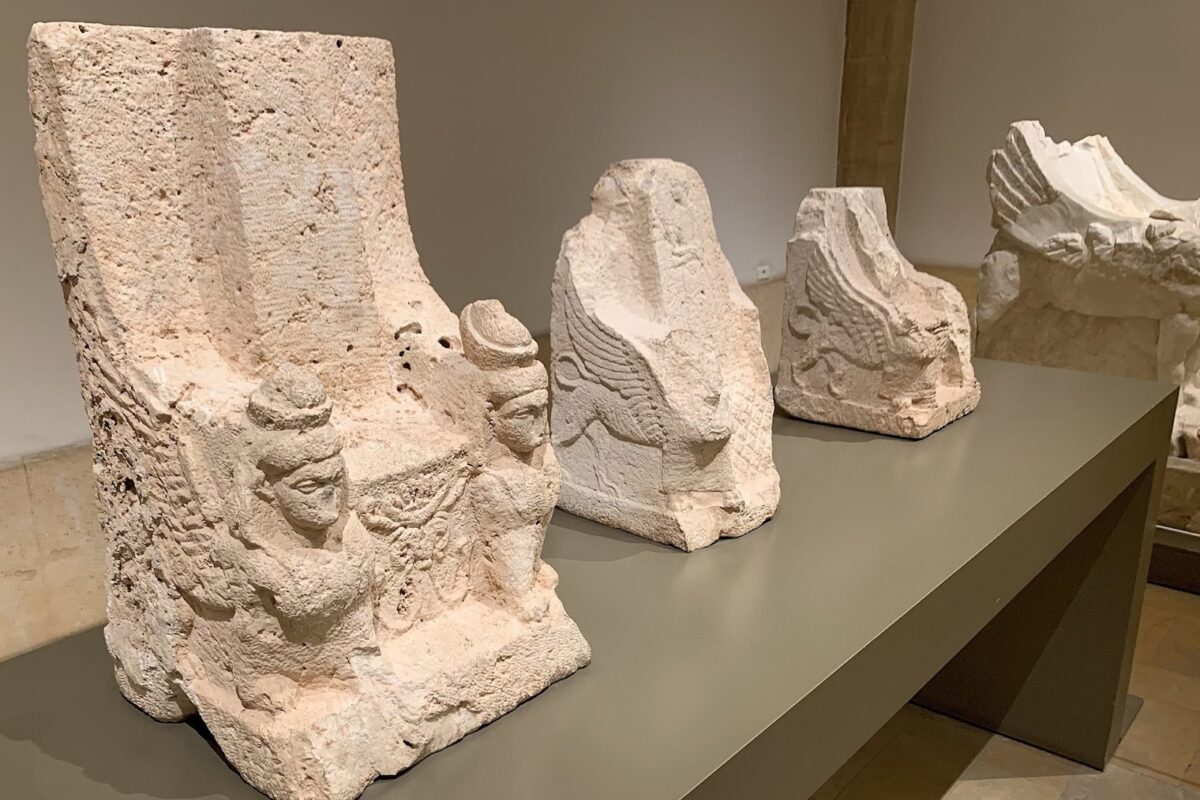
Let me be unambiguous: I would be among the first to place the full weight of my public history work at the service of a Phoenicianism that offers Lebanon a way to project itself for the next century, and more. That is not the position of someone who is anti-Phoenician. That is the position of someone who believes the Phoenicians deserve better than what is currently being offered in their name.
I rarely engage in public polemics, and I do so here only because the interlocutor warrants it. Elie Khoury is, quite simply, one of my favorite minds.
I speak as a history teacher first. Twenty-five years in classrooms have taught me that the absence of rigorous historical education does not produce ignorance — it produces distortion. And it is distortion, not ignorance, that characterises Lebanon’s current engagement with its Phoenician past. What circulates in abundance is discourse — on X, for example — whether partisan or polemical, almost entirely disconnected from the scholarly foundations upon which any serious public engagement with Phoenician civilization must rest. The debate oscillates between appropriation and rejection, and that oscillation is itself a symptom of a deeper failure, or absence — of education, of institutional priorities, and of the public history practice that ought to serve as the bridge between the two.
That absence takes several concrete forms. There is no dedicated Phoenician studies chair in most major Lebanese universities, USJ has already taken that step, and the failure of other institutions to follow remains an institutional scandal. There are no scholarships specifically designed to train the next generation of Lebanese historians and archaeologists in this field.
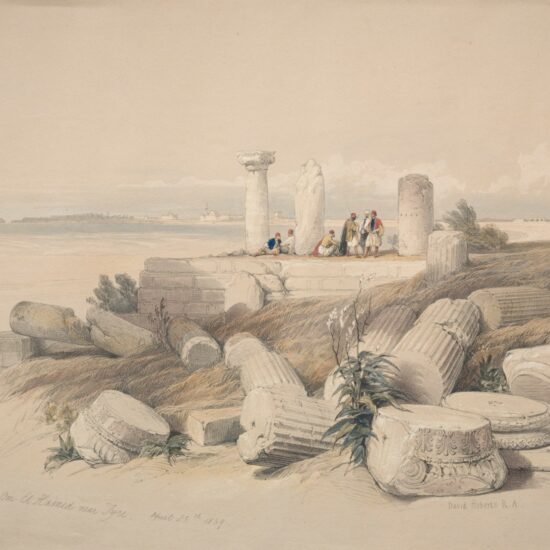
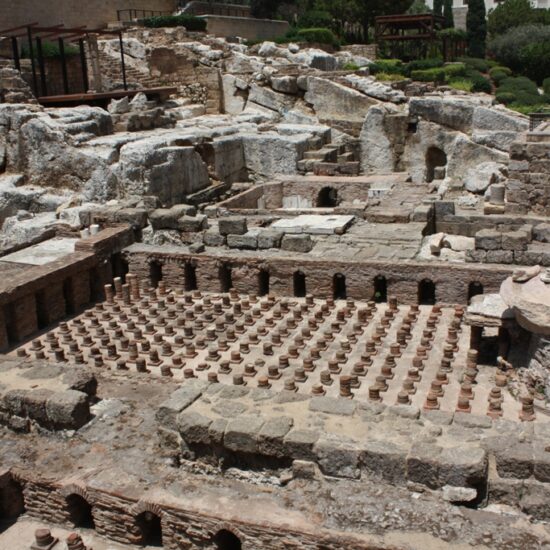
There is, as elementary as it sounds, no systematic educational visits for school students to Phoenician archaeological sites. First-hand engagement with material remains is among the most effective tools for introducing a wider public to the history of a civilisation — and one of the most honest: the site bears witness in ways that no textbook or social media campaign can replicate. How can one speak of recovering a people’s past without first introducing them to the physical evidence of that past? The Temple of Eshmoun at Bustan el-Sheikh in Sidon, Umm el-Amed, whose stelae now stand in the Louvre and at the National Museum of Beirut, and the Tel el-Burak Phoenician wine press, among the oldest yet discovered. Many Lebanese are unaware that these sites exist at all, or have never visited them.
A further problem is that of geographical scale. How is a Phoenician identity to incorporate, as it logically must, the territories of the four ancient Phoenician kingdoms and their sphere of colonies, a geography that bears no correspondence to the borders drawn in 1920? The best-preserved Phoenician temple in the eastern Mediterranean stands at Amrit, in Syria, not far from Tartus — a fact that most proponents of Phoenician identity have never had occasion to consider, let alone visit. The question is not incidental. It opens what is, in fact, the more fundamental problem: would the proponent of such a Phoenician identity also concede that Syria — its coast in particular — holds a legitimate share in this heritage, given that it encompassed the territories of the Phoenician kingdom of Arwad? And what of the Phoenician colonies scattered across the Mediterranean?
These are not rhetorical questions. They are a diagnosis. A movement that has not invested in making these places central to Lebanese civic and educational life is, structurally, a movement that has not yet taken the Phoenician identity seriously beyond the amphitheater of social media.
The question, then, is how to activate this history, how to cultivate, at the level of the wider public, genuine curiosity and historical understanding, rather than the polarising campaigns that generate noise and build nothing. One would go further. The teaching of the Phoenician alphabet in Lebanese schools should be a recognition that this script ranks among the most consequential contributions any civilisation has made to human communication.
The Phoenician celebrations of Adonis and the Egersis — the awakening festival of Melkart at Tyre — should be reintroduced through historically informed public reenactment as a structured, academically supervised act of heritage recovery, the kind that anchors collective memory in something deeper than political sloganeering. The question, however, is whether current religious authorities would tolerate such reenactments — dismissed, predictably, as pagan.
My position is not a refusal of Phoenician identity. I believe Phoenicianism, properly constituted, could offer Lebanon something rare: a chapter of its history that is genuinely universal. That universality is precisely what makes it a potential common ground. And it is precisely that universality which the current parochial, weaponized, and historically thin appropriation of the Phoenician past is actively destroying.
But I want to say something more direct, because the historical stakes demand it. Lebanon has been ravaged, for more than half a century, by narratives that were never its own. The Cairo Agreement of 1969 was the moment a sovereign republic voluntarily surrendered the territorial logic of statehood and began, in slow motion, to dissolve itself before competing regional projects. What followed, the wars, the occupations, the successive captures of the Lebanese state by armed ideological actors, is a history written in displacement and ruin. Hezbollah is not merely the latest chapter in that story. It is, structurally and ideologically, its most complete and dangerous expression: an organization whose entire civilizational frame of reference is built on the negation of Lebanon as a distinct and sovereign entity. To say this is not sectarianism. It is a historical description.
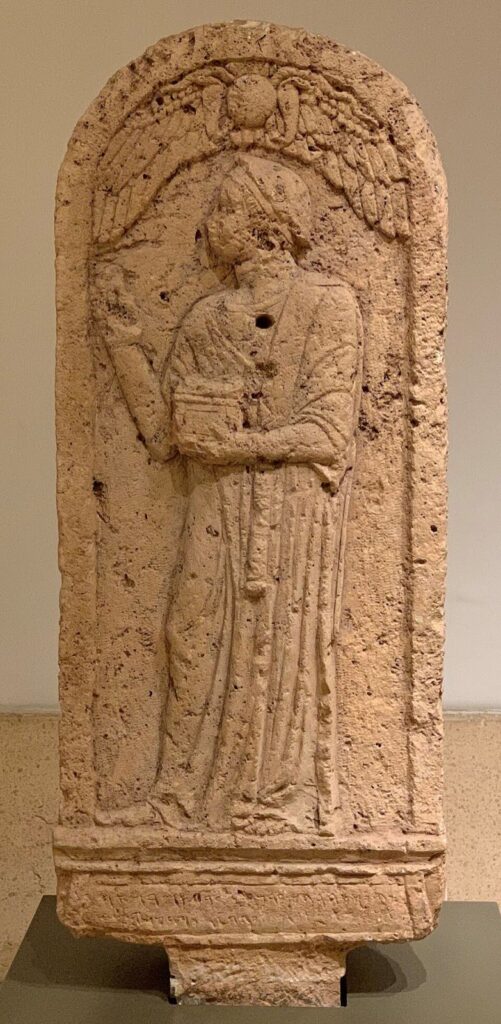
National Museum of Beirut – Baalshamar stele with Phoenician inscription from Umm el-Amed
This is precisely where serious engagement with Phoenician civilization occupies a role that no other discourse in Lebanon currently fills. A small country cannot sustain itself on narratives of enclosure and civilisational resentment. The Phoenicians understood this: their answer to smallness was not withdrawal but projection — outward, across the sea, toward the unknown. That mobile, universalist, and culturally generous civilizational instinct is not a nostalgic fantasy; it is a structural lesson. Lebanon, if it is to survive as a republic — not as a geography administered by militias, but as a political community with institutions, borders, and a shared civic horizon — needs precisely that: a narrative capacious enough to hold its diversity without erasing it, and open enough to face outward rather than collapse inward.
Phoenicianism could be that narrative: not only as a mythology of origins, but also as a philosophy of openness.
That is the Phoenicianism I believe in. I have done my share in bringing Phoenician civilization to public attention, and I continue to do so — but a personal initiative, however sustained, is not a cultural policy. Social media will not provide the foundations for a Phoenician revival in Lebanon; it will polarize without roots, building on the ephemeral rather than the permanent. What is needed is a strategy: academic chairs established, excavations funded, sites opened to the public, scholars trained, the alphabet taught.
Only then, when Lebanon is invited to a serious and grounded conversation about whether and how Phoenician civilization offers a viable way forward, will the wider public know what it actually was — through the slower and more demanding work of building genuine curiosity and understanding. In a country currently consuming itself in a suicidal war, it may be a way out. Let us build that curiosity together, Eli, so that we may one day sit at that table, and drink Phoenician wine.
Eli Khoury’s: https://nowlebanon.com/phoenician-and-a-half/
Franck Slameh’s: https://nowlebanon.com/response-to-charles-hayeks-between-history-and-hallucinations/
Charles H. al-Hayek’s:
https://nowlebanon.com/between-history-and-hallucinations-the-weaponization-of-memory-part-i/
Charles H. al-Hayek, Public Historian, founder of Heritage and Roots.
The views in this story reflect those of the author alone and do not necessarily reflect the beliefs of NOW.